Revealing the Secrets of Prehistoric Civilizations: The Challenge to Evolutionary Theory (Part One)
In 1859, Darwin compellingly introduced the theory of evolution in "On the Origin of Species," proposing that today's complex biological world evolved progressively from simple, primitive organisms. However, history appears to repeat itself in cycles. As science continues to advance, we find ourselves revisiting questions that evolution supposedly "settled." Many have identified issues within the theory of evolution, leading us back to the age-old question: Where does life truly originate from? Over the past two decades, numerous factual discoveries have thrown the theory of evolution into a true crisis, with many scientific findings shifting the perceived truths in unexpected ways.
I. Fragile Logical Foundations
Comparative anatomy highlights the theory of evolution's logical flaw—circular reasoning
In science, a theory cannot prevail if its evidence contradicts logic. Yet, the logical flaws in the theory of evolution are often overlooked, perhaps because a deeper examination reveals a lack of evidence. This revelation may astonish many. In fact, uncovering the problem is even more surprising. Using comparative anatomy to support evolution is like saying: "If humans evolved from apes, then humans and apes must have many similarities; because humans and apes do have many similarities, humans must have evolved from apes." This is a textbook case of circular reasoning. The initial part is logically sound (although logically sound does not mean factually correct), while the latter is mere sophistry. To simplify: "If A is B's younger brother, then A must be younger than B; because A is younger than B, A must be B's younger brother." Clearly, this reasoning is flawed, as A could be younger than B without any familial relation and could even be B's uncle. Circular reasoning cannot be logically sustained.
Is the theory of evolution based on inductive reasoning? No, because it fails to incorporate too many facts.
Some assert that the theory of evolution employs inductive reasoning—a more sophisticated logical process that's still accessible. Inductive reasoning involves formulating a hypothesis that, if it can encompass all related issues, is considered true. However, too many facts cannot be reconciled with evolution! Evidence from prehistoric civilizations, the pace of evolution, the sudden emergence of species, and the probabilities tied to evolution not only don't fit but directly contradict evolution theory. This indicates that arguing for evolution as inductive reasoning doesn't hold up; it remains circular reasoning.
This seemingly reasonable "circular reasoning" pervades the entirety of the theory of evolution, and people seem to have become accustomed to it. Yet upon rigorous analysis, we are often startled! Even those not well-versed in logic can discern that this reasoning is sophistry.
Today, with a deeper understanding of the essence of life, Darwin's examples supporting evolution seem stretched, and the arguments can't be considered rigorous. Why do I say this? Let's examine an example. In the first edition of "On the Origin of Species," Darwin hypothesized boldly that a bear could enter the water, transform into an aquatic animal, and eventually evolve into a massive creature like a whale. He suggested that, with enough time, natural selection could turn a bear into a whale. In later revisions, Darwin removed this claim. Realizing upon review that there was no solid evidence to back it up, he omitted this assertion. Interestingly, his notion that a bear could evolve into a whale through natural selection is central to the entire theory of evolution—that one species can turn into another. Moreover, the concept of whale evolution is still cited today. Darwin's removal of this example indicates he harbored reservations or doubts about his own theory.
II. Probability Calculations Challenge the Core of Evolution Theory—Gene Mutation Mechanism
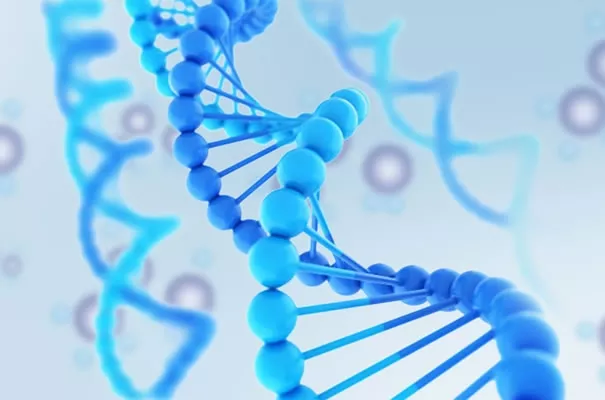
During Darwin's era, modern Western science was in its early stages, and comprehension of life's phenomena was still quite basic. Observers saw various hybrid traits in domesticated animals and assumed similar species transformation, termed evolution, was possible. Later, with the discovery and detailed study of genes, researchers realized that without fundamental genetic changes, any variability between descendants and ancestors held no evolutionary significance. Yet, genes are very stable, with only abnormal "gene mutations" causing changes, making "gene mutation" the foundation of modern evolution theory, a fact acknowledged by modern evolutionists. Here, we'll delve into analyzing this core theory.
The Stability of Genes Within Species is Extremely Hard to Overcome
Gene stability is crucial for a species to maintain its stability. Genetic exchanges among individuals within a species do not result in species transitioning into others. Experts in plant and animal breeding understand that the variation range for a species is limited. Ultimately, cultivated varieties may become sterile or revert to the original parent. Harvard University Professor Mel calls this genetic equilibrium within the organism. For instance, no matter how much dogs are crossbred, they remain dogs. This represents an insurmountable obstacle for evolution theory. Theoretically, hopes to overcome this barrier have been placed on gene mutations, the only remaining possibility.
The Probability of Gene Mutations Yielding Advanced Traits is Nearly Nonexistent
Gene mutations occur as random errors during processes like gene replication or damage repair, hence referred to as random mutations, which are inherently pathological. The likelihood of such mutations is extremely low, ranging from one in ten thousand to one in a billion. Lower organisms have higher mutation rates—about one in a thousand—while many genes in higher organisms mutate at rates of one in a hundred thousand to one in a million.
Can gene mutations produce advanced traits? Detailed gene studies reveal the extremely low likelihood of this occurring. It's known that a gene's core comprises hundreds to thousands of specifically ordered base pairs, with four different bases forming a complex and precise genetic code. As gene mutations are random errors, consider this analogy: Can a sophisticated and precise computer program improve by randomly altering one or two characters? Certainly not. Gene mutations function similarly. Mutations arising from errors usually involve single base changes, often resulting in defects, deformities, or lethality, with no examples exhibiting survival advantages in natural conditions. To enhance mutation rates for research, scientists have used various methods to increase the probability of mutations, creating numerous mutants, yet no evolution toward higher forms has been observed.
Probability Calculations Indicate that the Likelihood of Biological Evolution is Nigh Impossible
Modern evolution theory posits that evolution fundamentally results from random gene mutations. We understand these mutations as random, infrequent, and lacking direction. Notably, in today's biotechnological landscape, where mathematical models and formulas are pervasive, evolutionists have yet to present a detailed formula to calculate evolution's probability stemming from gene mutations. Why is that? Let’s dive deeper.
Numerous scholars have calculated the probability of new species arising from gene mutation rates and found it alarmingly low. In "Darwin's Black Box," American biochemist Michael Behe uses complex biochemical pathways, like blood coagulation, to argue that such precise life phenomena couldn't evolve. He suggests that the probability of a protein (TPA) evolving is one in ten to the eighteenth power, implying it would take at least ten billion years. If another interacting protein evolved alongside, the probability drops to one in ten to the thirty-sixth power. He remarked, "Unfortunately, the universe does not have time to wait."
Let's propose a simplified formula to compute the probability (P) of evolution resulting in new species based on mutation rates:
P = (M × C × R × E × S) n
Simply put, this formula suggests an individual undergoes mutation (probability M=0.001), where the mutated gene must be compatible with other genes at different levels (estimated C=0.01), the individual survives competition and reproduces (R=0.1), the mutation holds beneficial evolutionary value (not yet observed, some evolutionists estimate E=0.001), and the mutated gene stabilizes and propagates within the population (estimated S=0.1); considering a new species requires a series of novel genes, assume ten are necessary (exponent n=10, albeit species differences are far greater), hence the probability of evolving a new species becomes:
P = (0.001 × 0.01 × 0.1 × 0.001 × 0.1)10 = 10^-100
Assuming a population reproduces ten generations annually, with a thousand individuals, the time required for evolution, even under very loose assumptions, extends to "ten to the ninety-sixth power" years. Current scientific consensus suggests the universe's age does not exceed twenty billion (two times ten to the tenth power) years, implying the time needed for a new species to evolve vastly outpaces the universe's current age, rendering evolution practically impossible.
Even the slightest genetic differences between closely related species can't be bridged by just ten genes, while the genetic gap between higher and lower organisms measures in the thousands. Therefore, imagining how organisms might evolve from lower to higher forms presents an unimaginable timescale. (To be continued)
—— Translated from "Unveiling the Veil of Prehistoric Civilization" by Insight Culture Publishing
Image source: Pixabay QianKu Network