Unveiling Prehistoric Civilizations: Reevaluating Evolutionary Theory (Part 3)

The Unreliability of Phylogenetics and Evolutionary Theory in Seaweeds
A report from ScienceDaily highlights that Stefan Draisma, a seaweed expert from Leiden University in the Netherlands, asserts that the phylogenetic classification of brown algae is profoundly flawed and should be almost entirely reversed. His findings have received support from numerous phycologists.
Draisma's research indicates that our understanding of the relationships among existing brown algae species is largely inaccurate—suggesting, for example, that simpler species may have appeared later than more complex ones.
Algae are considered the most basic form of plants in biological classification due to their simple growth patterns, found in both seawater and freshwater. Brown algae, being multicellular, typically exist in temperate regions. These can range from thin strands to towering structures over 50 meters long, such as those forming underwater forests off the coast of California. Scientists classify these based on not only their external features but also their genetic data.
Professor Draisma's new phylogenetic classification enables biologists to rearrange the detailed classification of brown algae. Compared to older methods, the new system is more comprehensive and seemingly more accurate. Previously, only 13 types were recognized, but the new classification suggests there are actually 20.
This reclassification has also uncovered some new species, including algae found on China's southern coast that measure just 1 to 2 centimeters in length.
Contradictions in species classification are not uncommon and have led many scientists to question evolutionary theory. Usually, a comparative tree diagram based on differences between species serves as evidence for evolution and aids in biological classification. Accepting evolutionary theory means accepting the relationship structures it describes. During Darwin's era, modern analytical tools like molecular biology were nonexistent, and detailed classifications have been developed only recently. There are various criteria for determining kinship, such as comparing sequences of DNA, proteins, or cytochrome C. The most commonly used evolutionary tree diagrams are based on the latter.
If evolutionary theory were entirely accurate, all methods would yield consistent results—but this is not the case. Outcomes from different methods often contradict each other, sometimes resulting in seemingly absurd conclusions.
For example, when examining cytochrome C protein sequences to determine species relationships, it was found that humans are more closely related to kangaroos than to apes, although it is widely accepted that humans and apes belong to the primate order with numerous biological similarities. Thus, asserting that humans are closer to kangaroos than to apes contradicts both results derived from other standards and common sense, as the general belief is that humans evolved from apes.
Additionally, the Australian continent separated from other land masses tens of millions of years ago, making it illogical to say kangaroos are more closely related to humans than apes are. Similarly, sea turtles, categorized as reptiles, appear to be more closely related to birds than to other reptiles like snakes according to cytochrome C comparisons. Furthermore, chickens and ducks are not more closely related than chickens and penguins.
It should be noted that among over forty phylogenetic trees studied, those based on cytochrome C are still considered most consistent with evolutionary theory, raising questions about the reliability of other tree models. More provocatively, these inconsistent results are often not reported; the tendency is to highlight conclusions that support prevailing views.
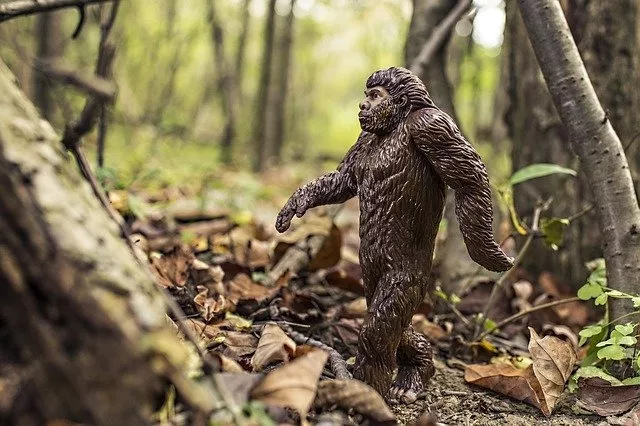
The Nonexistence of Hominids
Those who support evolutionary theory frequently use hominids as an example to validate the theory of evolution. Today, when hearing "prehistoric era," many envision a group of hairy individuals clad in animal skins, the men wielding spears while women tend to children near a cave—depicting a very primitive society.
This stereotype permeates almost all biology textbooks and history museums, many of which even display wax representations of this scene. But does this truly reflect human history? As explored in the previous section, there is substantial evidence contradicting this long-held notion, and it is also relatively unknown that the evidence claiming humans evolved from ape-like creatures is quite tenuous.
Despite over a century of archaeological exploration, if humans indeed evolved from apes, there should be characteristic evidence of each transitional stage from apes to modern humans, including fossils and related cultural artifacts from each phase. While ape and human fossils have been found, none represent the intermediate stages of evolution. In the absence of such evidence, the hypothesis that humans evolved from apes can be likened to a house of cards.
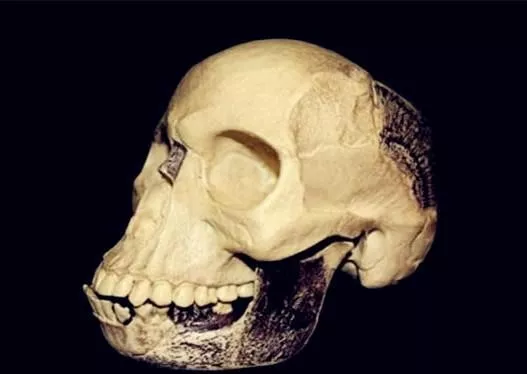
The Piltdown Man Skull Fossil
Piltdown Man
The "Piltdown Man," once heralded in evolutionary textbooks as a human ancestor fossil, was actually an elaborate hoax by a group of archaeologists.
Sir Arthur Keith described the Piltdown Man as having a skull similar to humans, while the jawbone was almost ape-like. He claimed it represented a transitional form between humans and apes—essentially a half-human, half-ape hominid.
The scientific community quickly accepted the Piltdown Man, with few scholars challenging it as merely a combination of a human skull and an ape jawbone. These dissenting voices were largely ignored as mainstream science embraced this supposed evidence of hominids, with notable support from figures like Professor William H. Howell of Harvard University.
However, forty years later, K. P. Oakley conducted an analysis using fluorine dating on the Piltdown Man fossils stored at the British Museum and discovered a huge inconsistency in the fluorine content between the skull and jawbone. The skull's low fluorine content suggested it was only a few thousand years old rather than the purported five hundred thousand years.
Experts then re-examined the fossils, uncovering the following signs of fabrication:
- The skull had been treated with iron-based chemicals to artificially age its appearance.
- The teeth had been filed down.
- The jawbone was from an ape whereas the upper jaw was human; they were combined and altered to appear as a hominid.
In 1953, J. S. Weiner, K. P. Oakley, and other British scientists published findings that declared the "Piltdown Man" a scientific fraud.
Lucy
"Lucy," discovered by Donald Johanson in the East African Rift, was once thought to be a common ancestor of humans and apes. However, more recent studies classify it as an extinct ape of the species Australopithecus afarensis.
Nebraska Man
In 1922, biologist H. F. Osborn announced the discovery of a tooth that displayed traits of both an orangutan and a hominid, dubbing the owner "Nebraska Man." Evolution proponents then constructed a speculative image of this hominid based solely on this single tooth.
However, by 1927, further research identified the tooth as belonging to an extinct species of wild pig native to America, not a human or hominid.
Java Man
Ample evidence suggests that reports surrounding hominids are often more speculative and deceptive than factual. The Java Man incident serves as another testament to this:
Java Man was classified as a hominid based on a leg bone, three teeth, and a part of a skull. The leg bone was similar to a human's, while the skull looked more akin to an ape's. Notably, these fossils were uncovered 14 meters apart within the same rock layer, along with actual human skulls that were concealed for many years. The fossils' discoverer, Dr. Eugene Dubois, later claimed in his old age that these remains were not those of a hominid but resembled those of a large gibbon more closely. Yet, his revelations were dismissed by evolutionists, allowing Java Man, founded on scanty evidence, to remain in textbooks as a legitimate creature.
In summary, the assertion that humans evolved from apes is weak and fraught with inconsistencies. Moreover, similar "missing links" impede archaeological evidence for other species as well. Let us delve further.
The Problems Raised by the Cambrian Explosion
One of the most significant challenges in the study of fossils today is the absence of transitional processes in biological evolution; life often seems to appear suddenly. Among fossils spanning 3.8 billion years, the "Cambrian Explosion" or "Cambrian Big Bang" is exceptionally puzzling, marked by the abrupt appearance of most animal phyla during the Cambrian period.
On May 25, 1995, the overseas edition of China's People's Daily reported a study by Niu Weigong on the "Chengjiang Fossil Biota," noting that the "Cambrian Explosion" was an unparalleled sudden event in life evolution history, with potential implications that could challenge traditional evolutionary theories. On July 19, 1995, the People's Daily published a further report by Ding Bangjie, emphasizing the discrepancy between Darwin's evolutionary concept of gradual species mutations and the rapid diversification of species approximately 530 million years ago during the early Cambrian period.
The archaeological discoveries of the "Chengjiang Fossil Biota" have garnered global media attention, shaking both archaeological and biological fields. Dating to the early Cambrian period (approximately 555 million years ago), these findings, along with middle Cambrian shale in Canada (about 530 million years ago), provide substantial geological data on life's explosive development. During the Cambrian period (around 570 to 500 million years ago), almost every known animal phylum appeared. Prior to the Cambrian, multicellular fossil records were scarce, and among the Ediacaran biota fossils from the Neoproterozoic era (1 billion to 570 million years ago), none can be definitively linked to known animal phyla ancestry. In essence, most animal phyla emerged suddenly during the Cambrian, contradicting Darwin's evolutionary theory, which predicts a prolonged evolutionary trajectory before multicellular animals should have appeared in the Cambrian. To this day, no evidence of such transitional processes has been found. Is this due to incomplete fossil records? Fossils occur randomly—why would transitional records specifically be absent?
Phillip Johnson, a law professor at the University of California, Berkeley, is recognized as one of the most prominent critics of evolutionary theory. A former assistant to U.S. Supreme Court Justice Warren, Johnson excels in analyzing language and logic in debate contexts. When he first reviewed literature on evolutionary theory, he spotted many arguments laden with logical flaws and evasive reasoning. In his book "Darwin on Trial," he persistently questions, "How can we verify the truth of 'evolutionary theory'? Where is the concrete evidence?" He concludes in his book: "The fossil record reveals organisms appearing abruptly without evidence of gradual evolution... Once these organisms appear, they essentially remain unchanged for millions of years, regardless of how the climate and environment evolve. If Darwin's theory were accurate, these conditions should have prompted significant species changes."
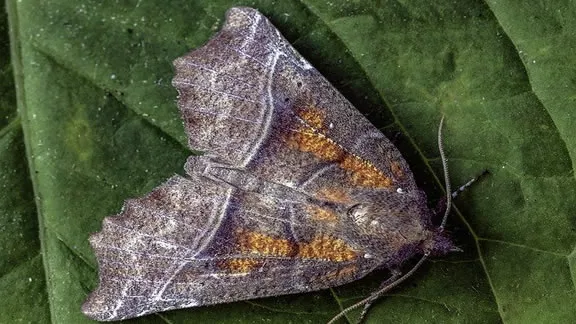
Evolutionary Examples in Textbooks Under Scrutiny—The Peppered Moth and the Black Moth
The "peppered moth and black moth" case is another example frequently presented in biology textbooks to reinforce evolutionary theory. These books often feature comparative images showing a peppered moth on gray lichen and a black moth on a dark tree trunk, explaining that this species, found mainly in the UK and US, conceals itself on tree trunks during the day, making the gray pattern a beneficial camouflage. Due to industrial pollution darkening tree trunks and destroying lichen, gray moths became more visible and were preyed upon by birds, while the black moths thrived. Following air quality legislation, gray lichen re-emerged, granting camouflaged protection back to the peppered moths, while black moths dwindled. Thus, this bird predation supposedly exemplifies natural selection.
The rapid color transition over decades has become a cornerstone argument for proponents of evolutionary theory; successive generations of biologists have held this example in high regard. However, as previously noted with the Piltdown Man, recent scientists have found flaws in this moth experiment. The famous image was staged; the moths were not in their natural state but affixed to tree trunks for photography.
Dr. T. D. Sargent from the University of Massachusetts posits that the experiment introduced artificial conditions, with the birds quickly exploiting the non-natural food source. In reality, these moths rarely rest on tree trunks, instead preferring to conceal themselves within the foliage.
Dr. J. A. Coyne, of the University of Chicago, commented in 1998 on the book "Melanism: Evolution in Action," expressing: "Upon realizing the moths were purposely arranged, I felt a disappointment akin to discovering as a child that my Christmas gifts were from my father, not Santa Claus."
Dr. Jonathan Wells, a biologist and religious scholar at the Discovery Institute in Seattle, argues that the peppered moth and black moth example should be omitted from textbooks. He contends that evolutionary biologists have overstated these evolutionary cases, with textbooks minimizing the complexity involved. While it's uncertain if the famed moth image was an intentional deception, it has certainly misled audiences.
In the UK and the US, the shift from black to gray moths aligned with public realization of industrial and air pollution severity, while the resurgence of gray moths came after air quality laws. However, in other regions, gray moths replaced the black variants even before lichen grew back, indicating that gray lichen's protective role might be overstated.
This prompts further inquiry:
- Do birds solely rely on color to identify and capture moths?
- Can biologists fully grasp the moths' natural behaviors?
- While air quality laws have mitigated industrial smoke, is it the sole air purification indicator?
- Pollution, including water contamination, remains serious, raising questions about its influence on moth populations or possible genetic mutations.
- If bird predation and air pollution are primary influences on evolution, why haven't similar patterns been consistently observed in other polluted areas?
Three classic pieces of evidence supporting evolution are now widely challenged: comparative anatomy is criticized for logical issues; the law of embryonic recapitulation is deemed observationally mistaken; and new fossil finds disrupt the evolutionary timeline. Even the revered example of the peppered moth and black moth, celebrated by modern evolutionary theory, now faces skepticism.
Looking ahead, future generations may ponder how a hypothesis with such evident flaws ever gained widespread acceptance.