Rethinking Evolution: Unveiling the Significant Genetic Differences Between Humans and Chimpanzees
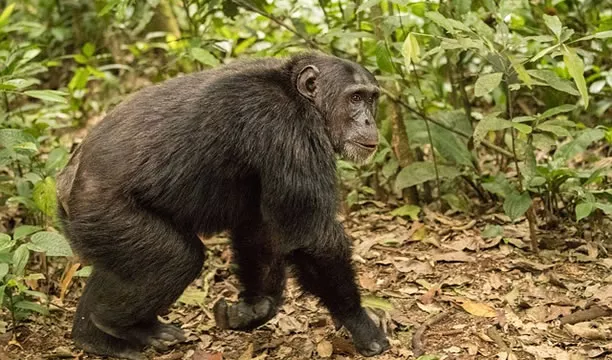
Are humans similar to chimpanzees? Research in molecular biology suggests that the genetic differences between the two are too substantial to support the notion that humans evolved from chimpanzees. Scholars reveal that studies by evolutionists on the genetic similarity between humans and chimpanzees hide astounding truths.
Dr. Thomas Seiler, a physicist from the Technical University of Munich, disclosed during a speech at World Youth Day in 2016 that evolutionists have not found evidence for evolution through molecular biology. Instead, they've discovered instances that challenge the evolutionary hypothesis.
Dr. Seiler stated, “Most of us have heard that the genetic similarity between chimpanzees and humans is 99%. However, what they don’t tell us is that this result isn't from comparing all DNA, but rather based on only 3% of DNA. The functions of 97% of the DNA genetic code remain unknown to us.”
Large Genetic Differences Between Humans and Chimpanzees
Dr. Seiler highlighted that according to a report published in the respected journal Nature in 2010, an analysis of the chromosomal differences between chimpanzees and humans shows that the Y chromosome, which determines biological sex, is only 40% similar, with the remaining 60% differing. How can evolutionists claim that humans evolved from these animals given such significant differences?
While Darwinists often assert that human DNA is very similar to that of chimpanzees, with only a 1% difference, this statement is somewhat misleading. The claim of a 1% DNA difference dates back to 1975, when researchers used a selectively screened segment of chimpanzee DNA to compare with human DNA to estimate similarity.
Dr. Jeffrey Tomkins, former director of the Bioinformatics Department at the Clemson University Genomics Institute, and Dr. Jerry Bergman noted in 2012, after analyzing research literature, that “the similarity between the human and chimpanzee genomes does not exceed 87% and may even be as low as 81%.”
In essence, the genetic differences between humans and chimpanzees are substantial, likely exceeding 19%, and could be as high as 30%. Notably, the differences in the Y chromosome between human males and male chimpanzees are significant, entirely contrary to what evolutionists anticipate.
Significant Genetic Differences
According to David DeWitt, a biologist at Liberty University, the differences between humans and chimpanzees are too great. Chromosome count, as well as their structure and characteristics, vary; for example, humans have 23 pairs (46 chromosomes), with telomere DNA lengths of 10K base pairs, while chimpanzees have 24 pairs (48 chromosomes) with telomere DNA lengths of 23K base pairs.
Furthermore, the differences in the 4th, 9th, and 12th pairs of chromosomes are so notable that evolutionists believe “genetic material has been remodeled.” This “remodeling” indicates a process distinct from the gradual changes described by evolutionists, suggesting a non-evolutionary process. Particularly concerning the Y chromosome, which determines sex, the genetic material is markedly different.
DeWitt added that these differences are often omitted from evolutionary discussions in their research papers and are not addressed in genetic studies.
The Background of the 1% Claim
DeWitt explained that this so-called percentage of similarity obscures the fact that there is a vast amount of DNA that is different; 1% represents a difference of 3 million DNA base pairs. This encompasses various molecular biological information tied to genetics, masked by a simplistic similarity term.
It is surprising that even after decades of research disproving it, this rough hypothetical result from 1975 is still cited in the authoritative academic journal Science in 2012.
Svante Pääbo, a geneticist at the Max Planck Institute for Evolutionary Anthropology in Germany, once stated, “How we view the differences between humans and chimpanzees is a question involving politics, society, and culture.”
The deeper issues surrounding these biological studies have transcended academic boundaries. Reports analyze that “Perhaps the reason evolutionists cling to the myth of 1% is due to political, social, and cultural reasons. DNA comparisons reveal that humans and chimpanzees are vastly different at the DNA level. What is the purpose of evolutionists denying the clear conclusions reflected in the comparison results?”