The Insect Origins That Evolutionists Tend to Avoid Discussing
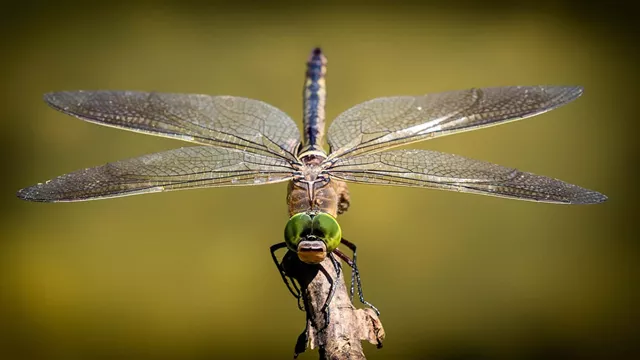
American biologist Jerry Bergman suggests that the diversity of insects found worldwide challenges the validity of evolutionary theory.
The Marvel of Insect Wings
Insect wings exhibit an extremely intricate and delicate structure, with their "flight capabilities remaining an unsolved mystery." Despite being incredibly light and thin, these wings are extraordinarily strong and flexible, made primarily from a substance known as cutin.
The transparent wings of dragonflies demonstrate exceptional aerodynamic skills, allowing them to execute sudden stops and sharp turns that aerodynamics experts admire. Ladybugs feature retractable, folding elytra that display mechanical deformation capabilities beyond current human technology. Bees flap their wings over 400 times per second, a phenomenon that fascinates engineers as it exemplifies a flapping flight mechanism that remains beyond the reach of current human technology.
Closer examination of insect wings reveals a network of veins that contribute to their strength and formation. The robust muscle groups in the thorax provide the power necessary for flight, enabling some insects to flap their wings 200 times per second, such as flies, and others to reach up to 1000 times per second, like midges.
In contrast to bird wings, insect wings lack bones and feathers and instead consist of a minimal amount of muscle alongside a unique structure, making them distinct within the animal kingdom.
Evolutionists have often speculated about the origins of bird wings, suggesting that animal forelimbs transformed into wings for unclear reasons (it's worth noting that evolutionists find it challenging to specify these reasons). When it comes to the origins of insect wings, even evolutionists hesitate, as there is no clear organ that could have evolved into insect wings.
Additionally, fossil evidence shows that ancient insect wings were just as intricately complex as modern ones, with no indication of a gradual evolution over millions of years.
Bergman references University of Wisconsin biologist Sean Carroll, who stated: "Fossil evidence does not support Darwin's theory of gradual evolution. There are no intermediate forms of life among all species on Earth."
Complex Folding Wings
Among insects, only a few, such as dragonflies with their two pairs of thin wings, have fixed wings. Most insects have wings that can fold. Anatomically, these foldable wings involve a complex joint system that allows them to tuck against the body.
Folding wings can be regarded as possessing "the most complex joint morphology system." Insects have various types of folding wings, commonly classified as either longitudinal or transverse.
Fossil records indicate that folding wings have existed for millions of years, as evidenced by the coexisting fossils of folding-winged cockroaches and fixed-wing dragonflies from the same period.
Bergman states: "Evolutionists rarely bring up insects when discussing supposed evidence of evolution." In the animal kingdom, insects represent about 80% of species, with approximately 5 million different kinds. Nonetheless, evolutionists often avoid addressing the origins of insects that offer counter-evidence to evolution.