Uncovering Prehistoric Civilizations: Challenging Evolutionary Theory (Part II)
The Probability of Life Originating Naturally Is as Unlikely as "a Hurricane Assembling a Boeing 747"
Modern evolutionary theory proposes that the emergence of life is a natural process. It suggests that simple organic and inorganic materials can evolve into complex macromolecules under certain special conditions, which then combine and evolve into primitive life forms. After learning about this sequence of "idealized" processes, readers might begin to ponder the likelihood of such events occurring. British scientist Fred Hoyle famously remarked, "The chance of this happening is comparable to that of a hurricane sweeping through a junkyard and assembling a Boeing 747."
Can Hypotheses and Guesses Be Used as Proof?
Most people would answer: "Of course not." If a series of hypotheses (say, five) are used as proof, and each has a 70% likelihood, the overall credibility (the product of the five 70%s) drops to just 16.8%. From the previous analysis, we understand that the molecular evolution mechanism according to evolutionary theory is based on a series of hypotheses, which already reduces the probability to a level which the universe cannot afford to wait for. The universe would have been destroyed countless times before a single species could evolve. In light of this, is evolutionary theory truly accurate? Shouldn't we scrutinize the scientific rigor of this perspective?
The Challenges of Evolutionary Theory—Questions About the Evolutionary Timeline
According to evolutionary theory, humans evolved from the most primitive aquatic plants, gradually transitioning to aquatic animals, then moving onto land, evolving from amphibians to reptiles, then to mammals, and ultimately into monkeys before descending to the ground to become humans—a journey that spanned hundreds of millions of years. Biologists have mapped an evolutionary timeline based on this progression from simple to complex life forms and from lower to higher organisms. For example, evolutionary theory suggests that the simplest single-celled organisms and basic creatures like sponges appeared on Earth between 570 million and 500 million years ago. The following chart presents the timeline of biological emergence as believed by evolutionary theory, along with many lesser-known archaeological discoveries mentioned in this book.

In reality, numerous archaeological findings directly conflict with the claims of evolutionary proponents. For instance, evidence of ancient humans from different times has been discovered worldwide, including human footprints from tens of thousands to hundreds of millions of years ago, which challenge the evolutionary timeline. Below are some verified discoveries.
Human Footprints from 540 Million to 250 Million Years Ago
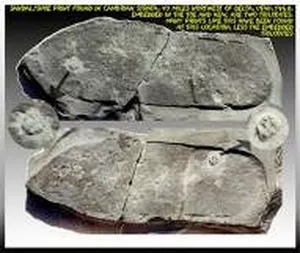
Amateur fossil expert William J. Meister discovered adult shoe prints on a trilobite in Cambrian sedimentary rock in Antelope Springs, Utah. These prints were confirmed as human by renowned chemist Melvin A. Cook from the University of Utah.
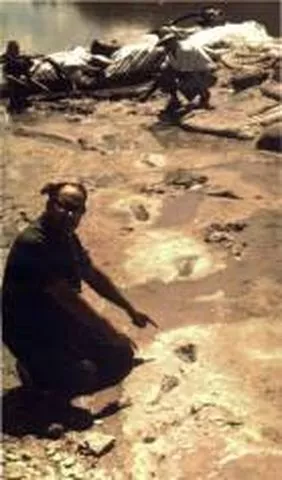
Beginning in 1969, Stan Taylor conducted excavations at the Paluxy River, where, after removing several tons of limestone, he uncovered human-like footprints within the Cretaceous strata (image provided by Dr. Don Patton).
Human Footprints from 270 Million Years Ago
In 1817, archaeologists Henry R. Schoolcraft and Thomas H. Benton discovered two human footprints, approximately 10.5 inches (27 cm) long, on a limestone slab near the west bank of the Mississippi River in the United States. The toes were widely spaced, and the soles were flat, resembling the footprints of individuals used to walking barefoot. The impressions were distinctly natural and appeared to have been made while the rock was still soft. This limestone slab has been dated to be 270 million years old.
Human Footprints from 235 Million Years Ago
According to a November 6, 1997, report in the China Geological and Mineral Report, four human footprints were found on Triassic rocks in Fuyuan County, Yunnan, China. These rocks are dated to be 235 million years old.
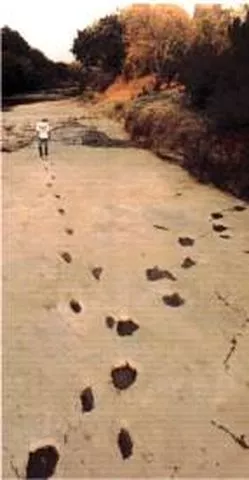
During the 1999 drought season, clear footprints of humans and three-toed dinosaurs were photographed walking together on a riverbed. The footprints leading up to the standing position belonged to humans, while those to the right were from a three-toed dinosaur (image provided by Dr. Don Patton).
Human Footprints, Finger Fossils, and a Hammer from the Cretaceous Period (145 Million to 65 Million Years Ago)
In the Paluxy Riverbed in Glen Rose, Texas, dinosaur footprints from the Cretaceous period were discovered. Additionally, archaeologists were surprised to find 12 human footprints fossilized just 18.5 inches away from the dinosaur footprints, with one human footprint even overlapping a three-toed dinosaur's print. Cutting the fossil in half revealed compressed marks beneath the footprints that replicas cannot reproduce, providing clear evidence that they are genuine.

A man-made iron hammer was found in the Cretaceous strata of Texas (image provided by Dr. Don Patton).
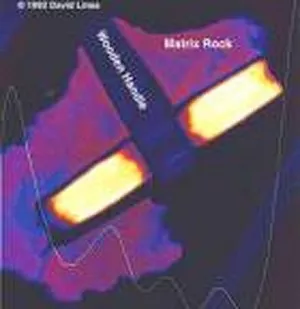
Analysis shows that the hammer is composed of exceptionally high and stable purity iron, far surpassing current iron smelting technology (image provided by Creation Evidence Museum).

The blackened part of the hammer's wooden handle has turned to coal, suggesting the hammer was present when the rock layers solidified (image provided by Creation Evidence Museum).
Additionally, human finger fossils and a man-made iron hammer were discovered in the same rock layer nearby, with a piece of a wooden handle still firmly attached to the hammer head. The hammer's head consists of 96.6% iron, 0.74% sulfur, and 2.6% chlorine—a highly unusual alloy with superior quality, and it is currently impossible to create such a metal compound of chlorine and iron. The remaining piece of the handle has fossilized into coal. For this transformation to occur quickly, the entire layer must have undergone significant pressure and heat. If the hammer had simply fallen into a crack in the rock, the pressure and temperature wouldn't have been enough to cause such coalification. This indicates the hammer was present as the rock layer hardened and solidified. The layer containing man-made tools aligns with the layer containing dinosaur footprints, while other layers contain neither dinosaur footprints nor man-made tools, implying humans and dinosaurs coexisted during the same era.
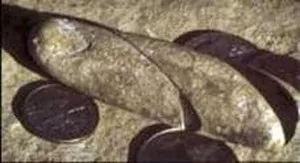
Human finger fossils were discovered in ancient rock layers (image provided by Dr. Don Patton).
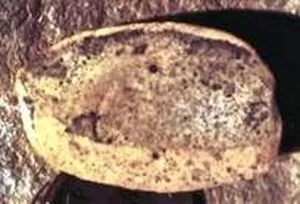
After slicing the finger fossil, it was observed that it exhibits the porous structure typical of human bones (image provided by Dr. Don Patton).

Dr. Dale Peterson uses computer scanning to observe the joints and other tissues of the finger fossil (image provided by Dr. Don Patton).
Human Humerus Fossil from Four Million Years Ago
In 1965, archaeologists Bryan Patterson and W.W. Howells unearthed a humerus fossil identified as being four million years old in Kanapoi, Kenya. Professors Henry M. McHenry and Robert S. Corruccini from the University of California stated this humerus is nearly indistinguishable from that of modern humans.
Human Footprints from 3.4 Million to 3.8 Million Years Ago
In 1976, a research team led by renowned archaeologist Mary D. Leakey discovered a set of footprints in Laetoli, northern Tanzania, along the eastern line of the East African Rift. These footprints, resembling modern human characteristics, were imprinted in volcanic ash sedimentary rock and radiometrically dated to be between 3.4 million and 3.8 million years old. Arranged in two parallel lines extending approximately 27 meters, the anatomical features of the soft tissues differ clearly from those of apes. Weight transfers from the heel through the outer arch of the foot, to the ball of the big toe, and finally to the big toe, which is extended forward. In contrast, when orangutans and Australopithecus walk upright, the weight shifts from the heel through the outer side of the foot to the middle toe, with the big toe extending sideways.
Human Femur Fossil from Two Million Years Ago
In 1972, a femur fossil discovered at Lake Turkana, Kenya, closely resembles modern human morphology and is estimated to be two million years old.
Human Skeleton from One Million Years Ago
In 1913, German scientist Hans Reck discovered a complete modern human skeleton in the Olduvai Gorge, Tanzania, within a layer approximately one million years old.
Human Pelvis and Femur Fossils from 300,000 Years Ago
According to a May 27, 1999 report in the Chinese Science Times, Spanish paleontologists found prehistoric human pelvis fossils, femurs, and some stone tools in the Atapuerca Mountains in northern Burgos, Spain, dating back 300,000 years.
135 Human Skeletons from 26,000 Years Ago
On May 29, 1998, the American scientific journal Science reported the excavation of 135 human skeletons and prehistoric artifacts, including hearths, near Lake Mungo and Lake Willandra in New South Wales, Australia, dated 26,000 years ago. Additionally, a complete male skeleton dated to 30,000 years was unearthed at Mungo III, covered in ochre dye, with arms folded across the chest, indicating a burial ritual.
(Continued)
Adapted from Insight Culture Publishing's "Unveiling the Veil of Prehistoric Civilization."