Underwater Ruins of a Prehistoric Civilization Discovered in India from the Great Flood Era
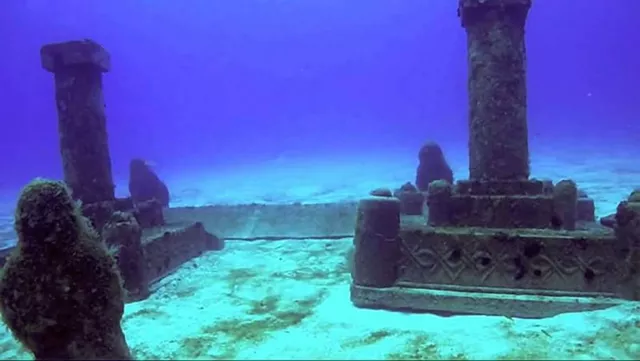
When discussing the oldest civilizations in the world, four major ones typically come to mind. Traditionally, the Mesopotamian civilization, which flourished around present-day Iraq and was established by the Sumerians around 3000 BC, is considered one of the earliest. However, a pivotal discovery in 2002 challenged this historical understanding. In January of that year, the ruins of an ancient city estimated to be 9,500 years old were found on the seabed of the Gulf of Khambhat in western India.
Located 40 kilometers off the coast and 36 meters deep, Indian scientists uncovered two ancient city sites. These cities boasted grand walls and plazas, with handmade artifacts dating back 9,500 years, making them 5,000 years older than artifacts from other ancient cities. If these findings are accurate, they suggest that civilizations existed even before the traditionally acknowledged four major ones.
Should this be the case, it would radically alter our understanding of history, necessitating a revision of the timeline of human civilization. Scientists hypothesize that these submerged ancient cities could be remnants of a civilization lost at the end of the Ice Age, possibly one of the advanced prehistoric civilizations referenced in flood legends.
The seabed of the Gulf of Khambhat reveals traces of rivers, a critical component for the development of civilization. Evidence of human habitation, large bath-like structures, and fortifications have also been found along its banks. This points to a once-thriving community equipped with comprehensive living facilities.
Additionally, over 2,000 fossilized human bones, pottery, and construction tools have been retrieved from the site. Some pottery exhibits signs of use with fire. Radiocarbon dating of wood fragments confirmed they date back 9,500 years. Marks on the wood indicate manual separation, and the dating corresponds with this period.
But why did this civilization end up submerged? Some suggest it was due to rising sea levels from melting ice and snow, while others speculate a major earthquake caused tectonic shifts. Yet, no definitive conclusions have been reached.
Ocean expert Nasu Noriyuki offered an intriguing theory: after the civilization sank in the Gulf of Khambhat, its people may have migrated to Gujarat or other regions. Consequently, this highly developed civilization could have continued to evolve in these new areas, potentially forming the foundation of Indian civilization.
Regarding the true nature of this ancient underwater site in India, more research and exploration are necessary. However, scientific studies reveal that the ancient Indian coastline has historically experienced flooding. Long before the great flood, the region was once vast land; now, the current coastline has receded inward by 50 kilometers. Could there be one or more ancient civilizations hidden beneath this 50-kilometer stretch of water? Perhaps the real answers lie in the deeper ocean, further from the coast.