Biological Research Challenges Aspects of Evolution Theory
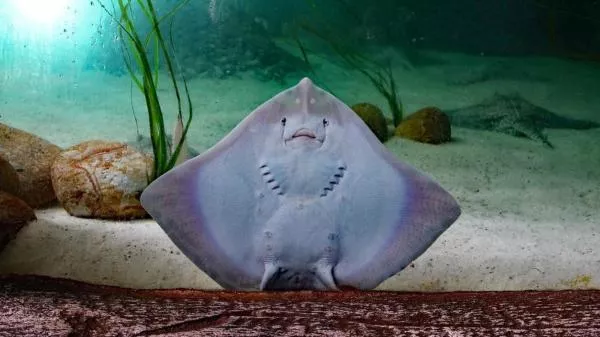
Recent biological research challenges the theory of evolution, suggesting that the stability of species has remained unchanged over billions of years, contrary to the ideas of natural variation and natural selection.
Biologists have discovered a type of fish that inhabits the ocean floor and is capable of walking, yet this fish has never ventured onto land. The study identifies this fish as a skate (Leucoraja erinacea), which uses two fins at the back of its body for locomotion. Additionally, the skate's brain system has motor control capabilities similar to those of land animals.
Scientists have documented the skate's walking behavior using underwater cameras. They note that despite living on the ocean floor for 400 million years, the skate has never utilized its walking ability to transition onto land.
Researchers emphasize that this fish does not utilize any so-called "evolutionary advantage" to live on land. In other words, the walking capability of this fish has minimal connection to terrestrial animals. Consequently, this finding does not support the hypothesis that fish evolved into land animals. Instead, it further demonstrates the long-term stability of species, contrary to the evolutionary concept of rapid change.
In fact, numerous studies have affirmed that species remain unchanged for billions of years, presenting no evidence of natural selection as posited by evolution. The coelacanth, previously thought to be an ancestor of land animals by evolutionists, has remained unchanged for 350 million years.
In August 2017, scientists from Oregon State University and other institutions reported the discovery of 100-million-year-old amber in Myanmar containing seven ancient flowers preserved in vivid detail. Researchers noted that these flowers possess purple petals, nectar discs, ovaries, elongated flower stalks, and stamens—features identical to those of modern flowers.
Evolutionists often seek evidence to support their theories but frequently encounter contrary findings, such as the lack of so-called transitional species between evolutionary stages. Recent experiments on zebra stripes have particularly puzzled biologists; instead of supporting evolutionary theories, these findings challenge their accuracy.
In January 2016, a study published in the journal PLOS ONE revealed, through optical measurements and comparative experiments, that zebra stripes do not serve as a pattern evolved to deter predators, as suggested by evolutionists. Zebra stripes are highly conspicuous and readily detected by lions and hyenas, whether during the day, at dusk, or on moonless nights, thus failing to fulfill any so-called "evolutionary protective" role.
The origins of life and the mechanisms of species change remain scientific enigmas that elude explanation by the dogmatic assertion of evolutionists that "evolution is a fact."
Image source: Vision Times ( original article )