Evidence of Giants: The Forgotten City of Giants
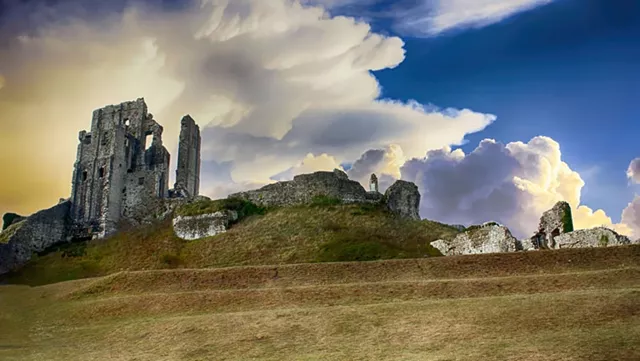
The discovery of giant ruins is one of the most remarkable archaeological achievements in recent years, yet mainstream scholars have deemed it unimportant and unworthy of further research.
Many believe that the uncovering of the "Lost City of Giants" in Ecuador is among the most significant archaeological finds of the 21st century. Despite its importance, this astonishing discovery has been largely overlooked by mainstream scholars in various archaeological studies.
Ancient legends in Ecuador tell of a time when giants roamed the Earth, building magnificent cities from enormous stones. These cities eventually became engulfed by nature over thousands of years.
Before the ancient stone city was found, numerous local legends spoke of incredible giant beings who once inhabited the outskirts of Ecuador, crafting monumental stone structures. This ancient city is just one example of those relics.
A group of explorers teamed up with locals familiar with the area to uncover the lost city of giants, exploring the ruins of this once-great settlement.
Indigenous leaders guided the expedition to a sacred site where local tribes once celebrated the powerful spirits of the giants believed to still reside within the stone ruins, according to legend.
Reports indicate that when the research team reached the lost city of giants, they found a series of stone structures, including an irregularly shaped pyramid measuring 260 feet in height and width.
It is believed that this massive pyramid-like structure was constructed using large round stones, each weighing over 2 tons. At the top of the pyramid is a flat, polished stone, thought to have been used for rituals and sacrifices. French-American archaeologist Benoit Duverneuil noted its resemblance to a paved wall, with streets or plazas at a 60-degree angle, possibly representing the structure's apex. Many stones are perfectly aligned with distinct edges, suggesting they were sculpted by human hands.
The research team found that the pyramid, despite being covered by a thick, impenetrable layer holding the stones together, is noticeably blanketed in moss.
While the buildings are impressive, archaeologists argue that the most significant discovery lies in the enormous and unusual tools left behind, which have become part of the natural landscape over time. Tools of such size would be impractical for ordinary humans.
Bruce Fenton, a writer and researcher from the team that identified the giant city, claims this is definitive evidence that giants once inhabited the Earth, constructing incredible cities and structures. The existence of large hammers or stone mallets supports the notion that this settlement was home to a race of giants.
If these tools had wooden handles, they would have been oversized and impractical for standard Incas and local Indigenous peoples, as these giants were reportedly much taller.
Mainstream scholars remain skeptical, asserting that the city does not exist. Interestingly, when numerous ancient sites were discovered in 2013, representatives from the Ecuadorian Ministry of Culture investigated the lost city of giants, yet mainstream scholars concluded that the pyramid-shaped structure was merely a natural formation.
Nevertheless, Fenton and his team argue that the arrangement of the large round stones and their intricate combinations clearly indicate that this site is not a natural formation but one of the most significant archaeological feats, demonstrating that giants once walked the Earth.