Did 250,000 Shang Dynasty Troops Suddenly Appear in Central America?
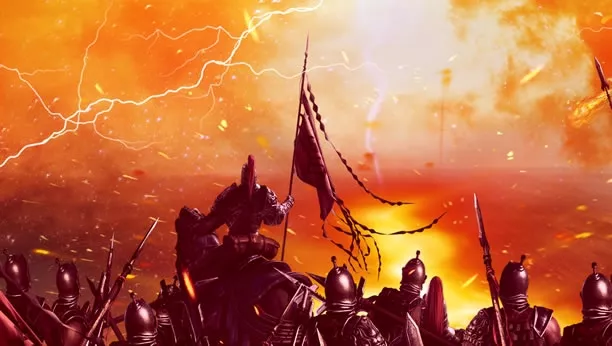
The final ruler of the Shang Dynasty in China was King Zhou. After he took his own life through self-immolation at Luta, King Wu of Zhou commanded Jiang Ziya, saying, "We need to recover King Zhou's remains and give him a dignified burial." Jiang Ziya accepted the order and instructed the soldiers to gather King Zhou's remains, preparing clothing and bedding for a royal funeral.
In ancient Chinese culture, there's a tradition that while a nation can rise and fall, its lineage should continue. With this in mind, King Wu of Zhou maintained the sacrificial rites of the Yin people and allowed King Zhou's son, Wu Geng, to inherit the Shang throne, governing part of the former Yin territory (in present-day Anyang, Henan). Additionally, he appointed Guan Shu, Cai Shu, and Huo Shu to protect the vicinity of the Shang capital as regents.
During the pre-Qin period, people of the Zhou Dynasty referred to the lower Yellow River region as "Eastern Yi," where the Yin and Shang also lived. Using the term "Yi" wasn't meant as an insult; in ancient times, the Eastern Yi and the Yan-Huang were seen as counterparts, both significant parts of what would later become the Han people, especially in the north. During the Three Kingdoms period, Wei Zhao noted in his commentary on "Guo Yu" that "Xianbei is an Eastern Yi nation." However, this is not directly related to the "Eastern Yi" term used in historical records after the Qin and Han dynasties. After the Qin Dynasty, "Eastern Yi" became a general term for the peoples beyond the East.
Once King Cheng of Zhou ascended the throne, Wu Geng capitalized on the fledgling stability of the Zhou Dynasty and King Cheng's youth to initiate a rebellion with the vassal states of Cai, Guan, and Huo. King Cheng's uncle, the Duke of Zhou, led an army eastward and spent three years suppressing the rebellion. To prevent future uprisings from the Yin and Shang remnants, King Cheng entrusted Jiang Ziya with the state of Qi and appointed the Duke of Zhou's eldest son, Ji Boqin, to the state of Lu, using these states to guard against the Eastern Yi. To ensure long-term stability, the Duke of Zhou established laws, created rituals and music, and regulated the people's moral conduct. Influenced by Zhou's ritual governance and the education from Qi and Lu, the power of the Eastern Yi gradually waned, prompting them to either flee, perish, or integrate into the Zhou Dynasty.
Did the Lost Shang Army Resurface in Central America?
With the collapse of the Shang Dynasty, the capable and seasoned commander of the Shang army, You Houxi, led a main force of 100,000 troops, along with 150,000 from tribes such as Linfang, Renfang, and Hufang, who mysteriously vanished during this historical transition. The fate of these 250,000 Shang soldiers and civilians remains a historical enigma.
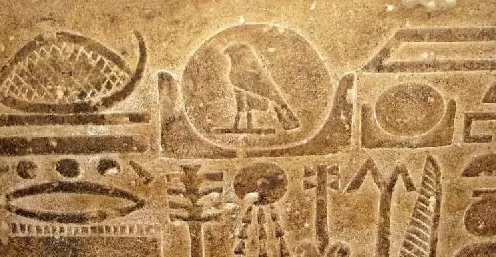
Three thousand years later, archaeological discoveries unveiled a compelling fact: at the same time the Shang remnants disappeared, a new civilization abruptly emerged in Central America's Yucatán Peninsula—the Olmec civilization. Even more remarkably, artifacts like jade discs and carvings unearthed in the region bore a significant amount of oracle bone script. Experts have confirmed that the inscriptions on these jade items are indeed names of Shang ancestors. The local legends, customs, and linguistic habits also strongly reflect Shang cultural influences.
As a result, scholars speculate that part of the Shang army's remnants, along with their leader, reached Central America, while another portion migrated from the Shandong Peninsula across the seas to northeastern Liaodong. There, they encountered another ancient and resilient group—the Sushen. The Eastern Yi Xianbei, having journeyed far, opted not to engage in conflicts with the Sushen and continued migrating northward. They eventually settled in the chilly, forested Greater Khingan Mountains and the lush grasslands of eastern Mongolia, gradually establishing the pre-Qin Xianbei habitat.
The Eastern Yi Xianbei, originally from China, are typical descendants of the Huaxia people. Throughout history's vast procession, they continuously migrated and adapted, and due to environmental pressures, their appearance, customs, and survival practices underwent substantial changes. Nevertheless, their lineage remains rooted in Huaxia ancestry.
Ancient China, often called "Shenzhou," boasts a history rich with myths and miracles. However, as the ancestors of the Central Plains departed the heartland, they gradually lost the divine cultural influences and transformations they once knew. Faced with harsh and limited external conditions, nomadism became the primary survival strategy for the Eastern Yi Xianbei, cultivating unique lifestyles and dietary practices.
Genetics Unveils the Link Between Mongolians and the Shang Dynasty
The various factions of the Shang Dynasty that migrated to the Mongolian Plateau eventually coalesced. As history unfolded, their descendants emerged as groups like the Donghu, Xiongnu, Xianbei, and Rouran. Over more than a thousand years, including the Qin, Han, Three Kingdoms, Wei, Jin, Southern and Northern Dynasties, and Sui and Tang Dynasties, Mongolia rose and ultimately established the Yuan Dynasty in the Central Plains.
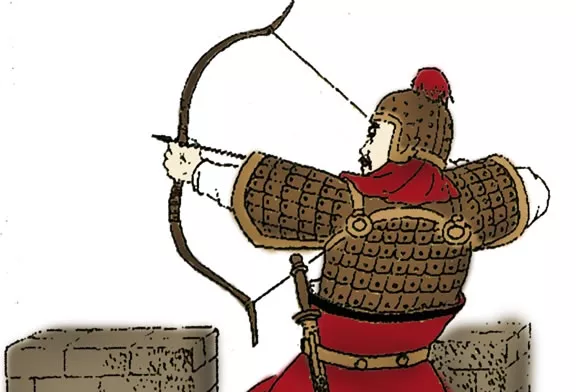
The Institute of History and Linguistics in Taipei researched the bones found at the Yin Ruins in Anyang, Henan. After years of study and analysis, they concluded that the human remains at Yin Ruins consist of three major racial components and five racial types, with the first type being the typical Mongoloid (Classical Mongolid). Modern genetic studies have confirmed the connection between Mongolians and the Shang Dynasty.
Genghis Khan and Kublai Khan, both of Mongolian descent, trace their lineage back to Huaxia; they are genuine Huaxia people, and Mongolians are purely Chinese. Yet over time, due to regional divides, concepts of Huayi (the distinction between Chinese and non-Chinese), and international border shifts, these peoples of Huaxia descent were categorized as foreigners. Consequently, Genghis Khan's nationality is regarded as Outer Mongolia, and Kublai Khan's Yuan Dynasty was viewed as a foreign invasion of the Central Plains.
Following the thread of history, the elusive 250,000-strong Shang army has emerged from the shadows of history into reality, sparking significant interest in academic research and carrying the mysteries of the past into the present.