Mysterious 'Script' Ruins May Date Back to the Ice Age, Ten Thousand Years Ago
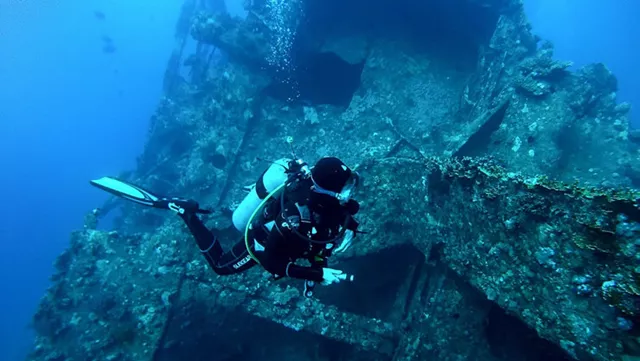
Throughout Earth's history, numerous civilizations have emerged, with many prehistoric cultures still being uncovered. In recent years, archaeologists have discovered two ancient underwater cities in the Gulf of Cambay, India, which are estimated to be over 10,000 years old. Additionally, some raised symbols found on stone slabs could potentially push back the timeline of the emergence of "writing" to the end of the Ice Age.
Underwater Ancient Cities of the Gulf of Cambay, India
Located 40 kilometers off the coast and 36 meters beneath the sea in the Gulf of Cambay, Indian scientists have uncovered the ruins of two ancient cities. Each city is comparable in size to Manhattan and features grand walls and plazas, along with handmade artifacts dating back 9,500 years—5,000 years earlier than artifacts from other ancient cities. Archaeologists estimate that these cities existed over 10,000 years ago and likely declined during the last Ice Age.
Within these ancient cities, archaeologists have found significant building remains and remnants of ancient ships. Scientists believe these findings will greatly enhance research into the history of these ancient cities.
Records of a Great Flood
The underwater ancient city of Dwarka was accidentally discovered by Indian marine geologists during seawater testing. Archaeologist Graham Hancock speculates that the ancient relics found in the Gulf of Cambay are linked to the legend of a great flood. According to Indian mythology, the kingdom of Dwarka, associated with the deity Krishna—one of the most revered gods in Hinduism—was submerged by a flood.
In honor of this revered king, his subjects constructed several Dwarka cities on the Gujarat Peninsula, rich in Eastern cultural elements, including temples over 3,000 years old. The ancient city of Dwarka may indeed be connected to the Indian flood legend.
In Hinduism, Manu is regarded as the "progenitor of humanity." Interestingly, Manu's story bears a striking resemblance to that of Noah in the Bible. When the flood approached, Manu built a large boat, loaded it with seeds, and drifted until landing on a mountaintop. His mission was to revive civilization after the great flood.
Scientists suggest that if these stories are not mere coincidences, the ancient civilization uncovered in the Gulf of Cambay might be linked to the Indus Valley Civilization. Around 21,000 years ago, much of India was land above the ocean, and after a long period of geological changes, the Gulf of Cambay was only fully submerged approximately 800 years ago.
Professor Badrinath, who led the exploration of Cambay Bay, informed Hancock that using side-scan sonar, they discovered these two large cities 36 meters underwater, both built along a river. One city is about 8 kilometers long, while the other spans about 9 kilometers. They are located where extensive landmasses vanished at the end of the Ice Age. Sample analyses revealed they belong to the period at the end of the Ice Age. Originally above land, these two ancient cities were submerged by a flood 7,000 to 8,000 years ago.
Human "Writing" May Have Emerged Earlier at the End of the Ice Age
"Before testing, we initially thought they might be early Harappan culture sites, but after thoroughly studying the artifacts found there, we now believe they are much older. Carbon dating tests revealed that one artifact dates back to 7500 BC, 4,500 years earlier than the oldest items from Mesopotamia and Egypt," Badrinath showed Hancock various recovered artifacts and tools.
Hancock noted that some of these artifacts resembled spoons, while others were intricately carved with deer images on both sides. Some artifacts were exceptionally thin, indicating advanced polishing techniques were used at the time.
Badrinath also presented Hancock with human jawbone and vertebra fossils, along with a stone slab featuring some raised "marks." Badrinath believes these could represent "writing" used by ancient people. "If true, this could push back the timeline for the emergence of writing to the end of the Ice Age." Experts are incredibly excited by this discovery!
Undoubtedly, these findings represent a significant discovery that could greatly impact the world and provide unexpected insights to modern humanity.