The Unknowable Secret: The Eternal Flame Burning for a Thousand Years
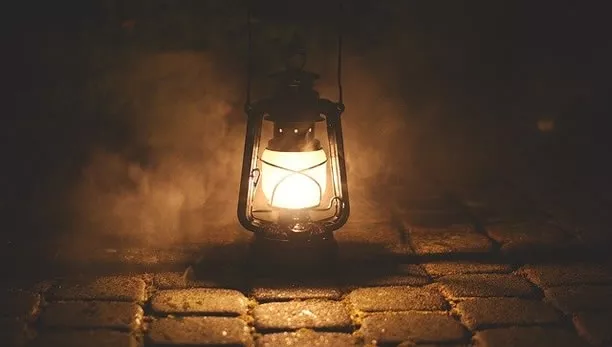
Image source: Pixabay
According to Greek mythology, Prometheus and Athena were responsible for creating humanity. During that era, Zeus prohibited humans from using fire. Moved by human suffering, Prometheus secretly delivered the eternal fire from the heavens to mankind. Throughout history, there have indeed been numerous accounts of eternal flames and ever-burning lamps, some reported to have burned for over a thousand years.
A Greek historian documented a perpetually burning lamp at the entrance of the Temple of the Sun in Egypt. Remarkably, this lamp needed no fuel and burned for centuries, unaffected by wind or rain. Similarly, the Roman theologian St. Augustine described a lamp in the Temple of Venus in Egypt that also resisted extinguishment by wind or rain.
In 527 AD, during the height of the Eastern Roman Empire's power, which spanned Europe, Asia, and Africa, Roman soldiers stationed in Syria discovered a lamp burning in a niche, safeguarded by a delicate casing. Inscriptions from that time indicate this lamp had been lit since 27 AD, suggesting it had been burning for 500 years! Unfortunately, it was destroyed by invading soldiers.
Eternal Lamps Discovered Worldwide
In 1400 AD, an eternal lamp was found in the tomb of Pallas, a son of a Roman king, purported to have been burning for over 2000 years. Not even wind or water could extinguish it; the only way to snuff it out involved removing a mysterious liquid from the lamp's bowl.
In 1534 AD, King Henry VIII's army stormed an English church, expelling monks and looting tombs. While excavating in York for the tomb of Emperor Constantine's father, soldiers found another burning lamp. Since Constantine's father died in 300 AD, this lamp had been burning for 1200 years!
In 1540 AD, Pope Paul III discovered a burning lamp in a tomb beside the Appian Way in Rome, thought to be that of Cicero's daughter, who died in 44 BC. Hence, this lamp had been burning for 1600 years in a sealed arched tomb. Interestingly, Cicero's daughter's body lay immersed in an unknown liquid, looking as if she had just passed away.
In China, records also mention eternal lamps. The "Records of the Grand Historian" notes that eternal lamps were placed in the tomb of Qin Shi Huang. However, since the tomb remains unexcavated, it is unknown if any lamp still burns there.
Archaeological records reveal that the phenomenon of eternal light has been discovered globally, in ancient civilizations such as India, China, Egypt, and Greece, as well as in Italy, England, Ireland, and France.
The Secrets Humanity May Never Know
Astonishingly, once humans discover these eternal lamps, they are often swiftly destroyed, sometimes by plunderers or during excavation.
In England, people entering ancient tombs sometimes triggered mechanisms that automatically destroyed the eternal lamps. In one instance, a person opened a tomb to find a lamp hanging from the arched ceiling, lighting the entire space. As they moved forward, a part of the floor trembled under their steps. Suddenly, a fixed statue, clad in armor, began to move, wielding a weapon to destroy the lamp. Thus, this precious artifact was lost.
In the mid-17th century in Grenoble, France, a Swiss soldier named Dupre discovered the entrance to an ancient tomb. Within, he found no gold or jewels but was amazed to see a glass lamp still burning in this isolated tomb.
Astonished, he presented this mysterious lamp to a monastery, where the monks preserved it like a treasure, as it had burned for at least a thousand years. Unfortunately, a few months later, an elderly monk accidentally dropped it, shattering the lamp. It seems that humanity may never fully unravel the secrets behind these eternal flames.
Modern Technology Cannot Create a Thousand-Year-Lasting Lamp
Post-Middle Ages, many scientists endeavored to craft lamps that could burn indefinitely by continuously supplying fuel, yet all failed. Even with today's technology, creating a lamp that burns for a thousand years remains a challenge.
Some bold theories propose that the liquid in these lamps, ostensibly the fuel, might actually be mercury used for conducting electricity, suggesting that these lamps could be electrically powered, hence impervious to wind and rain.
Legend suggests that ancient Hebrews secretly possessed what we now consider electrical technology. In the 13th century, a Frenchman named Jecheri had a lamp containing neither oil nor wick, often placed on his porch for all to see. When asked about its illumination, he would merely smile and keep it a secret.
Global records of eternal lamps lend credence to their existence. Scholars of the Middle Ages believed these lamps held some mysterious magical power. Yet humanity still cannot unlock the secrets of these eternal flames; perhaps only Prometheus, who brought them to humanity, can reveal their mystery.