Decimated in 17 Minutes: New Research Uncovers the True Cause of Death for Pompeii's Inhabitants
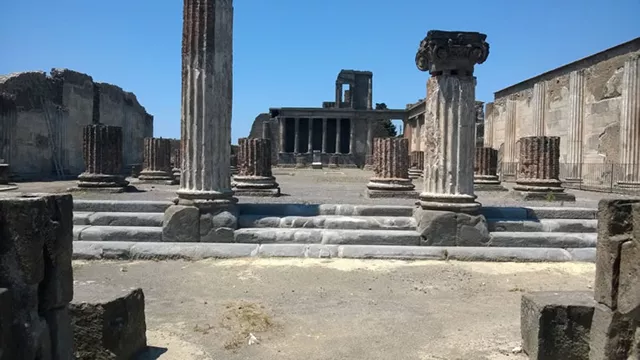
Pompeii, an ancient Roman city, was a flourishing and affluent hub, populated by the elite who luxuriated in opulence and excess. However, on August 24, 79 AD, Italy's Mount Vesuvius erupted without warning, burying the bustling city beneath volcanic ash overnight. This catastrophe endures as a poignant reminder for humanity. Recent studies indicate that Pompeii's residents succumbed to the intense, high-temperature volcanic ash in a mere 17 minutes, contrary to previous beliefs that they were "buried alive" by lava.
According to a study published on March 2 in the British scientific journal "Scientific Reports," the residents of Pompeii met their end within minutes due to the swift inundation of dense volcanic ash. Geologists explain that volcanic eruptions not only discharge lava but also spew significant amounts of rock debris, forming pyroclastic flows.
Pyroclastic flows consist of rapid, high-density, high-temperature streams of volcanic gases, ash, and rock, capable of traveling at speeds of hundreds of kilometers per hour. These fine volcanic ash particles can float in the air and potentially impact human health; at high concentrations, they can be lethal almost instantly.
Experts estimate that the pyroclastic flow that devastated Pompeii reached temperatures of 100°C (212°F) and descended on the city, located roughly ten kilometers from the volcano, within ten to twenty minutes of the eruption. The entire city was engulfed, and although a few residents died from falling debris, most succumbed to asphyxiation.
Research models indicate that after the eruption, Pompeii was enveloped in pyroclastic flows exceeding 100°C for 10 to 20 minutes, a duration sufficient to cause rapid fatalities.
Researchers indicate that while humans can endure temperatures of 200°C to 250°C for 2 to 5 minutes, inhalation of concentrated volcanic ash significantly reduces survival time. At that time, Pompeii was cloaked in volcanic smoke for an average of 17 minutes, during which residents were overcome by the fatal, high-temperature ash.
The 79 AD eruption of Vesuvius obliterated Pompeii, a city with a population exceeding 20,000, and inflicted severe damage on other well-known coastal cities such as Herculaneum and Stabiae. Excavations at the Pompeii site reveal that many individuals were captured in the midst of their daily activities at the moment of their deaths, adding an element of mystery to the disaster and suggesting these people died suddenly and unexpectedly.

What Led to the Fall of the Luxurious City?
Many argue that the fall of Pompeii, and subsequently the Roman Empire as a whole, was closely linked to the nation's embrace of hedonism. An old Chinese proverb states, "The root of all evil is lust," implying that the loss of rationality and moral restraint drove the people of Pompeii into moral decay.
Excavations in Pompeii have uncovered numerous indecent murals, with examples of group promiscuity and homosexuality being common. Despite having a population of only 20,000, Pompeii was home to 25 brothels, reflecting a society steeped in indulgence and vice.
Additionally, the wealthy in Pompeii engaged in alarming levels of excess. They served processed oysters as appetizers and prepared lobsters, sea urchins, and mice, which were fried in oil and served as side dishes. For dessert, they enjoyed a pickled, sweet-and-sour sea eel. Shockingly, after catching the eel, they would feed it the flesh of slaves for several days, believing that the flavor of the eel, having consumed human meat, was exceptional, using meat from freshly slaughtered slaves.
Pompeii's amphitheater is the oldest surviving Roman structure of its kind. Although the city's population, including slaves, was only 20,000, the amphitheater could accommodate 12,000 spectators—more than half of the city's residents—highlighting their intense enthusiasm for the bloody spectacles involving human and animal combat. The brutal, gory battles, the roars of the beasts, the screams of the slaves, and the horrific scenes of starving animals tearing apart gladiators provoked excitement rather than empathy among the people of Pompeii.
The British literary critic Tynan once remarked, "Pompeii is a city of gray-red." He observed that "the people of that time lived with their whole bodies."
On a silver goblet discovered in Pompeii, the inscription reads: "Enjoy life to the fullest; tomorrow is uncertain." This illustrates the extreme extent to which people were consumed by earthly pleasures at that time.
Historical events serve as a mirror. Through the ruins of ancient Pompeii, we see that unrestrained indulgence can lead to catastrophic and painful destruction. This reflects the concept of karmic retribution and the hidden suffering experienced after death, serving as a reminder that we, as humans, should strive to elevate our moral standards. When morality is neglected and deteriorates beyond a certain point, a heavy price is inevitably paid.