Is Disaster Looming? Japan's "Killing Stone," Said to Seal Monsters, Cracks Open
Near the volcanic crater of Nasu Yumoto Onsen in Tochigi Prefecture, Japan, lies a large rock known as the "Sessho-seki" or "Killing Stone," believed to imprison a demon within. On March 5th of this year, a visitor to the Killing Stone, a Japanese netizen, noticed that it had cracked into two pieces, with the sacred rope, or shimenawa, used for purification by priests, also broken. This discovery stirred discussions online, with people expressing concerns that the demon, trapped inside the stone for almost a thousand years, might be escaping.
Below are photos captured by a Japanese netizen named Lillian on the afternoon of March 5th, depicting the already fractured Killing Stone.
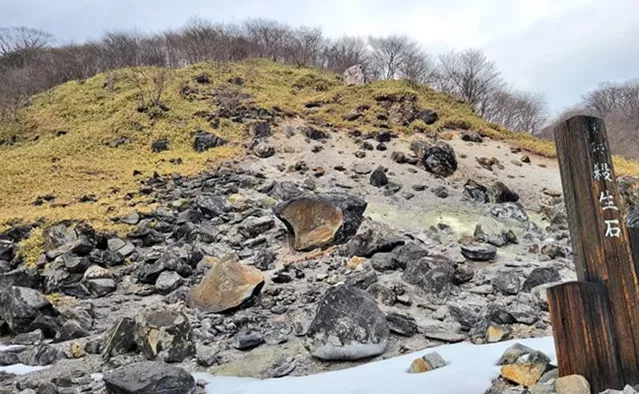
Another netizen pointed out that during their visit in December last year, the Killing Stone was still whole, with the shimenawa intact.
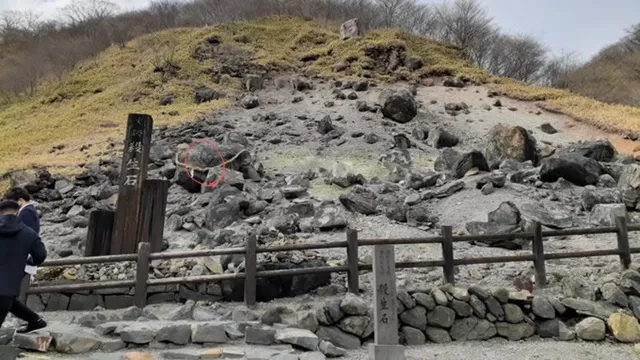
The fracturing of the "Killing Stone" (Sessho-seki) has captured significant attention in Japan. An article in the Asahi Shimbun recently questioned: "Is this a warning of disaster or a good omen?"
According to international media, Nick Kapur, a professor of Japanese history at Rutgers University in the United States, wrote an article about the "Killing Stone" earlier this month. He suggested that the heightened interest in the stone’s cracking might symbolize our current times.
"There is a pervasive sense of the end times, a feeling of apocalypse, amid the COVID pandemic and the war in Ukraine," Kapur said in an interview. "People are asking, 'Why is all this happening now?' So perhaps the stone cracking at this particular time has resonated deeply."
The legend of the "Killing Stone" dates back to Japan's Muromachi period (1336 to 1573). It tells of an onmyoji (a practitioner of Japanese esoteric cosmology) who pursued a nine-tailed fox demon that had disguised itself as a beautiful woman with plans to assassinate Emperor Toba. The onmyoji chased the demon to Nasu Mountain and sealed it within the Killing Stone. Some suggest that the cracking of the stone means the demon could pose a threat, while another version of the legend claims a Zen monk shattered the stone with his staff and convinced the demon to vow never to harm humans again.
The "Killing Stone" was declared a cultural heritage site by Tochigi Prefecture in 1957 and recognized as a national scenic spot in Japan in 2014. Experts explain that the stone's location at a volcanic crater produces toxic gases capable of killing living creatures, thus earning it the name "Killing Stone."
Masaki Akutsu, an official from the town of Nasu near Nikko National Park, told the Asahi Shimbun that the cracking of the Killing Stone has sparked many global concerns, including recent distressing events: the war in Ukraine, the ongoing pandemic, and a powerful underwater earthquake that struck on March 16 in the northern waters of the Fukushima region in Japan.