The Century-Old Ghost of Wall Street: Reality or Illusion?
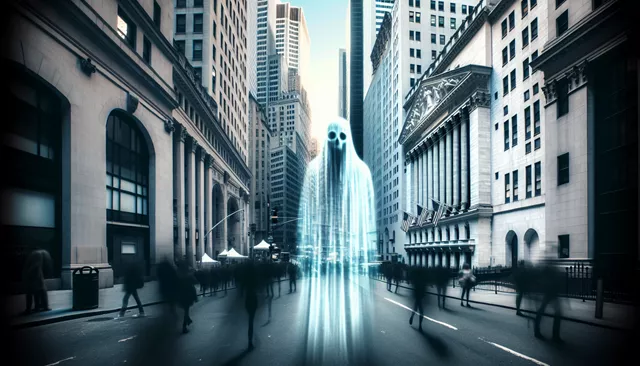
Wall Street, rich with historical significance, stands not only as a real hub of financial globalization but also as an enigmatic entity, a surreal emblem of global wealth and power. But is the century-old ghost of Wall Street a reality, or merely an illusion?
To answer that, let's delve into the origins of Wall Street. In the book "Wall Street: A Financial History, Regulation, and the People and Landscape," which Bernard Bell spent ten years completing, the evolution of Wall Street from 1685 to today is meticulously chronicled. It shows how a 12-acre parcel, purchased from a Belgian-Jewish man, gradually became the epicenter of global finance.
The term "Wall Street" originates from a wooden defensive wall built by the Marquis of Utrecht in Amsterdam to fend off enemies. This wall was constructed on the southern coast of what is now New York City to prevent British and Native American invasions, marking the starting point of the financial essence embedded in this land.
So, does Wall Street have a ghost? The answer depends on your interpretation of "ghost." If viewed as something tangible, then certainly not. However, as a symbol or a representation of spirit, the answer is more complex. In Wall Street's ethical code, rationality and self-interest reign supreme—this paradox is both their creed and their ghost.
In the annals of Wall Street, real apparitions have indeed appeared. The 1929 stock market crash stands out as a living reality. On the day the crisis erupted, Wall Street was engulfed in oppression, panic, and despair. People's cries, wails, shouts, and angry queries manifested as turbulent specters, resonating for days and becoming an everlasting memory for Wall Street. This ghost isn't just about fear; it is a harsh warning against human greed.
The financial crises of 1987 and 2008 struck like lightning, cutting through the mists of history, once again setting off that silent alarm. With each crisis, prophetic figures known as bear market investors emerge, warning the world of lurking demons beneath a seemingly prosperous economic system. Dubbed as economic soothsayers, they also symbolize a ghost of Wall Street, urging everyone in the financial sector to thoroughly reassess their beliefs, rationality, and potential folly.
Despite such warnings, Wall Street also radiates an irresistible allure. Its grandeur is a dream for every investor and financial planner seeking fortune. This spirit of resilience, tackling pressures head-on and weathering storms, resembles an undying ghost, gathering strength and unleashing potential in the face of adversity.
In essence, the ghost of Wall Street doesn’t genuinely exist; it’s merely symbolic—a mix of past memories, future hopes, and reflections on the present. These ghostly figures make Wall Street vibrant, full of conflict, turbulence, challenge, and hope. That's why thousands strive, contribute, and even sacrifice for Wall Street ideals, hoping to rise above the ghosts and find true fulfillment.
However, the ghosts of Wall Street can also bring heavy burdens and endless pressure, leading to self-doubt and continual struggle. Yet, as Hannah Arendt noted, "No enduring society can withstand the pressures of self-doubt and struggle." This fate is as much humanity's as it is Wall Street's.
The ghost of Wall Street is both our illusion and our reality. It is simultaneously repulsive and captivating; it stirs fear while igniting anticipation. Regardless, the ghost of Wall Street will persist alongside us, becoming an unforgettable memory on our journey through life, an eternal symbol.