Neptune: The Roman God of the Sea and Ruler of the Ocean Myth
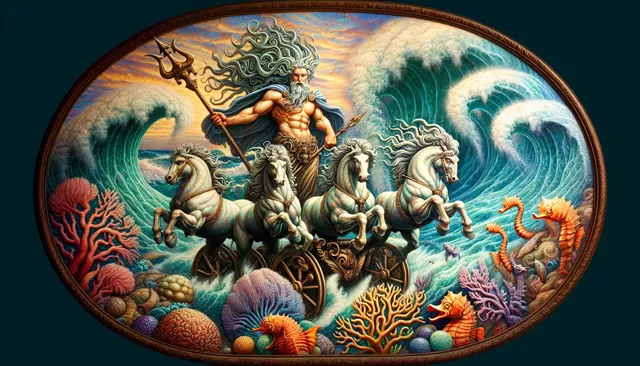
Throughout human history and across the wide expanse of myths, Neptune (or Neptunus) stands out as a brilliant and distinctive figure in ancient Roman mythology. As the ruler of the vast, mysterious, and powerful ocean, he commands the roaring waves with his magic, directs the relentless tides with his songs, and reigns over the rugged underwater realms like they were his own courtyard. He is the deity with the power to stir the seas.
The ancient Romans' reverence for Neptune arose from their experience of the sea as cold, relentless, and mesmerizing. The ocean, both deep and silent yet also turbulent and dangerous, captured their imagination. Driven by their own passion, the Romans sought to break free from the constraints of nature and conquer this vast blue domain. Neptune was the sea god they invoked for power, yet in reality, he mythologized their hard realities and veiled humanity's helplessness in the face of nature.
Over centuries, Neptune's image has transformed into a vivid tableau: he stands proudly on a giant shell, wearing a crown symbolizing authority, holding his iconic trident, surrounded by crashing waves, alongside his loyal companions—the seahorse and the eternal chorus of the sea. His gaze is deep, marking his territory wherever he looks; his expression is as unfathomable as the endless dance of the ocean itself.
In the early Roman Empire, a myth circulated about Neptune and his love for the goddess of the hills, Salacia. Unfortunately, Salacia did not return his affections; she preferred to dance among the green hills or smile in the tranquil woods. Unable to endure this rejection, amidst the crashing waves, with the turbulent ocean below and seagulls soaring above, Neptune unleashed a fierce storm, forcing Salacia to retreat into his underwater kingdom, which ultimately only brought him sorrow.
This story illustrates the ancient Romans' imagination and grasp of the ocean's might, along with their apprehension about controlling nature. It highlights their awe and reverence for the sea, seeking comfort in the divine during moments of helplessness against nature, while longing for a sense of safety and equilibrium.
For example, those in Roman history who honored Neptune and the sea often found their accomplishments recorded in important documents, inspiring future generations. Consider the renowned Roman naval commander who, with his modest fleet, conquered tumultuous seas and was among the first to explore far-off lands. Before each voyage, he would offer incense at Neptune's temple as a sign of respect and prayer, and the Romans viewed his achievements as the ultimate testimony to Neptune's power.
The myth of Neptune interwove with the lives of the Romans, enabling them to perceive a mysterious beauty, a wild power, and even hope beyond the horizon in the sea, the winds, and the tides. Neptune's myth encircled and enveloped the imagination and everyday life of the ancient Romans—profound and irresistible.
Let us step into Neptune's mythical realm together, feel the deep understanding the ancient Romans had for the sea, and unveil the mysterious veil of Neptune's myth, rediscovering passion and belonging within the boundless ocean.
Let us revel in the wonders of this magical world together! It is the world of Neptune, and it is our world...