Legendary Mythical Beast: Xiezhi
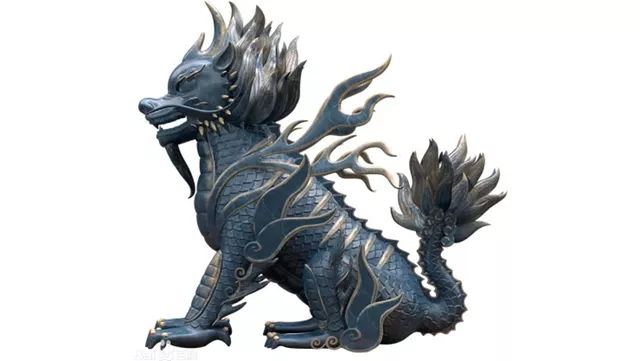
Xiezhi (pinyin: xiè zhì, also known as Xie Liao or Jie Zhi) is a legendary creature from ancient Chinese mythology. It has a goat-like appearance, with a body covered in thick, dark fur, expressive eyes, and a single long horn on its forehead.
I. Appearance of Xiezhi
What does Xiezhi look like? In ancient China, Xiezhi was also known as Liao, Jie Liao, and Jie Zhi. Historical texts offer at least four different descriptions of Xiezhi.
The first description claims it "resembles a cow." Xu Shen in "Shuowen Jiezi" noted: "Xiezhi, a creature of Jie Liao, looks like a mountain cow with one horn. 'Jian' refers to the grass it eats, originating from Liao and grass. In ancient times, the divine being presented Xiezhi to the Yellow Emperor. The Yellow Emperor inquired: What does it eat? Where does it live? It was said to eat 'jian' and live in marshes during summer and in pine and cypress forests in winter." The Eastern Han scholar Yang Fu wrote in "Shen Yi Jing": "In the northeastern wilderness, there is a creature resembling a cow, with one horn, green fur, and four legs like a bear. When it sees people fighting, it charges at the unjust; when it hears people arguing, it bites the unjust. It is called Jie Zhi."
The second description states it "resembles a sheep." As mentioned in the "Book of the Later Han: Treatise on Clothing and Rites": "Jie Zhi is a divine sheep that can distinguish right from wrong. The King of Chu once captured one and used it as a crown." During the Southern and Northern Dynasties, Liang Yuan Emperor Xiao Yi wrote in "Jin Lou Zi: Xing Wang": "A person once obtained a divine creature resembling a sheep, called Jie Zhi." Han Dynasty scholar Wang Chong mentioned in "Lunheng: Shi Ying": "Xiezhi is a one-horned sheep that discerns guilt. When Gao Yao presided over the court, if there were suspects, he would let the sheep touch them; if guilty, it would touch, if innocent, it would not. Thus, Gao Yao respected the sheep for its role in judicial matters."
The third description says it "resembles a deer." In "Book of Han: Biography of Sima Xiangru," Yan Shigu’s commentary cites Zhang Yi: "Jie Liao resembles a deer but has one horn. If the ruler’s punishment is just, it will appear in the court, and those who are unjust can be dealt with."
The fourth description likens it to a "qilin." In "Book of Sui: Treatise on Rites," it cites Cai Yong: "Jie Zhi resembles a qilin, with one horn." "Shuowen Jiezi" describes: "Qilin is a benevolent creature, with a deer-like body, cow-like tail, and one horn, making sounds like a deer." Xiezhi's image can be similar to a cow, sheep, deer, or qilin, but all share its single horn and nature of being upright and just.
From these descriptions, Xiezhi is an animal resembling a cow, sheep, deer, or qilin, characterized by its single horn and inherent nature of fairness and justice.
II. Xiezhi as the Ancestor of Chinese Justice
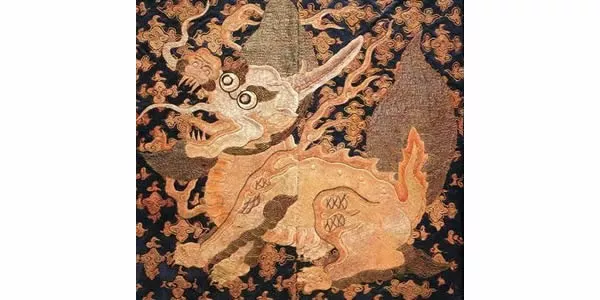
Xiezhi is renowned for its wisdom, understanding of human language and behavior, and its ability to distinguish right from wrong impartially. With keen eyes, it identifies good and evil, recognizing corrupt officials and using its horn to bring them down before devouring them. Known also as the divine sheep, it embodies bravery and justice, representing ideals such as "fairness," "integrity," and "justice under heaven" in the judicial system.
During the Spring and Autumn and Warring States periods, Duke Zhuang of Qi had a minister named Ren Li Guo in a legal dispute with another minister, Zhong Li Jiao, for three years. Due to the complexity of the case, Duke Zhuang summoned the "Liao," the divine beast Xiezhi, to judge the matter. After Ren Li Guo presented his case, Xiezhi remained still, but when Zhong Li Jiao was halfway through his, Xiezhi used its horn to overturn him. As a result, Duke Zhuang ruled in favor of Ren Li Guo.
Han Dynasty scholar Yang Fu provided a representative summary of Xiezhi’s characteristics in "Yiwuzhi": "It distinguishes right from wrong. When it sees people fighting, it charges at the unjust; when it hears arguments, it bites the unjust." This highlights Xiezhi's ability to discern right from wrong; when it sees a fight, it uses its sharp horn against the guilty, and when it hears an argument, it acts against the instigator.
The esteemed thinker Wang Chong of the Eastern Han period recorded the legend of Gao Yao, revered as the "ancestor of Chinese justice," using Xiezhi in court: "Xiezhi is a one-horned sheep that knows guilt. Gao Yao presided over the court, and for those suspected of crimes, he used the sheep to test them; if guilty, it would touch them; if innocent, it would not. Thus, Gao Yao respected the sheep." Emperor Yao's judicial officer Gao Yao used Xiezhi for its consistent accuracy in discerning guilt, earning a reputation for clear judgments and fair law enforcement. In cases of doubt, he relied on the divine one-horned sheep for a verdict, and if Xiezhi touched someone, they were deemed guilty. Thus, in ancient times, Xiezhi symbolized impartial law enforcement, with judges' hats famously called "Xiezhi crowns."
III. Xiezhi Culture
The connection between Xiezhi and "law" can also be seen in the ancient character for "law," written as "灋" (fǎ), while "廌" (zhài) refers to Xiezhi. The combination "廌法" indicates impartiality and fairness, derived from the symbol of water, denoting balance. This established Xiezhi's status as a symbol of law. Although the character "廌" (zhài) has been omitted in modern "法" (law), the cultural tradition of Chinese law it represents persists. Today, representations of Xiezhi are still seen in legal institutions, embodying law, fairness, and justice.
As a symbol of traditional Chinese law, Xiezhi has been venerated across various dynasties. During the Spring and Autumn and Warring States periods, King Wen of Chu fashioned a Xiezhi-shaped crown, leading to its widespread adoption in Chu. Legal officials in the Qin Dynasty wore this crown, a practice continued by the Han Dynasty. By the Eastern Han period, depictions of Gao Yao and Xiezhi were commonplace in government offices, and the Xiezhi crown, also known as the "law crown," became emblematic of legal authority. This tradition continued through the ages, and by the Qing Dynasty, officials like censors and judicial inspectors wore Xiezhi-adorned attire.
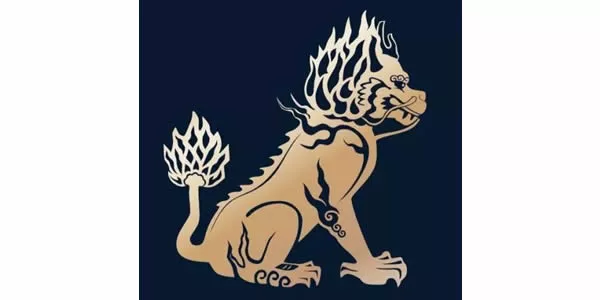
In popular culture, Xiezhi symbolizes justice, offering a unique sense of psychological security to people. The practice of using Xiezhi to ward off evil spirits is prevalent nationwide. For instance, in the Tianlong area, residents carve Xiezhi images onto locks and other items to deter malevolent forces. These depictions feature a pronounced forward horn, a raised head, and a curled tail, poised for action. Additionally, to emphasize its power against evil, the mane and back fur are styled into sharp horns pointing in various directions. This portrayal of Xiezhi highlights its fearless and upright nature in confronting malevolence, reflecting the common people's admiration and respect for its valor and strength.