The Four Legendary Beasts of Ancient Mythology: Taotie
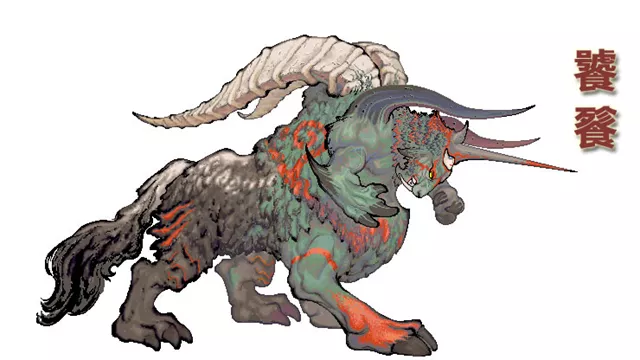
Taotie (饕餮, tāo tiè) is a mythical creature in ancient Chinese folklore, also known as the "Páo Xiāo." According to ancient texts like the "Classic of Mountains and Seas" (《山海经·北次二经》), it has the body of a sheep and the face of a human, with eyes under its armpits and tiger-like teeth accompanied by human hands. The term is often used metaphorically to describe greedy individuals, commonly referred to as "old Taotie" (老饕). In "Zuo Zhuan" (《左传》), Taotie is mentioned as a son of the Jin Yun clan, not one of the dragon's nine sons.
The Origins of Taotie
1. Son of the Jin Yun Clan
Taotie is noted as the son of the Jin Yun clan in numerous ancient texts, including "Lüshi Chunqiu" (《吕氏春秋》) and "Zuo Zhuan" (《左传》).
The "Shen Yi Jing" (《神异经·西南荒经》) says: "In the southwest, there exists a creature with a hair-covered body and a pig-like head. This creature's greed rivals that of a wolf; it accumulates wealth but does not use it and is skilled at stealing food from others." (The original text states it "likes to hoard wealth without consuming human grain," as clarified by annotations in the 'Records of the Grand Historian' (《史记·五帝本纪》)). The strong exploit the weak, fearing the strong and preying on the lone; this creature is called Taotie. In the 'Spring and Autumn Annals,' Taotie is mentioned as the unworthy son of the Jin Yun clan."
The "Zuo Zhuan" (《左传·文公十八年》) notes: "The Jin Yun clan has an unworthy son, greedy for food and indulging in bribery, with insatiable desires for luxury; he amasses wealth without limits and does not distinguish between the lonely and the poor. People compare him to the three evils (the 'three evils' refer to the unworthy sons of Shao Hao, 'Qiongqi'; the unworthy son of Di Hong, 'Hundun'; and the unworthy son of Zhuanxu, 'Tao Wu'), and he is called Taotie."
"Lüshi Chunqiu" (《吕氏春秋·先识览》) states: "The Zhou Ding (an ancient bronze vessel) features Taotie, showing a head but no body; it consumes people without swallowing, harming itself in the process, symbolizing the cycle of retribution."
2. Transformation of Chiyou
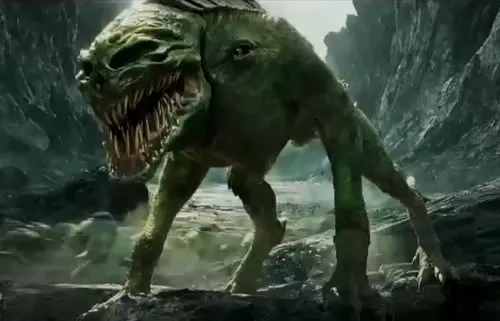
Legend holds that the Yellow Emperor Xuanyuan battled Chiyou for three years, and after Chiyou was defeated, his head transformed into Taotie. This creature had no body because its gluttony led it to consume its own body when nothing else was left. Hence, it only retained the form of a head. This image of a bodiless Taotie has been passed down through the generations.
3. One of the Four Evils
"Zuo Zhuan" (《左传·文公十八年》) states: "Shun's ministers Yao hosted at the four gates and expelled the four evil clans: Hundun, Qiongqi, Tao Wu, and Taotie, dispatching them to the four corners to confront the dragon spirits. When Yao passed, the world united with hearts aligned to support Shun as the Son of Heaven, thanks to his choice of sixteen ministers and the expulsion of the four evils."
"Lüshi Chunqiu" (《吕氏春秋·恃君》) mentions: "To the north of Yanmen, there are eagles and hawks, and the land of Taotie and Qiongqi." The four evils are metaphors for humanity, symbolized by Hundun, Qiongqi, Tao Wu, and Taotie.
"Records of the Grand Historian" (《史记·五帝本纪》) describes the unworthy son of Di Hong, 'Hundun'; the unworthy son of Shao Hao, 'Qiongqi'; and the unworthy son of Zhuanxu, 'Tao Wu'; known together as the 'three evils,' along with the unworthy son of the Jin Yun clan, 'Taotie,' making up the 'four evils.'
"Shen Yi Jing" (《神异经·西南荒经》) states: "In the southwest, there is a creature with a hairy body and a pig-like head, greedy like a wolf, hoarding wealth without consuming human grain. The strong prey on the weak, fearing the strong and preying on the lone, and it is named Taotie." The "Páo Xiāo" mentioned in the "Classic of Mountains and Seas" refers to Taotie.
Cultural Interpretations
1. Taotie Patterns
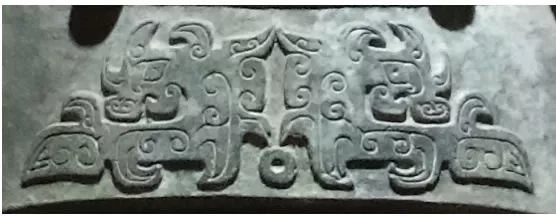
Ancient bronze vessels often displayed the head of Taotie as an ornamental motif. During the Shang and Zhou dynasties, these Taotie patterns were commonly etched on ritual bronze vessels. The oldest Taotie designs can be traced back to the Liangzhu culture, dating from about 5,300 to 4,300 years ago. "Lüshi Chunqiu" notes: "The Zhou Ding is cast with Taotie, having a head but lacking a body; those who consume yet do not swallow end up harming themselves, symbolizing retribution." This serves as a warning to future generations to act virtuously, or they will face retribution. In later periods, Taotie often symbolized greedy individuals.
Over time, the significance of Taotie patterns, which once represented self-restraint and governance, gradually faded. In "Wei Shu" (《魏书·桓玄传》), greedy individuals are described as: "Taking concubines presumptuously, resembling six bodies, making the Minister of Personnel act as a matchmaker, and the Chief Clerk as a host, indulging in gluttony and celebrating together."
2. Taotie and Gluttony
Cao Yu's "Beijing Ren" (《北京人》) begins with: "Moreover, he is very particular about food; he is a known glutton, skilled at discerning the beauty and flaws of food." Taotie is renowned for its love of food, and its image appears on the lids of bronze vessels. It is said that 'tao' refers to gluttony, hence food enthusiasts are often called "old Taos" (老饕); 'tie' represents greed, symbolizing human greed in the world.
"Taotie" is a fierce beast from ancient Chinese legends, known for its insatiable appetite. This creature has no body because it ate itself due to excessive consumption, leaving only a large head and mouth. It symbolizes greed and is used to describe gluttonous or greedy individuals.
Later generations emphasized the gluttonous nature of Taotie. Su Dongpo once wrote an essay titled "Ode to the Glutton" (《老饕赋》), stating: "Gathering all the beauties of the world to nourish my old Taotie," adding a whimsical quality to Taotie. Food lovers are also referred to as the "Taotie Clan" (饕餮族).
The Tang poet Du Fu wrote in his poem "The Deer": "Dressed in robes, both thief and glutton, Taotie uses this moment." Qing playwright Li Yu wrote in "Nai He Tian: The Vinegar" (《奈何天·伙醋》): "Never let uninvited gluttons disrupt the feast while the first guests endure the emptiness." Nie Gan discussed in "A Brief Discussion on Mr. Lu Xun's 'Wild Grass'" (《略谈鲁迅先生的<野草>》): "And the evil spirits of humanity sit high upon these living corpses, feasting on the banquet of human flesh."