The Four Great Beasts of Ancient Mythology: Chaos
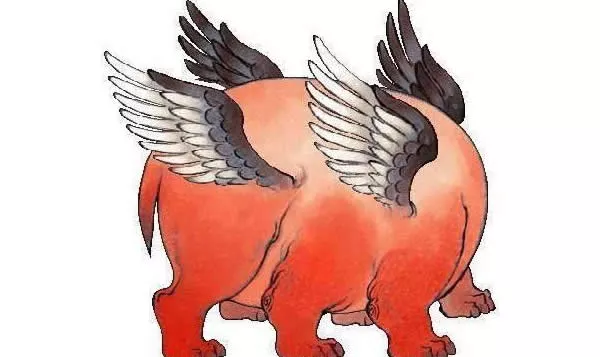
Chaos is one of the four fierce beasts in ancient Chinese mythology. According to the "Zuo Zhuan," these beasts are "Chaos," which resembles a giant dog; "Tao Tie," which has a human head, a goat's body, and eyes under its armpits; "Qiong Qi," a large tiger with wings; and "Tao Wu," which has a human head, tiger legs, and wild boar tusks.
Chaos, also known as Hundun, is a particularly peculiar member of these beasts. In folklore, Chaos is often described as a faceless creature capable of singing and dancing, highlighting its versatility.
Legend describes Chaos as being round, fiery red, with four wings and six legs, lacking facial features such as ears, eyes, nose, lips, and tongue. Despite this, Chaos is able to dance and sing. As folklore states: "There is a celestial bird, shaped like a yellow bag, red like fire, with six legs and four wings. Although formless and faceless, it recognizes song and dance."
The Appearance of Chaos
Chaos is both a divine and fierce beast due to the varying accounts in different texts, each describing it differently. In the "Shan Hai Jing," Chaos is often depicted as a divine creature, described as a celestial bird. In contrast, the "Shen Yi Jing" portrays Chaos as a malicious entity that aligns with the wicked and shuns the virtuous. Essentially, in the "Shen Yi Jing," Chaos is described as a monstrous figure that aids those with evil intent.
Shan Hai Jing Version: According to the "Shan Hai Jing - Western Classics," it is written: "There exists a divine being shaped like a yellow bag, red like fire, with six legs and four wings, lacking form or face, yet it recognizes song and dance. It is identified as Di Jiang (pronounced Hong)."
In the "Shan Hai Jing," Chaos is described as a divine bird with a shape like a yellow bag, fiery red in color, with six legs and two pairs of wings (four wings total). Although lacking a face or eyes, it can identify songs and dances, and is referred to as Di Jiang.
Zhuangzi Version: "Zhuangzi - The Emperor of the South Sea" states: "The Emperor of the South Sea is Shu, the Emperor of the North Sea is Hu, and the Emperor of the Central Region is Hundun." It also narrates, "Shu and Hu met in Hundun's land, where Hundun treated them graciously. Ultimately, Shu and Hu decided to repay Hundun's kindness by carving seven orifices for seeing, hearing, eating, and breathing. After seven days, Hundun died." In "Zhuangzi - Heaven and Earth," it mentions, "They borrowed Hundun's method, knowing one but not the other. They treated the inside, but not the outside; Hundun's wisdom is indeed limited."
In "Zhuangzi," Chaos is depicted as lacking the typical seven orifices. Shu and Hu, having been treated well by Chaos, sought to repay its kindness by carving these orifices one at a time. After seven days, Chaos succumbed. Other than this, "Zhuangzi" offers no further descriptions of Chaos.
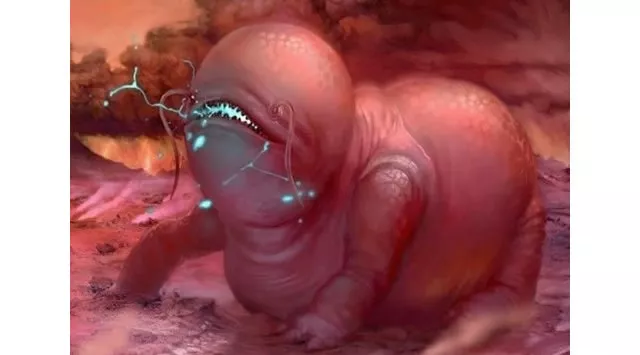
Shen Yi Jing Version: "Shen Yi Jing" describes Chaos as: "West of Kunlun, there is a beast resembling a dog with long hair and four legs similar to a bear's, but with no claws. It has eyes but cannot see, ears but cannot hear, and cannot move despite having legs. It possesses a belly without internal organs, with a straight intestine allowing food to pass through easily. It understands human nature, resenting virtuous individuals while favoring the wicked. This creature, Chaos, exists in emptiness, engaging in no activity, and frequently twirls its tail, laughing at the sky."
In "Shen Yi Jing," Chaos is depicted as a dog-like creature with long hair. It has four legs reminiscent of a bear but lacks claws. Its eyes are elongated but sightless; its legs also struggle to move. Though it has ears, they do not function, and its belly contains no internal organs, leading to an entirely straight digestive tract. Unable to perceive the world, it nonetheless senses human nature, detesting virtuous people and aiding the wicked.
A prevailing belief is that Chaos embodies the resentment of Huan Dou after death, aligning with the origins of the four fierce beasts: Qiong Qi stems from Gong Gong's resentment, Tao Wu from Gun's, and Tao Tie from San Miao's.
Chaos as the Leader of the Four Fierce Beasts
Despite Chaos's apparent ability to sing and dance, it indeed embodies fearfulness. Chaos is massive and, despite lacking a tongue, enjoys feasting on humans. Any place Chaos visits is soon devoid of human or animal life. It uses its enchanting song and dance to lure humans and prey, then devours them once entranced by the mesmerizing music.
In mythological accounts, Chaos possesses a direct digestive tract, efficiently processing food and perpetually feeling hunger. This trait makes Chaos comparable to Tao Tie, another gluttonous beast. Attempts have been made to subdue Chaos, but few resist its enchanting songs; those who try often meet their end by being consumed before getting too close.
Given Chaos's rapid digestion and insatiable hunger, the number of humans it consumes is thought to be innumerable. Its intimidating presence and fearsome capabilities establish Chaos as the leader of the four fierce beasts.
Chaos exhibits a playful nature; it becomes violent around noble individuals but complies with the wishes of wicked ones. However, those who indulge in its dark nature eventually share the same fate, ultimately becoming its prey.