Ancient Legends: The Mythical Beast Bai Ze
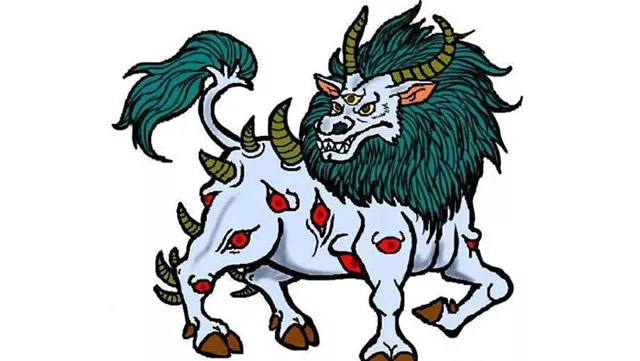
Baize is a renowned mythical creature from ancient Chinese mythology, dwelling on Kunlun Mountain. It is highly esteemed and considered an auspicious being, capable of transforming misfortune into prosperity. Entirely snow-white, Baize is fluent in human language, comprehends the emotions of all living beings, and possesses extensive knowledge of the world's creatures. It seldom appears, only emerging under the rule of a sage, symbolizing good governance for virtuous leaders. According to the "Three Talents Diagram," Baize has the body of a lion, a single horn on its head, and a beard similar to a goat's.
Historical Origins
Baize is knowledgeable about the identities, appearances, and exorcism spells for all ghosts and monsters. As a result, it has been revered as a divine beast and a symbol of good fortune since ancient times, with its earliest mentions appearing in Ge Hong's "Baopuzi." During the medieval period, the veneration of Baize grew considerably. At this time, the book "Baize Diagram" became incredibly popular, with nearly every household owning a copy. This book documented the names, appearances, and exorcism techniques for various supernatural entities, alongside detailed illustrations. When people encountered monsters, they would refer to these illustrations for identification.
In Zen Buddhist texts, sayings such as "Having a Baize Diagram at home, monsters will naturally disappear," "If you don't hang the talisman behind, why paste the Baize Diagram?" and "If there is no Baize Diagram at home, there will be such monsters" are common. People would hang images of Baize on their walls or doorways to ward off evil spirits. There was also a tradition of making "Baize pillows," which were pillows shaped like Baize, used during sleep to repel evil. "Baize flags" were frequently seen in military uniforms and equipment. Some people even chose the name "Baize" for themselves, resulting in many individuals bearing that name.
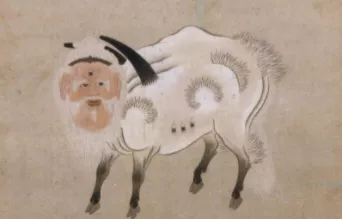
Legends Related to Baize
Legend 1: The Mount of Zhong Kui
According to legend, Baize serves as the mount of Zhong Kui, the "God of Exorcism" from Hu County, Xi'an, Shaanxi. Stone carvings from the Song Dynasty depicting Zhong Kui's mount are preserved in front of the Kongsu Pavilion of Wang Jiusi, the author of "The Legend of Zhong Kui," near Meihe Lake in Hu County, Xi'an. They are said to be the only existing pair of ancient Baize stone carvings in China.
Legend 2: The Unicorn
Another story suggests Baize is akin to a unicorn. In ancient times, the Vermilion Bird and other great beasts like the Azure Dragon, White Tiger, and Black Tortoise wreaked havoc. With the assistance of spiritual beasts including Qilin and Baize, Nuwa managed to defeat them. Eventually, Baize was stripped of its powers and fell to the mortal realm. It's believed Baize itself is a treasure with the ability to resurrect the dead. Additionally, brushes made from Baize's hair are rumored to have the power to restore ancient paintings.
Legend 3: The Yellow Emperor's Inspection
Legend has it that after the Yellow Emperor brought peace to the world, he traveled across China and reached the Eastern Sea, where he encountered Baize. Baize informed him about 11,520 types of monsters and ghosts. The Yellow Emperor commanded his officials to illustrate each of the entities Baize described for the benefit of the people. In medieval times, the reverence for Baize was heightened. Known for its understanding of exorcism techniques and knowledge of all supernatural beings, Baize was worshipped as a deity of exorcism and an emblem of good fortune. The book "Baize Diagram" (also known as "Baize Spirit Monster Diagram") became widely popular, with virtually every household owning a copy. It recorded the names, appearances, and exorcism methods of various supernatural beings alongside illustrations, aiding people in identifying the monsters they encountered.
In Zen Buddhist texts, sayings such as "Having a Baize Diagram at home, monsters will naturally disappear," "If you don't hang the talisman behind, why paste the Baize Diagram?" and "If there is no Baize Diagram at home, there will be such monsters" are common.
According to "Yunji Qiqian: Xuanyuan Benji," it's documented that "The Emperor inspected the East Sea, scaled Mount Huan, and discovered the Baize beast by the seaside. It could speak and understand the emotions of all beings. It was questioned about the ghosts and gods worldwide, revealing a total of 1,520 types of spirits and wandering souls. The Emperor ordered these to be illustrated and shown to the people." Later, Baize was used as a motif in royal garments; during the Tang Dynasty, the Baize flag was utilized for the emperor's outings, and in the Ming Dynasty, Baize patterns adorned the clothing of nobility.
Related Literary Records
- "The Book of Tang: Five Elements" notes that Empress Wei's sister used a tiger-leopard pillow to ward off evil and a Baize pillow to ward off temptation.
- "Ka Yuan Divination" Volume 116 quotes "Auspicious Response Diagram": "The Yellow Emperor inspected the East Sea, and Baize appeared, possessing understanding of the essence of all things, to caution the people and avert calamities."
- "Xuanyuan Benji": "The Emperor inspected the East Sea, scaled Mount Huan, and encountered the Baize beast by the seaside. It could communicate and comprehend the emotions of all creatures, revealing the realms of ghosts and gods, totaling 1,520 types. The Emperor instructed that they be illustrated and presented to the people."
- "Baopuzi: Extreme Words": "The Yellow Emperor... meticulously documented the words of Baize concerning spirits and demons."
- "Auspicious Response Diagram": "The Yellow Emperor inspected the East Sea, and Baize appeared, possessing understanding of the essence of all things, to caution the people and avert calamities."
- "Comprehensive Classics" records that the emperor's flag depicted the likeness of Baize, known as the Baize flag.
- "The Book of Five Elements" notes that Empress Wei's sister used a tiger-leopard pillow to ward off evil and a Baize pillow to ward off temptation.
- In "Journey to the West," Baize is among the grandsons of the monster Jiuling Yuansheng.
The above content is sourced from the internet, and copyright belongs to the original author. If there is any infringement on your original copyright, please inform us, and we will promptly remove the content in question.