The Divine Bird in Ancient Mythology: The Chongming Bird
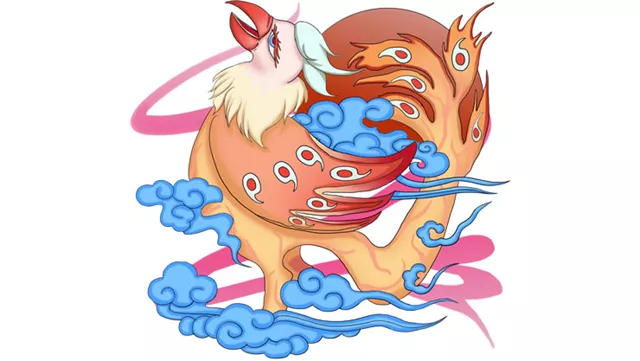
The Chongming Bird
The Chongming Bird is a mythical divine creature from ancient Chinese Han folklore, celebrated as one of the ten great mythical beasts of antiquity. Its specific ranking among these legendary creatures is uncertain. Known also as the Double-Eyed Bird, each of its two eyes possesses two pupils. It bears a resemblance to a chicken and has a melodious call akin to that of a phoenix. With a graceful dance, it often shakes off its feathers and soars through the sky with its bare wings.
This bird has the power to repel fierce beasts such as tigers, leopards, jackals, and wolves, frightening away demons and monsters that might otherwise threaten humans. For this reason, during the New Year, Han families traditionally paste images of chickens on doors and windows, symbolizing the essence of the Chongming Bird. It has minimal requirements from humans, needing no food and contenting itself with merely a sip of precious nectar.
Legends Related to the Chongming Bird
1. The Blind Man's Dream
In legend, King Shun was the reincarnation of the Chongming Bird, marked by double pupils in both eyes. Long ago, a blind man named Gu Sou lived at the foot of Lishan Mountain. One night, he dreamt of a Chongming Bird visiting him, offering food.
The Chongming Bird spoke, "I will stay and be your son, if you'd accept." Joyful, Gu Sou reached to embrace the bird, but awoke before he could. Finding the dream peculiar, he recounted it to his wife. She responded, "Dreams echo the heart’s desires; perhaps you yearn deeply for a son!"
Indeed, following the dream, Gu Sou's wife became pregnant and delivered a healthy baby boy ten months later. On the day of the birth, a Chongming Bird appeared at their doorstep, chirped for a while, and disappeared once the child was born. Neighbors remarked on Gu Sou's good fortune. Astonishingly, the newborn had eye sockets identical to the Chongming Bird’s, with two pupils each, leading all to believe the child was its reincarnation.
2. Tribute to Emperor Yao
In ancient tales, the Chongming Bird, reputed to consume dragons and ward off fearsome beasts, arrives during Emperor Yao’s reign, noted for his wisdom and simplicity. When the nation of Zhi Zhi sent envoys to present a tribute, Emperor Yao welcomed them with due ceremony. The tribute was an unusual bird resembling a chicken, with most of its feathers gone, leaving just its bare wings. Suspicious but intrigued, Emperor Yao asked the envoy, "What is this bird called, and what are its powers?"
The envoy explained, "With two pupils in each eye, it's called the Chongming Bird or Double-Eyed Bird. It’s strong enough to repel fierce beasts, its call echoes a phoenix, and evil spirits flee from it, marking it as a divine entity. Our king hopes to earn your favor by presenting it." Emperor Yao wondered, "How can it fend off fierce beasts without its complete plumage?"
Before the envoy responded, the Chongming Bird emitted a long, beautiful cry akin to a phoenix, then flew into the air, encircling the hall before soaring into the courtyard, where it continued its song. Just then, guards observed countless birds rapidly fleeing northward upon hearing the Chongming Bird's call. They realized these were owls and similar birds escaping to the wilderness, ensuring no evil birds remained within hundreds of miles where the Chongming Bird was present.
Amazed by the bird's abilities, Emperor Yao acknowledged its divine nature and asked if its plumage remained sparse year-round. The envoy clarified, "Its feathers shed periodically, and it's currently in that phase." In places plagued by strange occurrences, the Chongming Bird's presence would immediately dispel anomalies, turning misfortunes into blessings. It was capable of driving away all demons and monsters. Therefore, later generations honored the New Year’s arrival by crafting or painting chicken shapes to affix to their doors and windows.
Records from Historical Texts
"Records of the Lost" (Shiyi Ji)
1. Original Text
From "Records of the Lost" by Wang Jia of the Jin Dynasty, Volume 1: "During Yao's seventy-year reign, a country called Zhi Zhi presented the Chongming Bird, also known as the Double-Eyed Bird, due to its two pupils in each eye. It appears like a chicken and sings like a phoenix. Occasionally shedding feathers, it flies with bare wings. Capable of repelling fierce creatures such as tigers and wolves, it prevents harm from demons and disasters. Offered precious nectar, it visits once a year or intermittently. People clean their homes hoping for its arrival. If it doesn’t come, they symbolize it through wood or metal carvings at their doors, deterring demons and monsters. Today, on New Year's, people continue this tradition by creating wooden, metal, or painted chicken motifs, a practice rooted in the legend of the Chongming Bird."
2. Modern Translation
Four thousand years ago, during Emperor Yao's seventy-year rule, majestic creatures like phoenix chicks gave tribute, qilins roamed, and owls fled to desolate lands. The distant realm of "Zhi Zhi" offered a Chongming Bird, with two pupils in each eye, resembling a chicken and singing like a phoenix. It battled fierce animals like tigers, leopards, and bears, banishing demons and monsters. Consequently, people cleansed their thresholds, yearning for a Chongming Bird’s arrival at their dwelling. Eventually, the Chongming Bird ceased its visits, prompting people to craft wooden or metal representations to guard their doors, maintaining its protective legacy. Each New Year's Day, people sculpted or painted chickens on their doors, a tradition originating from the Chongming Bird’s lore and influencing later paper-cutting arts.
"Records of the Mysterious" (Xuan Zhong Ji)
Within the "Records of the Mysterious," an author from the Jin Dynasty notes a heavenly chicken residing on Mount Dushuo, whose crow, at sunrise, inspires chickens worldwide. The chickens slain during the Spring Festival represent this celestial chicken. Another ancient myth claims chickens evolved from the Chongming Bird. In Emperor Yao's era, a Chongming Bird, gifted by an allied nation, allegedly banished evil forces, earning people's welcome. However, annual tributes were irregular, leading people to craft or paint the Chongming Bird on their doors and windows, deterring dark entities. As the Chongming Bird resembles a chicken, this evolved into painting chickens or making window floral designs, which laid the foundation for the art of paper-cutting. In ancient China, chickens were esteemed as the "Bird of Five Virtues."
"Han Poetry Chronicles" (Han Shi Wai Zhuan)
According to the "Han Poetry Chronicles," a chicken displays numerous virtues: a crown upon its head signifies literary virtue; spurs on its feet denote martial virtue; its willingness to fight portrays courage; sharing food reflects benevolence; and its nightly vigilance symbolizes trustworthiness. Consequently, people not only butcher chickens for the New Year but also celebrate the first day of the New Year as Chicken Day.