Did Confucius Witness the Ancient Myth of the Qilin?
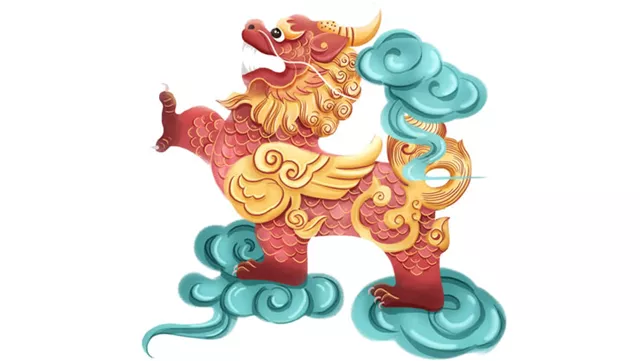
The Qilin is mentioned in numerous historical texts across different periods in China, with the most renowned story being "The Western Hunt and the Capture of the Qilin." We will delve into this historical tale below.
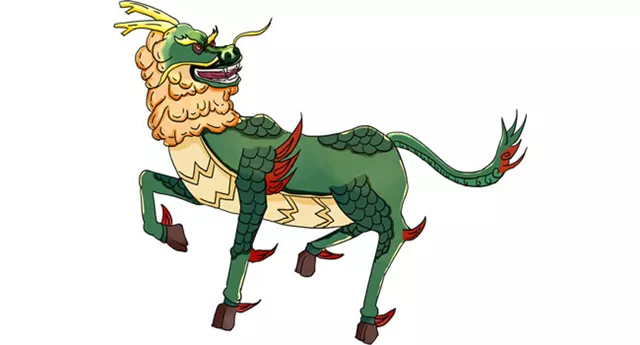
As a symbol of good fortune in ancient China, the Qilin is depicted in various ancient sources as having a dragon-like head, a horse-like body, a deer-like form, and an ox-like tail, with colorful patterns on its back and yellow fur on its belly. From these narratives and the historical depictions of the Qilin, it is clear that it is a captivating spiritual creature.
According to legend, the Qilin has a gentle nature, does not harm people or livestock, and refrains from trampling flowers or grass. In the "Book of Song," it states: "The Qilin is a benevolent beast." It's also believed that the Qilin can live for 2,000 years and is described in ancient texts as having a "harmonious voice, following the rules, choosing its dwelling place carefully, and residing only in auspicious locations. It avoids stepping on living insects, does not trample growing grass, does not live in groups, avoids other creatures, and never falls into traps."
Ancient records claim that the Qilin, like the Phoenix, has both male and female forms. The male is known as "Qi," while the female is referred to as "Lin," collectively called Qilin. The Qilin is said to be a descendant of the Yinglong, with the male Qi possessing a single horn, while the female Lin has no horn but can breathe fire and produce a thunderous sound.
In ancient China, the Qilin symbolized auspiciousness and reportedly appeared only during times of peace or when a sage was present. Xu Shen in the "Shuowen Jiezi" wrote: "Qi, a benevolent beast, has the body of a deer, the tail of an ox, and a single horn; Lin, the female Qilin."
The Qilin, along with the Phoenix, Tortoise, and Dragon, is one of ancient China's four divine beasts. While many view it as a mythological creature, ancient historical records indicate that sightings of the Qilin were documented multiple times. So, did this creature with a dragon's head, an ox's tail, and a horse- and deer-like body truly exist?
The Qilin Truly Existed
Research suggests that the Qilin was indeed real, just like the dragon. Prominent figures such as Confucius, Duke Ai of Lu, and Emperor Wu of Han reportedly witnessed it. The earliest mention of the Qilin is found in the "Book of Songs," over two thousand years ago. During the Ming Dynasty, the Qilin was reportedly discovered three times, stirring interest among the emperors of the time.
The first recorded discovery of the Qilin was in the 20th year of the Chenghua era (1484 AD) at a farmer's home in Sizhou, Jiangsu (now Xuyi), where a cow gave birth to a Qilin covered in black scales. The newborn Qilin's lively nature led villagers to mistake it for a monster, and it was beaten to death. At that time, Deputy Minister of Works, Jia Jun, visiting the area, took a leg of the Qilin back to Beijing as a curiosity.
The second sighting occurred in the 12th year of the Jiajing era (1533 AD) in Liaocheng, Shandong. A cow birthed a Qilin noted for its "extraordinary appearance," which immediately ran to the kitchen and bit an iron pot. Frightened farmers killed it as well.
The third event was in the 13th year of the Wanli era (1585 AD) in Guangshan County, Henan, where another cow birthed a Qilin. It was said the birth filled the farmer's home with radiant light, prompting neighbors to believe there was a fire. Upon discovering a scaly Qilin, the neighbors also killed it.
All these incidents were reported to Emperor Wanli, who expressed interest in seeing the Qilin's body, though officials managed to prevent it.
Aside from these occurrences in the Ming Dynasty, the "Draft History of Qing" records nine instances of cows and pigs giving birth to Qilins. Here's a detailed account from the "Draft History of Qing":
- The first instance was in August of the first year of the Kangxi era, when a pig in Jieyang, Guangdong, gave birth to a Qilin.
- The second case was in February of the first year of the Shunzhi era, when a cow in Laiyang gave birth to a Qilin.
- The third instance was in the fifth year of the Kangxi era, with a cow in Nanchang delivering a Qilin.
- The fourth occurrence was in the seventh year of the Yongzheng era, with a cow in Zhenhai giving birth to a Qilin, which died shortly after birth.
- The fifth instance was in the fourth year of the Qianlong era, when a cow in Shengjing birthed a Qilin.
- The sixth case was in the first year of the Jiaqing era, with a cow in Suian delivering a Qilin.
- The seventh occurrence was in the second year of the Jiaqing era, with a cow in Pingdu producing a Qilin.
- The eighth instance was in the fifth year of the Jiaqing era, with a cow in Baihe County giving birth to a Qilin.
- The ninth case was in the nineteenth year of the Guangxu era, with a cow in Taiping delivering a Qilin.
By examining various ancient texts, we find that the Qilin is consistently described as a "hybrid creature" across different periods. Its head is said to resemble a lion, with deer-like antlers, covered by a thick layer of dragon scales, and its tail similar to that of a mythological dragon. The uniform descriptions across different eras suggest that ancient people did see and accurately record the Qilin, indicating their collective perception.
Furthermore, ancient beliefs held that the appearance of a Qilin would bring auspicious signs, marking significant periods. Historical accounts note two Qilin appearances connected to Confucius. The first occurred before his birth, and the second before his death. It's said Confucius's mother, Yan, while in labor near Mount Ni, experienced intense pain when a single-horned Qilin descended, carrying a plump child amidst beautiful clouds. The Qilin reportedly rushed into Yan's arms, leading to the birth of Confucius, thus linking the Qilin to fertility and inspiring the saying "Qilin delivers a child."
Detailed Records of the Qilin in Historical Texts
Two significant historical texts, "Zuo Zhuan" and "Spring and Autumn," document the famous anecdote "The Western Hunt and the Capture of the Qilin." According to "Zuo Zhuan": "In the 14th year of Duke Ai of Lu (481 BC), during a spring hunt in the Great Wild, the Shusun family captured a Qilin, deemed inauspicious and given to the Yu people." Confucius observed this and remarked, "It is a Qilin."
This story recounts that during the Spring and Autumn period, Duke Ai of Lu, the state's 26th ruler, went on a western hunting trip in 481 BC. As he hunted through southern Great Wild, he disturbed a strange creature he had never seen. Pursuing it in his chariot, he struck its leg with an arrow, but the creature ran until it collapsed.
After capturing this unusual beast, Duke Ai summoned Confucius to identify it. Upon seeing the injured Qilin, Confucius was moved to tears, confirming it was indeed a Qilin.
Confucius advised Duke Ai to treat the Qilin's injuries, but the distressed creature refused food and drink, eventually dying. Duke Ai had no choice but to bury the Qilin in Juyi.
"Spring and Autumn" and "Zuo Zhuan" are known historical texts, and "Spring and Autumn," as one of the Confucian "Five Classics," was a staple of scholarly study in ancient times. Thus, the Qilin recorded in these texts is not a mythical creation, but a real divine beast that existed.
As Confucius documented this event in "Spring and Autumn," he lamented deeply, composing an elegy for the Qilin: "In the age of Tang and Yu, Qilin and Phoenix roamed; now, what do I seek? O Qilin, O Qilin, my heart is troubled." After completing "Spring and Autumn," Confucius wrote no further and, two years later, died from his sorrow, leading to the historical event known as "The Last Pen at the Capture of the Qilin."
Today, in Juyi County of Heze City, Shandong Province, where Duke Ai captured the Qilin, the Qilin Tomb still stands as a historical site. The local literature records Juyi as both the birthplace of the Qilin and the origin of Qilin culture. Due to the story of the Western Hunt and the Capture of the Qilin, Juyi is called the "Hometown of the Qilin," also known as Qilin Town. Visitors to Juyi County will see the county emblem featuring the Qilin.
In Juyi County, many streets are named after the Qilin, and sculptures or statues of the Qilin abound in Juyi Town. Many local schools also feature Qilin statues. As you stroll through the streets of Juyi, you'll find that people of all ages can recount stories or legends related to the Qilin.
In the "Records of the Grand Historian," Sima Qian documented history from the Yellow Emperor to Emperor Wu of Han, concluding with the story "Emperor Wu Captures the Qilin." In 122 BC, during a hunting expedition, Emperor Wu captured a Qilin in Yongdi, appearing like an ox but with a single horn.
Emperor Wu considered this a "heavenly auspicious beast," perceiving it as divine approval of his governance, leading him to change the era name to "Yuan Shou" and compose "Song of the White Qilin" to express his elation. Consequently, three historical texts, including the "Records of the Grand Historian," "Spring and Autumn," and "Zuo Zhuan," provide evidence of the Qilin's existence, witnessed by Confucius and two emperors. Can the existence of the Qilin still be dismissed as mere myth?
Finally, the Qilin, as a unique divine beast in China, has become a symbol of Chinese divine culture in our five thousand years of tradition, much like the dragon. The Qilin is associated with auspicious events, such as the phrase "Qilin's feet" indicating prosperous descendants, and rare talents or treasures likened to "Phoenix feathers and Qilin horns," or "Qilin and Phoenix as one." In astronomy, notably, there is even a constellation named "Qilin," located on the celestial equator, surrounded by Orion, Canis Major, Gemini, and Hydra.