Top 10 Unexplained Mysteries of Prehistory You Won't Believe
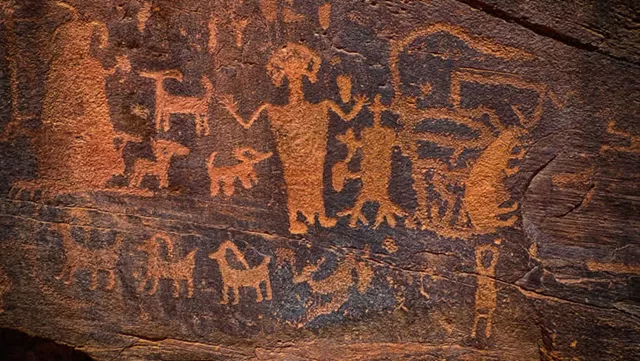
Recent archaeological findings suggest that humanity's origins are more complex than traditionally thought, with multiple human species existing across different historical periods, each leaving behind unique prehistoric civilizations. The evidence of prehistoric technological advancements suggests that early humans were capable of remarkable technological feats, some of which modern humans find hard to replicate, yet these achievements belong to ancient times.
1. The Great Pyramid of Khufu in Egypt
The Great Pyramid of Khufu consists of 2.3 million massive stones, constructed without any cement. The structure relies entirely on the precise alignment of irregular stones, averaging 2.5 tons, with the heaviest weighing up to 250 tons.
Regarding the astounding engineering feat of layering 2.3 million stones, experts argue that, with the technology available at the time, Egypt would have needed a population of 50 million to achieve this, while the global population was only about 20 million. French chemist Joseph Davidovits investigated the pyramid chemically and microscopically, concluding that the stones were likely artificially cast.
Based on his findings, Davidovits proposed that the stones were made from a mixture of lime and shells, similar to modern concrete. This material solidified to a state nearly indistinguishable from natural stone.
Moreover, Davidovits presented a striking piece of evidence: a strand of human hair about one inch long found within the stone. The logical explanation is that a worker accidentally dropped this hair into the concrete during construction, where it has been preserved ever since.
Other researchers have found signs that the pyramid was once submerged underwater. An advanced civilization predating the ancient Egyptians must have employed sophisticated construction techniques to build the pyramid and aimed to communicate a message to future generations through its creation.
2. Nuclear Reactor from Two Billion Years Ago
In June 1972, a French facility imported uranium ore from the Oklo uranium mine in Gabon, Africa, only to be astonished to find that it had already been refined! While typical ore contains about 0.72% uranium, the Oklo ore contained less than 0.3%. Experts rushed to Oklo, where they discovered an underground nuclear reactor, identified as a remnant of early human activity from two billion years ago. Its design was highly sophisticated and well-preserved, having operated for up to 500,000 years.
This suggests that two billion years ago, Oklo may have hosted a highly advanced civilization, surpassing modern human technology. Today, many recognize this as evidence of prehistoric civilization. Faced with this evidence, scientists classify it as an ancient nuclear reactor, including it in educational texts and examining its potential for nuclear waste management.
However, few dare to delve deeper. When compared to this ancient reactor, the largest reactors modern humans can build seem insignificant. How such an advanced civilization could decline and vanish is a perplexing question.
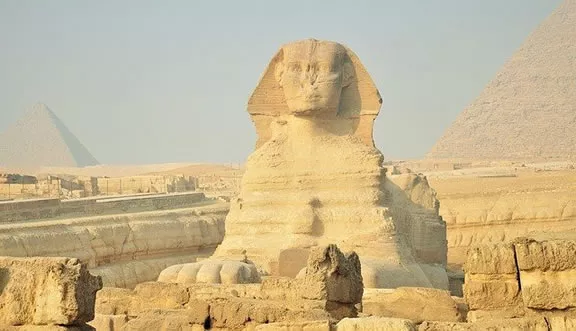
3. The Great Sphinx of Giza
The Great Sphinx of Giza, carved from a single natural rock, stands 20 meters tall and 73 meters wide, making it one of the largest and most famous statues globally. Positioned facing east, it gives an impression of great antiquity.
Professor Robert Schoch of the American Geological Society observed that the erosion on the Sphinx is unlike the sharp, horizontal erosion caused by wind and sand. Instead, it has rounded, wavy edges descending downward, with some erosion marks as deep as 2 meters.
Additionally, the upper parts display more severe erosion than the lower sections, indicative of rainwater erosion. The Sphinx has likely been exposed to the air for only about 1,000 years, with the remainder of the time buried beneath sand and stone.
Should it indeed have been constructed during Pharaoh Khafre's reign and subject to wind and sand erosion, other limestone structures from that period would exhibit similar erosion. However, no such structures display the same degree of weathering as the Sphinx.
Furthermore, since 3000 BC, the Giza Plateau has not experienced sufficient rainfall to cause such erosion, implying that these marks are from a distant past when the plateau saw more rain and higher temperatures.
Astronomical calculations show that between 11,000 BC and 8,810 BC, the sunrise was aligned with the constellation Leo during the spring equinox, which matches the orientation of the Sphinx.
From this analysis, archaeologists speculate that the Sphinx might have been constructed over 10,000 years ago. Some scientists have uncovered evidence indicating that the Sphinx was once submerged underwater.
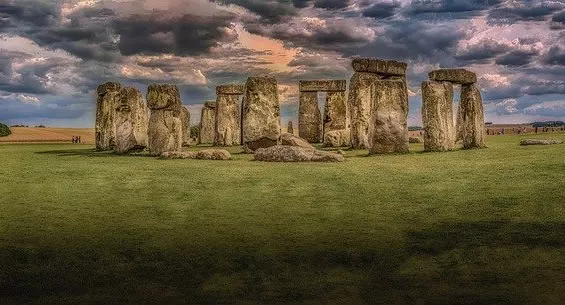
4. The Megalithic Structures of Britain from 4,000 Years Ago
Western Europe houses many ancient megalithic structures, with the stone circles on Salisbury Plain in southern England being the most majestic and intricate.
The standing stones, towering at 4 meters and weighing between 25 to 30 tons, suddenly appear on the vast open plains with no obstructions around them.
It's believed these structures are at least 4,000 years old, confirmed to have been built using sophisticated civil engineering techniques. The stones were transported from locations 33 kilometers and 200 kilometers away, a feat only modern transportation could easily accomplish.
Scientific studies on these stone circles reveal a clever encoding of extensive astronomical knowledge within their design.
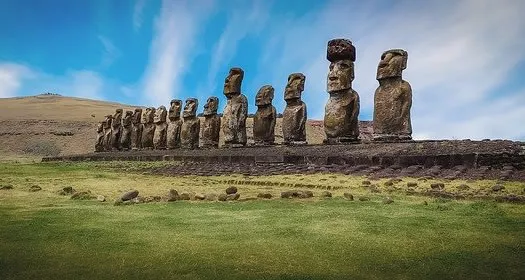
5. The 1,000 Moai Statues of Easter Island
Easter Island, located 3,700 kilometers off the coast of Chile and covering about 120 square kilometers, is home to roughly 1,000 Moai statues. These statues are characterized by disproportionately large heads, elongated ears, arms close to the body, and mouths facing the distant sky.
Typically, the statues weigh around 20 tons and range between 3.5 to 4.5 meters in height, with the largest statue standing about 10 meters and weighing 90 tons. Some unfinished statues are even twice this size. Additionally, some statues have hats made of red volcanic rock, which are more challenging to position atop the statues than to sculpt them. They also feature eyeballs made from white coral stone.
Research indicates that all the Moai originated from a quarry on the island. Besides these statues, other relics like wooden tablets inscribed with hieroglyphs resembling Eastern characters have been discovered on the island.
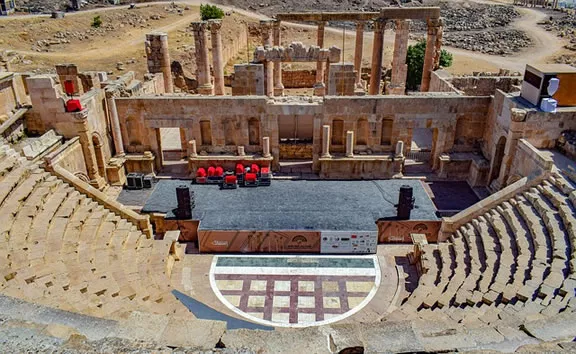
6. The Theatres of Ancient Greek Civilization
Ancient Greek civilization left behind numerous remarkable artifacts, including the Theatre of Dionysus, which could accommodate 15,000 people and possessed extraordinary acoustics. Despite being an outdoor theatre, even a whisper on stage could be clearly heard by the audience, displaying an architectural ingenuity that modern technology struggles to match.
7. The Crystal Skull of Honduras
In 1927, a crystal skull was unearthed in what is now Honduras, believed to date back to the Maya civilization. Carved from high-purity transparent crystal, its shape and size are identical to a human skull.
The skull shows no tool marks, indicating it was carved from a single crystal piece. With a hardness of about 7, it is impossible to carve without leaving marks using ordinary tools. When laser light is directed into its nostrils, the entire skull glows, suggesting a complex internal lens effect that exceeds modern craftsmanship capabilities.
8. The Lighthouse of Alexandria
The Lighthouse of Alexandria, one of the "Seven Wonders of the Ancient World," was a towering white marble structure over 150 meters tall, equivalent to 16 stories high, rising from the sea. Similar monumental structures exist worldwide, yet it wasn't until the 20th century that modern engineering mastered the techniques for constructing such tall buildings.
Traditional perspectives maintain that modern civilization has only existed for a few thousand years, believing humanity in earlier millennia to have lived primitively. How did they achieve such sophisticated technology? How could there have been advanced civilizations many millennia ago? Clearly, these awe-inspiring structures can only be remnants of prehistoric human civilizations, testifying to our prehistoric culture.
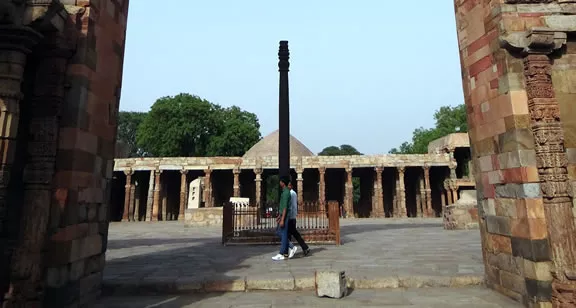
9. The "Iron Pillar" from 4,000 Years Ago
In New Delhi, India, the renowned "Iron Pillar" stands, having remained "rust-free" for over a millennium. Originally from an ancient Indian temple, this massive iron pillar extends 7.2 meters above ground, weighs about 10 tons, and was relocated to its current position hundreds of years ago. Estimated to be at least 4,000 years old, the pillar shows no rust, standing impervious to phosphorus, sulfur, and weathering.
Analysis reveals that 99.72% of the pillar consists of highly refined iron. Its millennium-long durability results from a unique and complex alloy composition, a feat of ironworking technology that exceeds both 20th-century India and modern-day capabilities.
Currently, scientists are unable to precisely date the casting using available technology, but historians preliminarily estimate its origin to be at least 1,600 years old, if not older. The identity of its creator and the reason behind its advanced tech level remain mysteries.
10. The Maya Calendar
The Maya civilization, known for its advanced scientific understanding, inhabited regions in present-day Mexico, the Yucatán Peninsula, Guatemala, and Honduras. This enigmatic civilization is believed to have developed an extraordinary culture.
The Maya culture holds answers to questions about humanity, life, and the universe's mysteries. The Yucatán Peninsula and parts of Guatemala showcase many Maya pyramids, temples, ancient structures, stone carvings, and cryptic inscriptions.
These cultural insights may be preserved in the surviving books, some carved on stone tablets and passed down through myths. Unfortunately, after the Spanish invasion in 1517, many valuable books from the Maya library were destroyed.
Today, only fragments of inscriptions and a few enigmatic calendars survive. Despite lacking telescopes, the ancient Maya possessed a remarkably accurate understanding of celestial cycle durations, closely matching modern calculations.
For example, modern measurements calculate a solar year as 365.2422 days, while the ancient Maya calculated it as 365.2420 days, differing by only 0.0002 days. They estimated the lunar orbit around Earth to be 29.530588 days compared to modern measurement of 29.528395 days. Notably, the Maya's calculations for Venus's conjunctions were accurate to within a day over a span of 6,000 years.
The Maya calendars also feature in-depth studies of Venus, determining a Venus year to be 584 days, with only a one-day error over a millennium using their methods, a staggeringly precise astronomical accomplishment. A stone tablet from Quirigua, Guatemala, records detailed positions of the Sun and Moon on a specific day over 400 million years ago.
The Maya calendar and numeric system are as enigmatic as their civilization. To this day, the origins of these systems remain unknown. The Maya calendar stands apart from others, raising perplexing questions with its use of exceptionally large numerical units, implying a sophisticated numerical system perfect for astronomical calculations.
The Maya's astronomical knowledge was extensive, calculating Earth's orbit with exceptional accuracy. Their calendars recorded Earth's movements, lunar eclipses, and planetary alignments and synchronizations. Remarkably, the Maya's astronomical insights extended beyond the solar system. In their "Tzolkin" calendar, they observed seasonal changes in the Milky Way, earning the Maya the title of "Galactic Navigators" from modern scientists.