9 Most Enigmatic and Mysterious Islands Around the World
1. Sheba Island
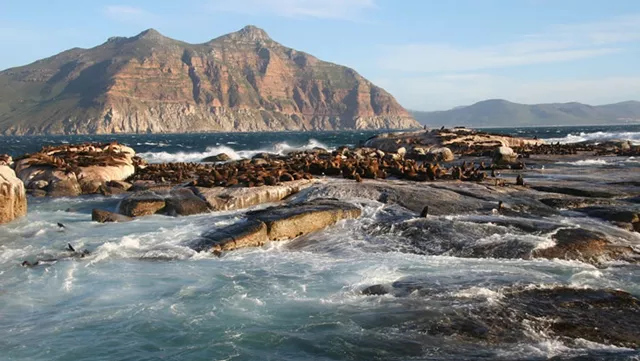
On the east coast of Canada, there lies a barren and desolate island known as Sheba Island. Grass doesn't grow there, birds don't rest, and there are no plants—only bare, hard blue stones. Whenever a ship nears the island, its compass abruptly malfunctions, drawing the vessel toward the island, causing it to run aground and sink as if some grim force is at play. Many sailors fearfully refer to it as "Death Island."
2. The Spinning Island
It is reported that a Greek cargo ship on a long voyage once encountered a massive object spinning on the ocean's surface about 1,000 meters from the ship. Initially, the crew thought they had stumbled upon a colossal sea monster, leaving everyone aboard bewildered. However, upon closer inspection, they discovered it was actually a small island. Calculations showed that this island spins rapidly, completing a rotation in as little as one minute at its fastest and taking up to twelve minutes at its slowest. The mystery of how such a solitary island manages to spin remains unsolved despite numerous research expeditions.
3. The Island that Splits and Merges
Located in the vast Pacific Ocean, there is a uniquely peculiar small island. Sometimes, this island splits into two smaller islands, and at other times, it automatically merges back into one. The separations and reunions occur irregularly, ranging from every 1 to 2 days to as often as every 3 to 4 days. When separated, the two sections are about 4 meters apart, yet when they merge, they form a single entity again.
4. The Crying Island
In the Pacific Ocean resides a desolate island measuring only a few kilometers across, emitting a persistent crying sound day and night. At times, the sound resembles the wailing of many people, while at others, it mimics the mournful cries of birds and beasts, creating an eerily sorrowful atmosphere. Passing ships often find themselves puzzled, frightened, or moved to tears by these haunting sounds.
A local legend about the Crying Island suggests that centuries ago, many sailors perished there due to a storm, and their souls, unable to return home, remain trapped on the island, crying out in anguish over their unresolved grievances. Scientific investigations have discovered that the crying sounds are varied and unpredictable, sometimes resembling a baby's cry, at other times a woman's sob, and occasionally a man's low wail. The mystery of why the island continues to emit these sounds remains unsolved.
5. The "Traveling" Island
In the southern hemisphere's Antarctic waters lies Bouvet Island, an island known for its ability to "travel." Unaffected by wind and waves, it moves on its own initiative.
In 1793, French explorer Jean-Baptiste Bouvet first discovered the island and accurately charted its location. However, over a century later, a Norwegian expedition team found that this 58-square-kilometer island had moved 2.5 kilometers west. What force causes it to "travel" remains a mystery.
6. The Ghost Island
On July 10, 1831, a small island abruptly emerged in the western waters of the Kingdom of Tonga in the South Pacific due to a volcanic eruption. The ongoing eruption gradually formed a landmass over 60 meters high and nearly 5 kilometers in circumference. However, just as people began discussing and making plans around it, the island vanished like a ghost. Years later, when everyone had nearly forgotten about it, it resurfaced like a phantom.
Records indicate that in 1890, the island rose 49 meters above sea level, but by 1898, it had sunk 7 meters below. It reappeared in December 1967, only to disappear again by 1968. This island has repeatedly appeared and vanished, remaining unpredictable.
In June 1979, it emerged once more. Scientists speculate that if the volcano remains dormant, the island may yet sink again. Its ghostly appearances and disappearances have earned it the name "Ghost Island."
7. The Natural Beauty Island
In southern Italy, Vulcano Island resulted from an ancient volcanic eruption, leaving behind mud from lava flow that accumulated in several pools. This mud is said to cleanse and moisturize the skin, making it smoother and fairer. Additionally, it is believed to relieve women's back pain and aid in weight loss, earning it the nickname "Natural Beauty Island."
8. Bird Island
Bird Island, nestled in the Seychelles archipelago in the western Indian Ocean, spans 40 hectares and has few residents. However, it serves as a crucial nesting ground for sea swallows, reaching up to 1.75 million pairs during peak season. In the mornings, pairs of these "couples" hunt for fish and shrimp in nearby waters, returning in flocks at night, chattering and playing. After the female sea swallows lay their eggs, the island becomes covered with them, which local residents can easily harvest. Egg merchants process and export these sea swallow eggs, with annual sales between 4.2 to 5 million eggs.
9. Penguin Island
Not far from Antarctica, the Falkland Islands are internationally renowned due to the conflict between Argentina and the UK, but few may realize this island is also a haven for penguins. At its peak, it was home to over ten million penguins, with five of the world's 17 penguin species inhabiting the island.