Unveiling China's Top Three Mysterious Forbidden Places
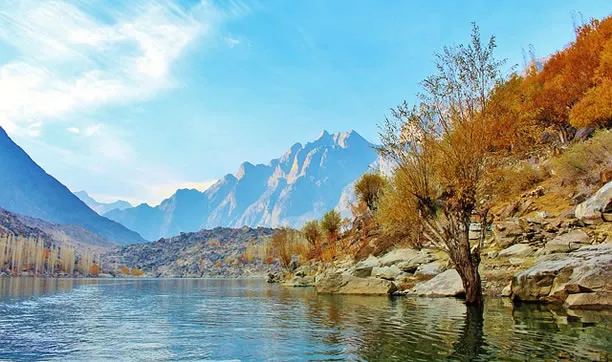
In our world, satellite remote sensing technology captures the entirety of mountains, rivers, and lakes. Yet, the Earth is much more complex than we sometimes realize, full of baffling mysteries that have puzzled humanity for ages. When confronted with these enigmas, human advancements in technology often seem quite limited. The following unsolved mysteries highlight this point perfectly.
1. Death Valley of the Kunlun Mountains
The majestic and towering peaks of the Kunlun Mountains have been regarded as sacred since ancient times in China, believed to be a celestial haven for immortals and shrouded in mystery. Legendary tales such as "Chang'e Flying to the Moon," "The Legend of Mu Tianzi," and "Journey to the West" all echo the mystical aura of the Kunlun Mountains. Even in today's technologically advanced era, they remain one of China's most enigmatic regions. Among the various mysteries they hold, the "Death Valley" is deemed a forbidden zone by locals.
It is said that even seasoned local shepherds prefer to let their livestock go hungry rather than allow them to graze in this valley, as rumors of demonic spirits suggest that anyone entering it never returns...
In the 1990s, an investigation by a Xinjiang Geological Bureau expedition ventured into this canyon. Around the same time, horses from a nearby pasture in Aral, Qinghai Province, strayed into the canyon's lush grasses.
As a shepherd prepared to retrieve the horses, he crossed paths with the expedition team, who urged him to leave promptly. Despite their warnings, the shepherd entered the canyon. Days later, the horses were seen again nearby, but the shepherd was missing. The expedition team discovered his lifeless, face-up body, his face unnaturally dark. Strangely, he appeared to have fallen as if attempting to fire a gun. The cause of his death remains unexplained.
In July 1983, a geological team from Xinjiang conducted research in "Death Valley." Despite the intense heat outside, a sudden snowstorm struck near the valley. A thunderclap knocked the team's cook unconscious. He later recalled feeling a sudden numbness, his vision darkening before he lost consciousness. The following day, the team found the ground's usual yellow earth changed to an ash-like color. These strange occurrences add yet another layer of intrigue to "Death Valley."
2. Snake-Infested Mogan Mountain
Mogan Mountain, located in western Deqing County, Huzhou City, Zhejiang Province, is a renowned national scenic tourist spot. Known as one of China's "Four Major Summer Resorts," it is also steeped in legends about the swordsmiths Gan Jiang and Mo Ye.
In late autumn, at heights between 700 to 750 meters on the mountain, visitors can witness a peculiar phenomenon. Despite the absence of bamboo, over 30 species of snakes, many venomous, gather here. Local farmers talk of a red "Snake King" at the peak, with some claiming to have seen it, leading to the nickname "Snake Mountain."
Visitors report weather changes and sudden rain upon reaching certain areas of the mountain. Particularly in late autumn, the snakes gather for hibernation, raising chances of sighting the "Snake King."
According to villagers, whenever someone approaches the area believed to be where Mogan’s parents lived, violent winds and thunder act as a deterrent, discouraging people from coming closer. Consequently, the peak has become another forbidden area, avoided by locals.
3. Bewitching Pit of Wawu Mountain
About 180 kilometers from Chengdu, in Hongya County, Meishan City, lies the frightening "Bewitching Pit." According to legend, Zhang Daoling, the founder of the Five Pecks of Rice sect, created an Eight Trigrams maze on Wawu Mountain to trap evil spirits. The mountain is perpetually covered in black mist, with tragedies occurring inexplicably. Many who venture into the mountain for herbs, hunting, or spiritual quests have disappeared or died mysteriously.
This pit is often likened to a "Bermuda Triangle on Land," wrapped in strange stories. Over the years, many have tried to solve its mysteries, but only more questions have arisen. The greatest challenge is the Bewitching Pit at the top of the mountain, where many have attempted to cross, to no avail.
Once inside, navigation becomes impossible. Phones lose signal, and watches malfunction due to strong magnetic interference. It is said some enormous meteorites underlie the pit, causing compass failures and disorienting illusions, leading people to become lost and fall victim to toxic mist.
On October 26, 2009, there were reports of a mysterious water creature in the Wawu Mountain reservoir. Villagers claimed to have seen a large, unidentified creature swimming rapidly. Four days later, another sighting described a "water monster" about 20 meters long, creating a wave a meter high before vanishing quickly. Though the sighting lasted only a few seconds, it caused a great stir.
Tales of a dragon atop Wawu Mountain amplify the Bewitching Pit's mystery. The unexplained disappearances of experts, tourists, and villagers who enter the pit contribute to its eerie reputation. The pit’s location, between 29°32'N and 29°34'N, parallels the latitudes of other enigmatic sites like the Bermuda Triangle and Egyptian pyramids, adding to the myth of a "Bermuda Triangle on Land," with science yet to offer clear explanations.
Indeed, China hosts other forbidden realms like Taiwan's Devil's Sea, Xinjiang's Lop Nur, Laoyemiao's waters in Jiangxi, and Hubei's Shennongjia. These places are riddled with mysteries awaiting discovery, reminding us of our humble understanding in the face of nature's vastness. Perhaps, as time goes on, humanity will one day unravel these secrets.