Exploring Supernatural Powers: Reality or Psychological Constructs?
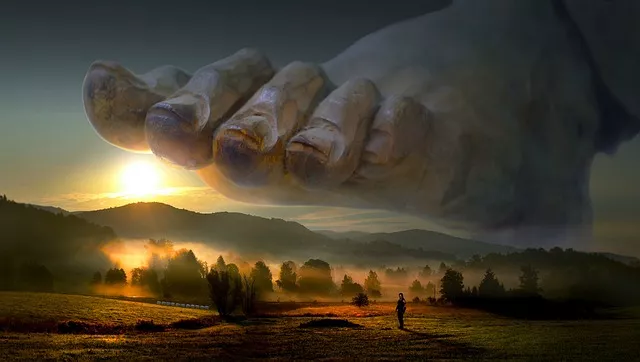
Image source: Pixabay
In our rapidly advancing technological age, the subject of supernatural powers remains a magnetic force, drawing in countless curious minds. From ancient sorcerers to modern mediums, from ghosts in horror novels to superheroes on the big screen, supernatural powers have always held a significant place in our culture and consciousness. But the question remains: do these powers truly exist, or are they simply products of our imagination?
1. Definition and History of Supernatural Powers
To address this question, we first need to define what supernatural powers are. Simply put, supernatural powers are phenomena that cannot be explained by scientific or natural laws. These include, but are not limited to, clairvoyance, divination, precognition, telepathy, ghost sightings, and superhuman abilities.
Since the dawn of recorded history, supernatural powers have been part of the human experience. From the ancient Egyptian pharaohs who believed their power was divine, to medieval alchemists attempting to turn base metals into gold, and to modern individuals seeking answers through tarot cards and crystal balls, supernatural powers have woven an invisible thread throughout the history of human civilization.
2. Scientific Perspectives on Supernatural Phenomena
The advancement of science has provided us with new insights into many supernatural phenomena. Research in fields such as psychology, neuroscience, and physics offers intriguing perspectives.
Psychology and the Supernatural: Freud suggested that many seemingly supernatural phenomena are projections of the subconscious. For example, dreams are considered expressions of the subconscious, and many people claim to have foreseen the future or communicated with deceased loved ones in their dreams. These experiences might not be genuinely supernatural but rather results of the brain processing information.
Neuroscience and Hallucinations: Neuroscientists have discovered that certain types of hallucinations (such as ghost sightings or the sensation of "sleep paralysis") can be explained by abnormal brain activity. Sleep paralysis, for instance, occurs when a person is falling asleep or waking up and cannot move, often accompanied by hallucinations. This experience is frequently misinterpreted as a supernatural event.
Physics and UFOs: Physicists and astronomers have also studied UFO phenomena. Many so-called UFO sightings can be explained by natural phenomena or man-made aircraft. For example, unidentified lights in the night sky may be sunlight reflecting off satellites, while strange flying objects could be military test aircraft.
3. Case Studies: Supernatural Phenomena We Have Pursued Over the Years
Let’s examine a few specific examples that demonstrate the complexity of supernatural phenomena and how they have been interpreted.
Case Study 1: The Bell Witch Incident
In the early 19th century, the Bell family in Tennessee, USA, claimed they experienced a series of supernatural attacks, such as furniture moving on its own, mysterious knocking sounds, and ghostly apparitions. This story became widely known and is one of the most famous paranormal events in American history.
Scientific Explanation: Modern researchers believe these phenomena may have been the result of collective hallucinations or pranks. The Bell family’s experiences occurred during a time of religious fervor and superstition, making people more likely to attribute unexplained events to supernatural forces.
Case Study 2: The Curse of Tutankhamun
In 1922, archaeologist Howard Carter discovered the tomb of Tutankhamun. Shortly thereafter, several members of the excavation team died, which was believed to be due to the pharaoh's curse.
Scientific Explanation: Medical experts suggest these deaths may be attributable to mold or toxic substances within the tomb, rather than a mysterious curse. Additionally, statisticians highlight that most who were involved in the excavation died within normal life expectancy ranges, with no significantly higher mortality rates.
4. The Human Psyche's Desire for the Supernatural
Why are humans so fascinated by supernatural phenomena? There are profound psychological and cultural reasons underlying this fascination.
Fear and Curiosity of the Unknown: The unknown is simultaneously terrifying and alluring. Supernatural phenomena provide a framework to explain the world, offering comfort when faced with the incomprehensible.
The Need for a Sense of Control: Supernatural powers are often perceived as tools for control. Activities like divination, clairvoyance, and precognition allow people to feel as if they have some control over the future, reducing anxiety about uncertainty.
Cultural and Media Influence: From ancient myths to modern films, supernatural phenomena have always been integral to human culture. The media continually amplifies and dramatizes these phenomena, embedding them deeply in our consciousness and making them widely accepted concepts.
5. The Intersection of the Supernatural and Reality
Despite the continuous advancements in science and our deepening understanding of the world, supernatural phenomena still hold a place in modern society. From folklore to urban legends, from personal experiences to collective memories, supernatural phenomena seem ubiquitous.
The Intersection of Modern Science and the Supernatural: Interestingly, science and the supernatural are not entirely opposed. Some concepts in quantum physics, such as quantum entanglement and the multiverse theory, often resemble plots from science fiction. These scientific theories are sometimes misinterpreted as "supernatural" because they challenge our traditional worldview.
Supernatural Phenomena in Psychotherapy: In psychotherapy, supernatural phenomena are sometimes used as healing tools. For example, through hypnosis, patients can explore their subconscious and even regress to "past life" experiences, a practice considered a form of spiritual healing in certain cultures.
The Social Function of Supernatural Phenomena: Supernatural phenomena also serve social purposes. For instance, shared paranormal experiences or mysterious events within a community or family can foster cohesion, forming a common cultural identity.
6. Conclusion: Real Existence or Psychological Constructs?
Do supernatural powers truly exist, or are they merely constructs of the human psyche? This question may not have a straightforward answer. While science offers many explanations, humanity's fascination with and experiences of the supernatural remain deeply rooted in our culture and psychology.
As Shakespeare wrote in "Hamlet": "There are more things in heaven and earth, Horatio, than are dreamt of in your philosophy." Supernatural phenomena may indeed be among those things we have yet to fully understand. Whether they exist in reality or are psychological constructs, they add mystery and wonder to our world.
The exploration of supernatural phenomena is not just an exploration of the world but also an exploration of the self. They challenge our perceptions of reality, ignite our imagination, and remind us that in a world seemingly fully understood, there still exists infinite unknowns.
So, the next time you hear footsteps above or see strange lights on the horizon, allow your mind to wander and explore that unknown realm. Perhaps the secrets of the supernatural lie deep within your soul, waiting for you to discover them.
In this world filled with the unknown and mysterious, we are all adventurers, and the journey to seek truth and meaning is never-ending. Regardless of the ultimate answer, what truly matters is that we continue to grow through exploration, transcend ourselves, and embrace the infinite possibilities.