The Warning Signals of Solar Eclipses: Debunking the Myth of the Sun-Devouring Dog
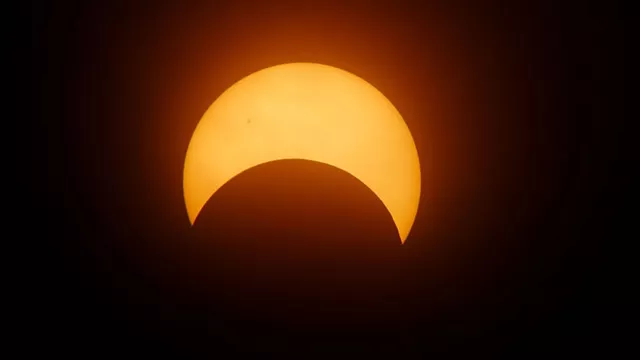
A solar eclipse is a rare astronomical event that happens when the moon positions itself between the sun and the Earth, making the sun appear as if it is being swallowed. Throughout history and mythology, solar eclipses have been depicted in various ways, such as the wolf Sköll in Norse mythology that devours the sun, and a celestial dog in Chinese culture that consumes the sun. These stories reflect the significant attention ancient cultures gave to this phenomenon.
The Phenomenon of Solar Eclipses
A solar eclipse, also called a solar obscuration, occurs when the moon is situated between the sun and the Earth, resulting in certain parts of the Earth seeing the sun partially or completely vanish. There are four types of solar eclipses: total solar eclipse, annular solar eclipse, partial solar eclipse, and hybrid solar eclipse, with the annular solar eclipse being the rarest.
A total solar eclipse theoretically occurs only when the moon is at its perigee. The sun is 400 times wider than the moon and is also 400 times farther from the Earth. Therefore, when the moon is at the ideal distance to cast a shadow on the Earth's surface, it can completely obscure the sun. However, given that the sun's actual size is much larger than that of the moon, only specific areas on Earth can witness a total solar eclipse, while others see only a partial solar eclipse.
In the scientific community, solar eclipses are believed to impact environmental changes, such as decreased visibility and temperature, and increased humidity. Sensitive plants and animals may display unusual reactions, and the safety of transportation and communication systems can also be affected to varying degrees.
Ancient Chinese Views on Solar Eclipses
In ancient China, celestial anomalies were often considered signs of great disasters or the decline of a nation, making them significant events for the country and its people. Solar eclipses were perceived as a celestial dog consuming the sun, a warning from heaven to the people, prompting the beating of drums and gongs to ward off the celestial dog. For this reason, solar eclipses were taken very seriously.
The "Theory of Solar Eclipses" states: "The sun is the essence of the sun, the image of the sovereign. When the sovereign's way is flawed, and there is an eclipse, it is because the yang cannot prevail." Ancient China was among the earliest civilizations to establish observatories, creating specialized institutions like the Si Tian Tai, and kept very detailed records of solar eclipses. From the Spring and Autumn period to the eleventh year of the Tongzhi era in the Qing dynasty, a total of 977 occurrences were recorded, aside from errors, including rare instances of "the sun rising twice," where daylight appeared twice in a day.
According to "Yisi Zhan," Li Chunfeng believed that solar eclipses were warnings of the emperor's loss of virtue, signaling the death of the ruler or the fall of the nation. Regardless of where a solar eclipse occurred, it was associated with corresponding human and natural disasters that required everyone's attention. It is said that Xi He, an astronomer during the Xia dynasty, was executed for failing to report a solar eclipse due to his indulgence in wine and pleasure, highlighting the importance placed on solar eclipses in ancient China.
The "Book of Songs, Lesser Odes, October" records: "At the turn of October, on the new moon of Xinmao, there was a solar eclipse, which was indeed a great omen," during the reign of King You of Zhou, who foolishly staged the "Beacon Fire to Fool the Lords" to amuse his favored concubine, Bao Si, serving as a cautionary tale for future generations.
Conclusion
Ancient interpretations of celestial bodies and atmospheric phenomena are rich with stories and meanings. The legendary Yamatai Kingdom, for instance, reportedly saw its people kill the sun goddess's priestess in anger following a solar eclipse. For us today, a solar eclipse may be just a fascinating spectacle to watch online and discuss casually, but in the past, it was a significant event that could influence the fate of a nation. In a world where natural disasters and wars are ever-present, perhaps we should take a pause from our busy lives to consider whether such events carry a warning for humanity.