Exploring Reincarnation: Near-Death Experiences and Insights into the Afterlife
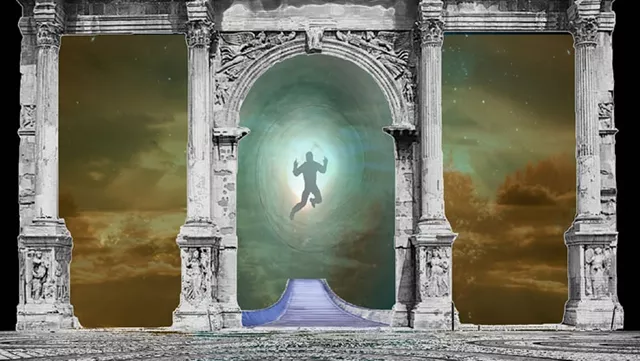
When discussing reincarnation, we must consider the concept of the soul. Without a soul, what would reincarnate? Therefore, the scientific community must first prove the existence of the soul, which Confucius referred to as the "wandering soul." While the physical body is temporary, only the soul can continue to exist after bodily death.
Research into the existence of the soul is ongoing, not only in medicine but also in physics. A key figure in this field is Dr. Amit Goswami, an Indian-American physicist and senior researcher at the Institute of Noetic Sciences. He applies modern quantum mechanics to explore the activities of the human soul. He wrote the book "Physics of the Soul," which discusses how to scientifically validate the soul's existence through mathematics and quantum mechanics.
Research on Near-Death Experiences
In the Western scientific community, a main area of research is known as "Near-Death Experience Study" (NDE). This research primarily focuses on patients who are near death or at the end of life. When patients are undergoing resuscitation and enter a state of unconsciousness, they report that their souls leave their bodies and explore various realms. Once they return to their bodies, they recall what they saw and heard during this period, which is termed a near-death experience. Near-death experiences are surprisingly common. According to statistics from Gallup, at least 13 million adults in the United States have reported near-death experiences and are still alive today.
The study of near-death experiences began quite early. In 1959, American parapsychologist Karlis Osis analyzed hundreds of detailed questionnaires about patients' experiences during the dying process. He published a research report titled "At the Hour of Death" in 1972. Osis concluded that "most patients enter a confused, forgetful, or unconscious state before death, but some retain full awareness until the end. They report 'seeing' the afterlife and can describe their experiences prior to passing. For example, they might see deceased family and friends, encounter figures from religion and mythology, and witness beautiful, otherworldly landscapes. These experiences profoundly impact them, bringing peace, tranquility, comfort, and spirituality."
Research conducted by Dr. Kenneth Ring's team at the University of Connecticut found that approximately 35% of people experience near-death phenomena, which means that more than three out of ten individuals can describe their soul's journey after clinical death.
Many scholars are engaged in this research, including Dr. Melvin Morse, a pediatric professor at the University of Washington; Dr. Raymond Moody, a professor at the University of Nevada; Dr. Elisabeth Kübler-Ross, a renowned expert on death and psychologist; and Dr. Charles Tart, a professor at the University of California. Numerous papers have been published in prestigious academic journals, including the internationally recognized medical journal "The Lancet" and "The Journal of Near Death Studies."
The Truth of the Immortal Soul

In 1978, with the initiative of several leading scholars, the International Association for Near-Death Studies was officially established, indicating that research in this field is still developing. One of the most notable figures is Dr. Elisabeth Kübler-Ross, who has personally documented over 20,000 cases of near-death experiences, including her own experience of her soul leaving her body and returning. She has written extensively on the subject, including works such as "On Life After Death" and "On Death and Dying," providing substantial medical evidence supporting the truth of the soul's immortality. Her works have been translated into multiple languages and become international bestsellers.
Next, we will explore near-death experiences based on the research findings of Dr. Raymond Moody. Between 1972 and 1974, he studied over a hundred patients who had near-death experiences and published the book "Life After Life" in 1975.
The book outlines that when a dying person lies on a hospital bed during resuscitation, they may feel severe physical pain and suddenly hear a doctor announcing that their heart has stopped, which is medically defined as death. The patient then experiences a dark tunnel with buzzing sounds, ringing, and noise, quickly traveling to the other side. At this point, they realize they have left their body and can see their physical form lying on the hospital bed. Some individuals report seeing deceased family members, others witness heavenly scenes, and some encounter divine beings as described in religious texts. These beings are described as "radiant lives" that greet them warmly.
Subsequently, divine beings present a life review, showing the person a recap of all their deeds, both good and bad, whether witnessed by others or not. The divine beings then allow them to evaluate whether their life was good or bad, with this assessment influencing their choice for the next life. Ancient Chinese wisdom states, "Above one's head, three feet have spirits," implying that divine beings observe all actions and thoughts, even in solitude. At the moment of death, everything is replayed like a film, which is why it's advised, "If you want to keep something from others, you must not do it yourself."
After viewing the film of their life, near-death experiencers reach a boundary separating this life from the next. Crossing it leads to the afterlife. Many do not wish to return to the physical world, finding freedom from the pain of resuscitation. However, they are often pulled back by an invisible force and return to their bodies. Upon awakening, doctors breathe a sigh of relief and say, "We've finally brought the patient back." The awakened patients then recount their out-of-body experiences, which constitute a near-death experience.
The Afterlife

In reality, not everyone's experience is peaceful and pleasant. Some report terrifying near-death experiences. For instance, in the book "Heaven is Real: A Doctor's Experience with Heaven," a German police chief named Stein Heidler described a horrifying near-death experience. Known for his brutality and lack of compassion, Heidler recounted that, at the moment of death, his soul left his body, and he faced vicious spirits, one of which tried to attack him. Why was his experience so terrifying? It was a manifestation of his cruel nature and malevolent thoughts, an enactment of his own actions.
The study of near-death experiences has roots in Eastern traditions, with descriptions appearing over three thousand years ago in Buddhism. The "Kṣitigarbha Sūtra" states: "In the realm of Jambudvīpa, even virtuous people will encounter countless evil spirits at the time of death, who may transform into parents or relatives to lead the deceased into evil paths, let alone those who have committed wrongdoings." This essentially describes near-death experiences. "Jambudvīpa" refers to humans on Earth. Even virtuous individuals encounter evil spirits at death, appearing as family members to lure them into evil paths, seeking repayment or revenge. For those with wrongdoing, the near-death experience can be even more frightening.
Thus, the Buddha frequently reminds us in the sutras to forsake evil and cultivate good, letting go of harmful behaviors, negative thoughts, and selfish ideas. By doing so, one can hope to witness positive scenes at the time of death and secure a better future life. Buddhism teaches that to perceive positive scenes at life's end, one should remember the Buddhas and Bodhisattvas, as they embody the most perfect and sacred forms of life. Additionally, divine beings described in other religions can provide comfort and help eliminate terrifying visions. Therefore, the findings from Western near-death experience studies align with truths about the universe and life long articulated by ancient Eastern religious philosophies.