Revived Four Days After Death: Wang Guo'ang Shares His Harrowing Experience
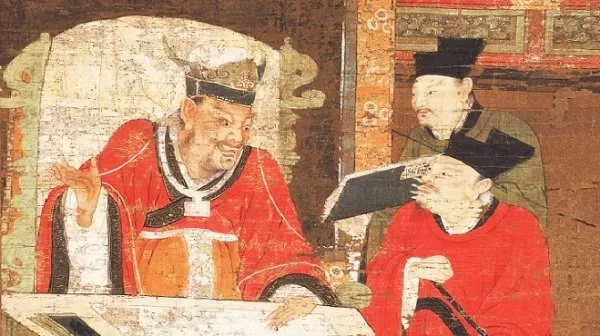
During the Ming Dynasty, a man named Wang Guo'ang lived beneath the Yinma Bridge in Suzhou. He earned his living by weaving bamboo into combs, earning him the nickname "Wang the Comb Maker." The "comb" was a traditional tool with fine teeth, used both to clean hair and serve as a hair accessory. In the second month of the Renzi year of the Wanli era (1612 AD), Wang fell ill and died. Remarkably, four days later, he returned to life and recounted his experiences in the afterlife to his neighbors.
According to Wang's account, upon his death, his spirit departed his body and he encountered a ghostly officer who captured him. He was bound with a red rope and led down a dark, sunless path resembling a valley. At the path’s end, he saw a well next to a large basket. Placed in the basket, he was lowered into the well, where he found a path leading to the First Hall of Yama, the King of Hell. After being reprimanded and punished for his sins, he was taken through the well to the Second Hall of Yama, and continuously deeper until reaching the Seventh Hall. There, in the pitch-dark depths, following further punishment, he heard Yama decree: "Send him to the reincarnation place; in his next life, he will be an animal."
Desperate, Wang pleaded with all his might. Yama, after reviewing his life records, remained silent before finally announcing: "Grant him thirty taels of silver, extend his life by one year." Wang was then escorted back, not via the old path, but to the seaside, where he was pushed into the ocean. His spirit naturally returned to his body, and he came back to life.
Despite this miraculous experience, Wang Guo'ang did not seek to cultivate virtue or engage in good deeds. Instead, he sold his father’s ancestral home for twenty-five taels of silver and worked at the county office, earning five more taels by making things difficult for others. On a day in the second month of the Gui Chou year (1613 AD), exactly one year after his first death, Wang passed away again, this time not returning to life.
This narrative does not detail Wang Guo'ang's sins or his pleas to Yama, potentially due to his reluctance to lose face while recounting the story. However, this absence also adds an element of authenticity, resonating with the mindset of a regular person. Regardless, this account serves as a reminder that a person’s spirit continues beyond bodily death, facing judgment where ultimately, good and evil are rewarded or punished.
Original text: 苏城饮马桥下居民汪国昂,编竹为篦梳,人呼之曰汪编箕。万历壬子年二月,病役而死,第四日乃苏,具述其事于邻人云:初死时,见冥卒一人,用赤绠缚去、如从阴崖暗谷中行,不覩天日。至一处,有井,井傍有篮,盛之而下。见第一殿王,将某拷掠毕,复送至第二殿。并从井入,渐低渐深,辗转传送直至第七殿,深无际矣。拷掠如初,传声将某送至转轮殿,受形为畜生。某苦告求还。见王检阅簿书,默然良久,便云:“赐银三十两,量延一年。”被前冥卒牵出,不由旧路,经到大海岸,推堕洋中,便活。汪小人也,既活不肯勤修,反改业为县门干力,鬻父所遗居得二十五金,又掯人先后恰得五金。首尾一年,果以癸丑二月某日复死。
Image and text source: Look China