Unlocking the Mysteries of the Human Body: Meridians, Acupoints, and Acupuncture
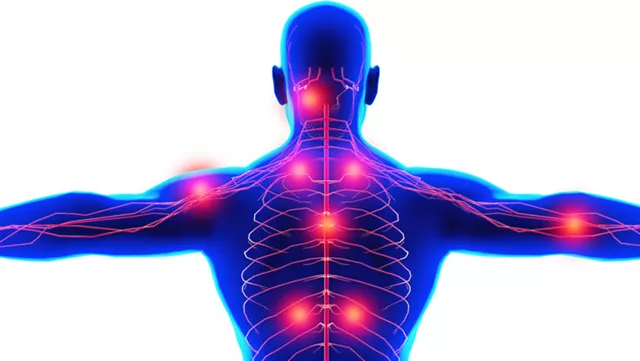
The theory of the Five Elements and the meridian system in Traditional Chinese Medicine (TCM) is a fascinating marvel of human science. Acupuncture, often referred to by Westerners as the "Eastern Magic Needle," is hailed as a wonder in the history of global medicine. A silver needle can be inserted from the top of a person's head and exit through the jaw without causing bleeding or pain, targeting multiple acupoints for various ailments. How ancient people came to understand meridians, acupoints, and the practice of acupuncture still amazes modern individuals. Scientists have employed modern scientific methods to study the Five Elements theory and the meridian system, validating the scientific foundation of these theories and confirming the actual existence of meridians, contributing to numerous significant research findings.
The interactions and transformations of the Five Elements mirror the body's automatic feedback regulation principles. The transformation laws involve concepts similar to program control in cybernetics, and the classification method of the Five Elements, known as "similarity-based categorization," is akin to the isomorphic system concept in cybernetics. The "internal stabilizer model" illustrated by cybernetics expert Ashby in "Design for a Brain" uses the letters A, B, C, D, and E, which closely resemble the diagram of the Five Elements' interactions. Canadian scholar Dr. Ling Y. Wei noted in his article "Modern Interpretations of the Fundamental Theories of Traditional Chinese Medicine" that "the Five Elements should not be seen as a static model, but rather as a dynamic one... the simplest form of dynamic models in the macro and micro cosmos... with immense value in science and medicine."
In addition to exploring the Five Elements theory, modern scientific methods have also been applied to study the meridian system.
In the 1930s, Japanese researcher Yoshitaro Shimizu discovered the electrical properties of meridians by measuring skin resistance. The areas around acupuncture points exhibit distinct electrical characteristics compared to other skin areas, including high capacitance, elevated potential, and increased conductivity. In 1950, Yoshio Nakagaki discovered pathways with good conductivity. In the mid-1950s, Soviet researcher Batyushkin identified "skin activity points." These conductive pathways and skin activity points closely align with the classical locations of meridians and acupoints.
Furthermore, infrared thermography has recorded temperature patterns that match meridian pathways. From 1971 to 1974, Professor Katsusuke Serizawa of Tokyo University of Education captured over 20,000 infrared thermographic images of 50 healthy men, covering areas such as the chest, abdomen, back, and head, discovering that the temperature at acupoints was significantly higher, appearing as white spots. Stimulated sound information showed conduction characteristics along meridian pathways, with paths closely matching the routes of the twelve primary meridians. This indicates that the meridians proposed by TCM indeed exist objectively.
Radiation field photography was initially discovered by N. Tesla (1856–1943), who created a high-frequency electric field using a high-frequency high-voltage generator. When an object is placed within this field, visible light appears, although it wasn't given much attention at the time. In 1939, Soviet engineer S.V. Kirlian revisited this phenomenon, discovering that living human bodies emit colorful halos and light points rhythmically; however, these halos disappear shortly after death.
The size of these halos varies with changes in the physiological and mental states of the body. Even more intriguing is that certain areas emit stronger light than their surroundings, corresponding with the 741 acupuncture points identified in ancient Chinese meridian theory. The Kirlian couple's discoveries caused a sensation worldwide. This phenomenon of human bioluminescence is known as the "Kirlian Effect."
The photography technique developed from the "Kirlian Effect," known as radiation field photography or "Kirlian photography," has been widely used in various studies of bioluminescence. Additionally, G. Fish, president of the Swedish Acupuncture Society, reported in 1973 that he, along with Professor C. Ledergerber from the University of California, conducted preliminary research on "Qi and Blood" in TCM, indicating that the existence and changes of Qi and Blood can be represented through "Kirlian photography."
Currently, the international medical community is widely engaged in research and clinical applications of Eastern medicine, particularly acupuncture and the meridian system. Their efficacy and legitimacy are recognized and funded by health management agencies in countries such as Japan, the United States, and Europe.
A multidisciplinary research group formed by domestic universities has made three significant discoveries about the material basis and functions of meridians based on numerous related findings. For the first time, modern scientific theories and experimental methods have proven that the morphological locations of acupoints are situated within a complex system based on connective tissue, interwoven with blood vessels, nerve plexuses, and lymphatic vessels, forming a physiological structure with comprehensive and complex physiological functions.
Preliminary findings indicate that the deep connective tissue structures corresponding to acupoint locations are enriched with elements such as calcium, phosphorus, potassium, iron, zinc, manganese, and chromium, with calcium content being tens to hundreds of times higher than that of other non-acupoint tissues (excluding bones). Calcium ions serve as crucial signaling molecules, playing an essential role in various physiological activities. Additionally, it has been preliminarily discovered that collagen fibers in the connective tissue exhibit liquid crystal-like structures with characteristic wavelengths for efficiently transmitting infrared light, suggesting a potential biological photon system within the human body that plays a vital role in physiological activities such as the transmission and exchange of life information and energy.
It is evident that the unique phenomena of the human body and the meridian system can, to some extent, be explained using modern scientific knowledge, and there are scientific principles behind them. Some phenomena remain unexplained and require further research. It is believed that with the efforts of scientists, the mysteries of the miraculous human body will eventually be unveiled.