The Incredible Parallels Between Earth and the Human Body
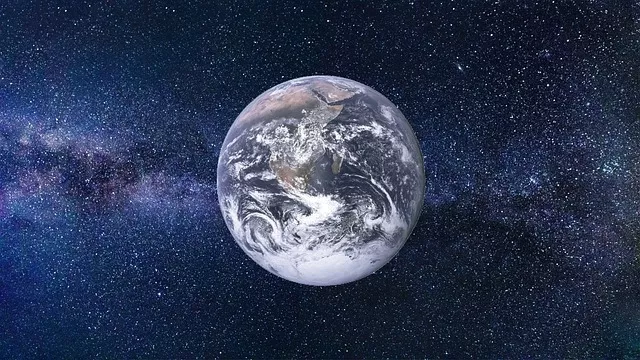
Image source: Pixabay
A growing number of scientists believe that every part of the universe, including Earth, is a living entity. Upon closer examination, we can see that while the forms of life throughout the universe are vastly different, they all share fascinating similarities.
There is a perspective that views Earth as a gigantic living organism. As early as the late 1960s, British atmospheric scientist James Lovelock introduced the "Gaia hypothesis," which posits that Earth functions as a self-regulating, living entity. This is because it can maintain its stability through internal regulation—a trait unique to living organisms—often referred to as "homeostasis."
Just like the human body has the ability to heal itself, Earth's "homeostasis" is evident in various ways. For example, although Earth's atmospheric composition and ocean salinity can be altered by numerous factors, both remain stable. Despite the constant increase in solar radiation over the years, Earth's surface temperature has stayed relatively stable. Even after experiencing frequent natural disasters and being impacted by various biological activities, Earth seems to have self-healing capabilities, gradually returning to its original state over time.
Furthermore, Earth and the human body, seemingly unrelated, exhibit remarkably similar characteristics. A well-known saying is that Earth's surface consists of "three mountains, seven waters, and one piece of farmland." According to statistics, the total volume of water on Earth is about 385 million cubic kilometers. If evenly distributed, Earth would become a "water sphere" with an average depth exceeding 2,700 meters. All life forms on Earth originate from water, which is also the most vital element for sustaining human life. Water makes up a significant portion of the human body, accounting for about 65% to 70% of its weight. The brain is about 75% water, blood is roughly 83% water, muscles are about 76%, and even bones contain around 22% water.
Moreover, certain extraordinary coincidences continue to fascinate. In traditional Chinese medicine, the two most important acupuncture points in the human body are the "Shenque" (navel) and the "Mingmen" (life gate), which correspond and represent the sources of life energy. The "Shenque," or navel, is seen in traditional Chinese medicine as the gateway for vital energy. Positioned on the body's midline, the navel divides the body perfectly according to the golden ratio. The book "Li Zheng An Mo Yao Shu" notes: "The navel connects to the five organs; it is the door for the flow of vital energy, hence it is called Shenque." The navel is also the earliest source of nutrition for the body after life begins.
Earth has a comparable point, located between 30 degrees East and 60 degrees East longitude, and around 30 degrees North latitude. This region, the Middle East, is rich in oil resources, much like how the navel functions within the human body; the Middle East plays a crucial role in providing life-sustaining nutrients for the planet.
Tracing the 30-degree North latitude line across the Earth, near 32° North and 64° West, is the renowned Bermuda Triangle. In relation to the human navel, this area might be thought of as Earth's "Mingmen," also termed the "life line." Along this line, not only have the oldest civilizations and most phenomenal natural landscapes flourished, but it is also shrouded in countless mysteries. Here we find the world's highest peak, Mount Everest, and the Mariana Trench, the deepest point on Earth; along with Egypt's ancient civilization, the "Fire God Fire Seed" murals in the Sahara Desert, and various other Earthly wonders.
Significant rivers on Earth are also situated near the 30-degree North latitude line, akin to how blood flows through the heart in the human body. The human circulatory system consists of arteries, veins, and capillaries, and similarly, Earth's major rivers flow across critical regions, such as the Yangtze River in China, the Mississippi River in the United States, the Nile River, which supported Egyptian civilization, and the Danube River, which winds through much of Europe. These grand rivers, with their many tributaries and smaller streams, spread and branch across the Earth like capillaries.
Interestingly, since the 1950s, studies on the brain have paralleled the exploration and development of Antarctica. While the brain represents the pinnacle of the human body, Antarctica represents a zenith on Earth. Scientific research suggests that the majority of brain functions remain untapped, similar to the many secrets yet to be uncovered beneath the Antarctic ice.
The remarkable similarities between the human body and Earth leave us marveling at the wonders of creation, often prompting us to ask: Is this the result of a higher power's design, or merely a coincidence?