The Fascinating "Sumerian King List": 8 Kings Ruled for 240,000 Years
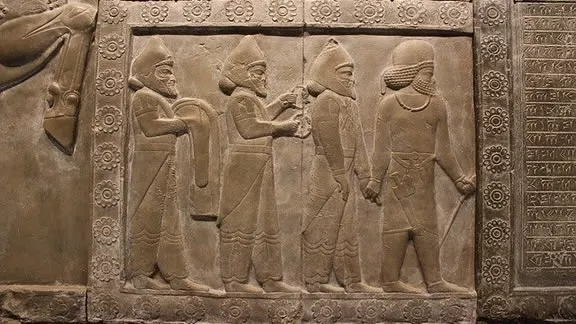
The Sumerian civilization in Mesopotamia is one of the world's oldest. Its most renowned artifact is the "Sumerian King List," an ancient document that records the names and reigns of the kings who ruled Sumer. Remarkably, the list claims that before the Great Flood, eight kings governed the region for a combined total of 240,000 years.
A portion of the "Sumerian King List" was discovered by German-American scholar Hermann Hilprecht in the city of Nippur and published in 1906. Since then, other versions of the list have been uncovered, featuring largely similar content.
According to the "Sumerian King List," kingship descended from the heavens, and eight rulers governed five cities in Sumer for 240,000 years until the Great Flood, which wiped out humanity. After the flood, kingship descended from the heavens once more.
Research indicates that the reign durations of these ancient kings, as described in the "Sumerian King List," are calculated using the Sumerian numerical unit "sar." One "sar" is equivalent to 3,600 years, the next unit is "ner," equal to 600 years, and the following unit is "soss," equal to 60 years.
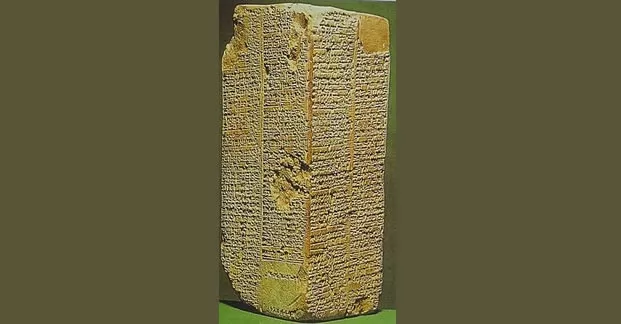
Currently, the best-preserved version of the "Sumerian King List" (public domain)
The first section of the "Sumerian King List" clearly records the time and place of the reigns of eight kings after kingship descended from the heavens:
- Alulim ruled for 28,800 years in the city of Eridug
- Alaljar ruled for 36,000 years in the city of Eridug
- En-men-lu-ana ruled for 43,200 years in the city of Bad-tibira
- En-men-gal-ana ruled for 28,800 years in the city of Bad-tibira
- Dumuzid, the shepherd, ruled for 36,000 years in the city of Bad-tibira
- En-sipad-zid-ana ruled for 28,800 years in the city of Larag
- En-men-dur-ana ruled for 21,000 years in the city of Zimbir
- Ubara-Tutu ruled for 18,600 years in the city of Curuppag
These eight kings ruled for a total of 241,200 years across five cities. Following this period, the catastrophic Great Flood swept across the world.
The extraordinary nature of these numbers has led some scholars to view them as mythical. However, others suggest that these rulers may have been divine, hence their unusually long lifespans. In ancient China, for instance, the reigns of the Three Sovereigns and Five Emperors also lasted for hundreds of years. It is said that this ancient era was a time when gods and humans coexisted.
Before the Great Flood, the kings' reigns were incredibly long, but afterward, they became progressively shorter, lasting only hundreds or even tens of years. This pattern of shortened lifespans is similar to biblical accounts, significantly enhancing the credibility of the "Sumerian King List."
Copies of the "Sumerian King List" have been found in Babylon, Susa, Assyria, and the royal library of Nineveh. All are believed to stem from an original list, thought to have been written during the Third Dynasty of Ur (around 2000 BC) or even earlier.
The best-preserved version is the "Weld-Blundell Prism," a clay artifact inscribed with cuneiform script, currently housed in the Ashmolean Museum in Oxford, England.