Alien Life Forms as Described by Buddha Over Two Thousand Years Ago
Before the advent of modern science, Buddhist scriptures offered insights into extraterrestrial civilizations. Over 2,600 years ago, Shakyamuni Buddha, known as a great enlightened being, not only affirmed the existence of extraterrestrial civilizations but also provided detailed accounts of the four great continents—Jambudvipa, Uttarakuru, Purvavideha, and Aparagodaniya—and the life forms and living conditions found there.
Scientific Consensus: Extraterrestrials Are Real
There is a scientific consensus regarding the existence of extraterrestrials: they do exist. Our Milky Way galaxy alone contains hundreds of billions of stars similar to our Sun, and more than a billion galaxies akin to the Milky Way have been identified. Thus, it seems implausible that Earth would be the only planet with advanced life. The main question is whether we can detect and interact with these extraterrestrial beings. The United States has invested extensively in this quest through the "Search for Extraterrestrial Intelligence Institute" (SETI), dedicated to finding alien life, though no substantial discoveries have been made yet.

For Millennia, Buddha Recognized the Splendor of Galaxies
Long before scientific discovery of extraterrestrial civilizations, Buddhist scriptures provided insights into them. The omniscient Shakyamuni Buddha not only confirmed the existence of such civilizations over 2,600 years ago but also detailed various types of extraterrestrial life and their living environments.
In the "Agama Sutra," the Buddha's mention of "Small Thousand Worlds" corresponds to the Milky Way galaxy. The "thousand suns and moons" in a Small Thousand World (where "thousand" is a quantifier) are described as forming a "wheel" (a Sanskrit term meaning "coiled hair" in ancient Chinese), suggesting a disc-shaped and spiral form, accurately depicting the Milky Way. These "thousand suns and moons" represent star systems with life, including "Jambudvipa (where Earth is located), Uttarakuru, Purvavideha, and Aparagodaniya" (the legendary four great continents in Buddhism), along with "eighty thousand small continents." This aligns with modern scientific estimates of advanced star systems in the Milky Way, ranging from ten thousand to one million. Many such Small Thousand Worlds exist; a thousand form a Medium Thousand World, and a thousand of these create a Great Thousand World, illustrating the numerous galaxies similar to the Milky Way across the universe.
The "Avatamsaka Sutra" describes various galaxy shapes, such as elliptical, womb-like, lotus-like, square, and river-like. Through Buddhist scriptures, much can be understood about the specific conditions of extraterrestrial beings.
Among the four great continents and eighty thousand small continents, the Buddha provided more elaborate descriptions of "Jambudvipa (the southern continent), Uttarakuru, Purvavideha, and Aparagodaniya," corresponding to four types of planets.
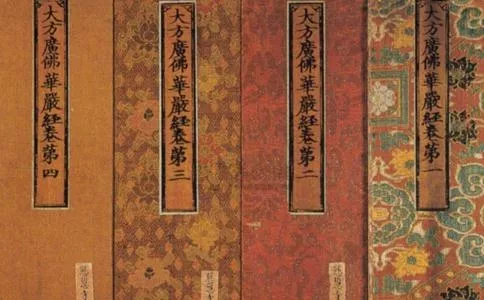
The Buddhist scriptures offer detailed descriptions of these four great continents:
1. Geography and Facial Features
Jambudvipa features a geography broad in the north and narrow in the south, with inhabitants having wider faces at the top and narrower at the bottom (mirroring Earth's land distribution). Uttarakuru resembles a crescent moon, with crescent-shaped faces. Purvavideha has a continent round like a full moon, with round faces, while Aparagodaniya has a square continent with square faces. Earth is categorized as Jambudvipa.
2. Height and Clothing Sizes
Inhabitants of Jambudvipa are three and a half elbows tall, wearing clothing seven elbows long and three and a half elbows wide. In Uttarakuru and Purvavideha, people share similar height and clothing measurements as those in Jambudvipa. Aparagodaniya's residents stand seven elbows tall, donning clothing fourteen elbows long, with a seven-elbow difference between upper and lower garments.
3. Natural Lifespan and Disease
People in Jambudvipa typically live a hundred years, though some die young. In Uttarakuru, lifespans reach two hundred years, with some early deaths. Purvavideha's longevity is three hundred years, also with some dying young. Aparagodaniya's people enjoy a millennium-long lifespan without premature death.
Despite their thousand-year lifespans, Aparagodaniya's inhabitants lead comfortable, happy lives. However, due to their indulgence and lack of education, saints avoid teaching there, leaving residents without exposure to Buddha's teachings. The Bodhisattva Weituo, venerated in our temples, is said to serve the three continents, excluding those without Buddha's teachings from Aparagodaniya.
4. Economic Life and Market Transactions
In Jambudvipa, markets trade money, grains, animals, and humans. Uttarakuru focuses on cattle and sheep transactions, while Purvavideha deals in wealth, grains, and treasures. Aparagodaniya's people do not participate in market transactions.
Although this was historically accurate, modern civilization has largely eradicated human trade in Jambudvipa, strengthened the livestock industry in Uttarakuru, and focused on agriculture in Purvavideha. Aparagodaniya's society has advanced technology, resembling highly evolved civilizations, where the concept of private property no longer exists.
5. Love and Marriage
In Jambudvipa, Uttarakuru, and Purvavideha, marriage between men and women shares similarities. However, Aparagodaniya lacks the concept of personal residence, thus having no marriage concept. If a man is attracted to a woman, he simply looks at her, and if she senses his feelings and reciprocates, she accompanies him to a tree.
If the woman is a close relative (mother, aunt, sister), the tree branches remain upright, withered leaves fall, providing no cover, flowers, or fruits, nor any bedding. If not, branches droop to offer shade, leaves flourish, flowers and fruits bloom, and the tree produces countless types of bedding for the couple beneath.
Interpreted through a modern lens, Aparagodaniya's trees may function as advanced AI devices, identifying unsuitable genetic matches. The Buddha also mentioned various trees that grant inhabitants' desires in Aparagodaniya.
6. Food
People in Uttarakuru and Purvavideha consume grains, vegetables, fish, and meat like those in Jambudvipa. Aparagodaniya's residents do not farm but have naturally mature rice due to their good karma.
Among the four great continents—Jambudvipa, Uttarakuru, Purvavideha, and Aparagodaniya—Aparagodaniya exhibits distinct differences from the others. The "Agama Sutra" elaborates on the beings in Aparagodaniya.

In the "Agama Sutra," the Buddha stated:
1. Eating Habits
"Monks, the people of Uttarakuru have a bluish complexion, are eight fingers tall, and are identical in appearance, lacking distinctive features. They all wear clothing—none are partially or entirely unclothed. They share kinship, with no differences. Their teeth are evenly spaced, intact, attractive, clean, ivory-white, and visually pleasing. When hungry or thirsty, the people of Uttarakuru gather food without farming or planting, naturally possessing clean, husk-free, white rice. When ready to eat, they place it in a bowl, a fire gem beneath it, and due to their good karma, the fire gem spontaneously ignites and cooks the food. The flame extinguishes on its own. Before eating, they prepare utensils, sit to share the meal with others, and their food never diminishes. The food remains complete, pure, fragrant, and delicious without broth or seasoning. It tastes like the heavenly Suva and is as pure as a flower. After dining, they are full and satisfied, youthful, and unaging. The food grants them benefits with perfect color and flavor."
The automatic fire device depicted in the eating habits clearly originates from advanced technology.
2. Love Life
"Monks, when Uttarakuru's people are attracted to a woman, they gaze at her, and if she reciprocates, she follows him to a tree. If she is a close relative, branches stay upright, and leaves wither without providing coverage, flowers, fruits, or bedding. If not, branches droop for shade, leaves flourish, while flowers and fruits bloom, providing countless bedding types for the couple to enjoy beneath the tree."
3. Child-Rearing
"Monks, in Uttarakuru, babies remain in the womb for only seven days, and are born on the eighth day. After birth, children, whether male or female, are placed publicly. Passersby from all directions feel empathy and feed them milk that naturally flows from their fingertips. After seven days of nourishment, the children reach the same appearance and size as adults, with boys and girls forming companion pairs."
This section describes the swift child-rearing process, where children are quickly nourished to adulthood within seven days.
4. Facing Death and Handling Corpses
In Aparagodaniya, people live for a thousand years without experiencing disease. "When Uttarakuru's people near death, there is no mourning; they simply place the body publicly. A high-flying bird named Uccangama swiftly carries the person's hair, transporting the body to a distant island. This is because Uttarakuru's people enjoy pure karma and cleanliness, avoiding foul odors. Monks, when Uttarakuru's people defecate, the ground opens and closes for them, maintaining cleanliness."
The Buddha also explained the origins of the beings in Aparagodaniya: by practicing ten good deeds, one can choose to be reborn there, attaining a thousand-year lifespan without changes. Due to their virtuous nature, Aparagodaniya's inhabitants ascend to heavenly realms after passing.
In conclusion, the Buddha, with infinite power and wisdom, was the first great enlightened being in history to declare the existence of extraterrestrial life and provide detailed descriptions of their life forms in scriptural texts. This suggests numerous planets harbor life, with Earth being just one among many.