Did Humans Imagine God, or Did God Create Humans?
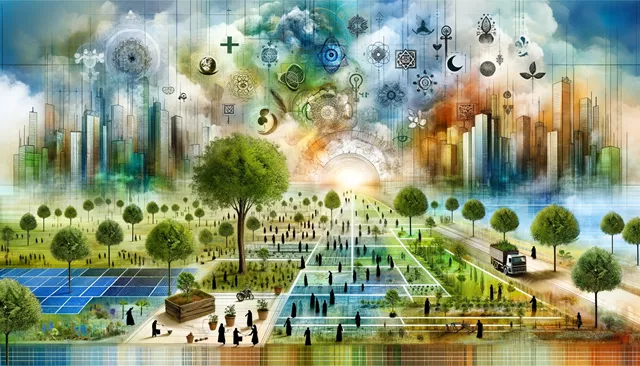
This topic encompasses religious beliefs, philosophical reflections, and personal viewpoints, with diverse cultures and belief systems providing various answers.
- From the perspective of many religious traditions, such as those in monotheistic faiths like Christianity, Islam, and Judaism, believers traditionally hold that God created humanity and the universe. For example, the Christian Book of Genesis recounts God's creation of the heavens, the earth, and humankind. Islam and Judaism offer comparable narratives about creation.
- Alternatively, certain philosophical schools of thought, humanistic viewpoints, and scientific explanations perceive the concept of God as a construct developed throughout human social and cultural evolution. These perspectives propose that humans conceived of God to explain the unknown, provide comfort, establish moral order, or encourage social cohesion.
- Some religious and philosophical traditions, such as Buddhism and Taoism, may not focus on creation but instead emphasize the inner spiritual development of individuals and their comprehension of life and the universe.
These varying interpretations reflect humanity's journey to explore and understand existence, and this question may never have a conclusive answer.
If we consider the possibility that deities such as God, Buddha, Allah, and other higher beings instruct humanity to do good, fill the world with love and kindness, and inspire awakening and repentance to prepare for a future paradise, what is their ultimate purpose? Is it out of love for humanity? Compassion for life? Or the strength of people's faith, awakening, and repentance?
In Christianity, God's teachings emphasize doing good and loving others out of unconditional love for humanity, as exemplified by the Bible's teachings and Jesus Christ's sacrifice. In Buddhism, the Buddha advocates for awakening and repentance to help beings understand the roots of suffering and pursue liberation. In Islam, Allah's teachings guide people to live morally and spiritually pure lives, aiming for forgiveness and rewards in the afterlife.
In some faiths, the power of faith serves as a bridge between the divine and human realms, facilitating a connection between believers and God. Within these religious views, faith may not only be essential for the existence of God or higher beings but also signify a mutual relationship: believers receive divine grace and guidance through faith, while God accomplishes His will on earth through the faith of believers.
In specific traditions, such as Buddhism, higher beings like the Buddha are not reliant on faith for their existence but are seen as symbols of enlightenment, guiding followers toward liberation and awakening.
However, some religions or philosophies view divine beings as symbolic or metaphorical, lacking reliance on believers' faith for existence. From this perspective, God, the Buddha, and others symbolize moral ideals and life's highest goals, with their "existence" manifesting more in their teachings and the practices of their followers.
Diverse religious and philosophical systems concur that the guidance from higher beings stems from compassion and love for life. They lead humanity toward goodness, not only to elevate individual moral and spiritual states but to promote social harmony and peace as well.
If human society achieves overall harmony and both the population and lifespan keep growing through technological and civilizational progress, encroaching on other life forms' resources, does the existence of higher beings serve solely for human dominance?
This question delves into ethics, ecology, and philosophy, reflecting profound challenges faced by modern society. The role of higher beings in various religious and belief systems is often to teach and guide, rather than to directly influence or control human development. Human society's evolution and ecological balance are complex issues involving numerous factors, including economic, cultural, technological, political, and moral values.
Many religious and philosophical systems advocate for responsible human actions, emphasizing respect for life and nature. For example, many religions have teachings on environmental stewardship and the care of other life forms, emphasizing that humans should act as guardians rather than exploiters. Certain religious texts offer guidance on how humans should coexist harmoniously with nature.
As technology advances and populations grow, human activities increasingly impact the environment, often leading to resource depletion and ecosystem damage. Thus, many modern philosophers and ethicists stress the importance of sustainable development, which aims to meet current needs without compromising the capacity of future generations to meet their own.
In contemporary environmental ethics, there is a debate between "anthropocentrism" and "ecocentrism." Anthropocentrism suggests that human interests should take precedence over other species, while ecocentrism holds that the natural environment and all forms of life inherently possess value.
In conclusion, while varied religious and philosophical systems might offer differing interpretations, modern society generally agrees on the need to promote human well-being while also protecting and maintaining the health of Earth's ecosystems and other life forms. This requires ethical reflections on technological and civilizational development and a global effort towards balance and sustainability.