What Role Do Signifiers Play in Tarot Reading?
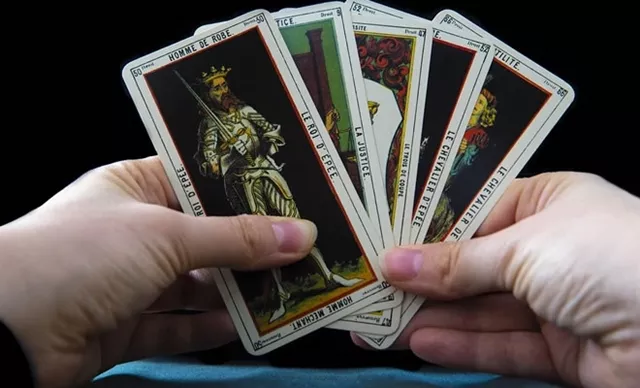
Image source: Pixabay
I. What is a Significator Card
A Significator Card is used in Tarot divination to symbolize the person posing the question or the question itself. Many Tarot reading practices incorporate Significator Cards.
II. What is the Role of a Significator Card
Specifically, the Significator Card is employed to reflect the querent's basic personality, identity, and status. Consequently, even under similar conditions, people with varying personalities, identities, and positions may react differently, leading to diverse anticipated outcomes.
For instance, if someone with the personality of the Knight of Pentacles inquires about their career, the Knight of Pentacles would be chosen as the Significator Card. If the conclusion is the Ten of Cups, it may appear favorable, as it signifies major emotional support and contentment. However, is this what they truly seek? As a Knight of Pentacles, they likely prioritize career advancement and wealth over emotions. In this case, the outcome of the Ten of Cups might not be as beneficial as most Pentacle cards.
III. When to Choose a Significator Card
The Significator Card should be selected before shuffling the deck and set before the querent. The querent can meditate on the Significator Card during the shuffle or focus on it, helping initiate a connection between the querent and the Tarot cards.
IV. How to Choose a Significator Card
The Significator Card aids the reader in unveiling the crucial information needed for a comprehensive interpretation. This guidance is instrumental in the overall reading. Traditionally, the reader picks the Significator Card, often following this approach:
Prior to shuffling, select one card from the 16 court cards to represent the querent. Of course, this choice is not merely based on personal preference; there are a number of rules and criteria, which vary by region. In Europe, for example, the selection often considers the querent's hair, skin, and eye color, with different ethnic groups choosing different card representations. Additionally, the choice is refined based on the querent's age and gender. Generally:
- Mature males often choose King cards.
- Mature females often choose Queen cards.
- Young males often choose Knight cards.
- Young females and minors often choose Page cards.
Besides grouping cards by ethnic appearance, other methods are available for picking Significator Cards. Since outward appearance may not always reflect one’s inner nature, selecting a Significator Card based on personality traits is often more fitting. This has become a commonly embraced approach. Typical classifications are:
- Wands represent energetic, action-oriented personalities;
- Cups signify social, diplomatic individuals;
- Swords stand for introspective, focused personalities;
- Pentacles embody practical, financially astute individuals.
However, choosing Significator Cards by personality has a drawback: it applies only to those well-known to us. For most unfamiliar individuals, this method may not be suitable. Another approach involves categorizing card groups based on different zodiac signs, typically focusing on the sun sign:
- Aries, Leo, and Sagittarius signify fire signs, using court cards from the Wands suit.
- Taurus, Virgo, and Capricorn signify earth signs, using court cards from the Pentacles suit.
- Gemini, Libra, and Aquarius signify air signs, using court cards from the Swords suit.
- Cancer, Scorpio, and Pisces signify water signs, using court cards from the Cups suit.
This zodiac-based method requires a thorough understanding of zodiac signs. Additionally, Significator Cards can be differentiated by the querent's occupation. In today's world, one's profession plays a key role in shaping thoughts and psychology.
Based on profession:
- The Wands group generally represents physically demanding jobs, like farming and manual labor, where individuals are often straightforward and strong, reflecting the characteristics of the Wands court cards;
- The Cups group typically signifies careers in culture, education, and services, requiring interactions and certain skills, paralleling the Cups court cards (those primarily handling household duties also fall under Cups);
- The Swords group represents highly specialized professions that demand keen observation and judgment, aligning with the Swords court cards;
- The Pentacles group generally represents professions in finance and business, where individuals are practical and exercise financial acumen, mirroring the Pentacles court cards.
Specific choices for each card:
- King cards are often suited for leaders or older individuals, who are decision-makers, thinkers, and often delegate tasks to others;
- Queen cards usually signify executors who manage day-to-day tasks, suggesting internal roles, distinct from Knight cards, which imply skilled roles;
- Knight cards represent individuals facing strong competition, typically in dynamic, external roles;
- Page cards denote newcomers to a job, needing guidance to perform well.
The aforementioned outlines some mainstream methods for selecting Significator Cards. In addition to these, a querent can choose their own card when the reader is uncertain about the most appropriate choice. The approach involves laying out the 16 court cards for the querent to select. Alternatively, the 16 court cards can be laid out face-up, allowing the querent to pick a few similar ones, shuffle them, and then draw one.
Occasionally, a reader might display all 16 court cards for the querent to choose from, though this method is not generally advised, as it can introduce bias and stray from reality. In uncertain cases, it may be better to randomly select the Significator Card.