A Practical Guide to Tarot Reading
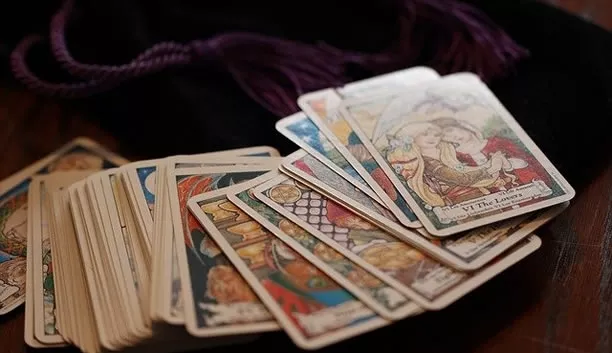
Strictly speaking, in addition to a tarot deck, you’ll also want two solid-color silk scarves. One is for wrapping the cards, and the other is used to lay out the table during a reading. Other fabrics are fine, but busy floral prints can look unprofessional and may be distracting. Different colors carry different energies; if your budget allows, keep several colors and choose different fabrics for different questions. If you’re on a budget, black and white are the most versatile choices. Ideally, place four items representing the four elements on the table during a reading to support accuracy. You should also have a wooden box for storing the cards. Carry this kit with you every day—whether or not you’re reading; practitioners call this “nurturing the cards.” That’s the idea.
- Love or friendship: green or pink
- Knowledge or education: gray
- Money: yellow or gold
- Career or status: purple
- Personality: blue
- Health: brown or green
- Energy accumulation: black
- Purity: white
Even if you don’t have a cloth, just remember to clean the table and wash your hands. Ideally, the cards should be wrapped, cased, and boxed—but that’s mainly to prevent damage (after all, tarot cards are paper and can be easily harmed). You can also skip the elemental items; if you like, read with only the Major Arcana and set the Minor Arcana aside by their corresponding elements. Carrying your deck daily can help you bond with it and makes frequent readings easier, which is beneficial—but it isn’t a strict rule. Tarot is flexible; what matters most is you.
Take your readings seriously: wash your hands beforehand, and make sure the environment is clean and quiet. If you buy a cloth, choose genuine silk or pure cotton—natural materials. Otherwise, the tarot won’t be able to connect with the outside world.
Environment
The environment for reading tarot includes both your surroundings and your inner state. Five helpful inner qualities are:
- Openness: Openness means being receptive—willing to acknowledge and accept without denial or resistance. With an open attitude, you give yourself the chance to receive the information you need.
- Calmness: When your mind is chaotic, the whispers of your inner guide are hard to hear. Tarot messages often arrive gently and subtly, easily drowned out by restless thoughts. When your mind is calm—like a still sea—you can sense every wave of insight.
- Focus: Focus is crucial for interpreting the cards. When you’re genuinely eager to explore a question, you tend to receive direct, powerful information. When your mind is scattered, all the cards seem to blur together. Your most insightful readings happen when your intention is strong.
- Alertness: When you’re alert, all your abilities are awake and engaged. Think of a cat watching a mouse or a bug. Of course, your cards won’t attack you, but if you’re tired and unfocused, reading becomes much more difficult.
- Respect: Respect means treating the cards as valuable tools. Be grateful for their help in better understanding yourself. Choosing to learn tarot is itself an act of respect for your path.
Although these five qualities are important, they aren’t mandatory. You can still do meaningful readings without them; it’s just more challenging. To know if the timing is right, look inward and ask yourself. If something feels off, wait. If your intuition says proceed, then go ahead.
Beyond your inner state, consider the external environment as well. The ideal setting evokes quiet, peace, and even a sense of reverence. You can read in a noisy airport, but the distractions make inner harmony harder to achieve. Since you’ll likely be reading at home most often, here’s how to create a supportive environment there.
Designate a specific area in your home for tarot readings. Regularly reading there helps establish an energetic field. You can also sit there to think or pray, as these activities align spiritually with the cards.
Whenever possible, conduct your readings in a private space. During a reading, you want to step away from the everyday world and enter a space that feels timeless and beyond the mundane. A separate room is ideal, but a screened area, a spot by the curtains, by your pillow, or another secluded corner can work well.
Create a pleasant, meaningful atmosphere. Surround yourself with a few special personal items. Natural objects such as shells, stones, crystals, or plants are usually suitable. Talismans, motifs, or religious symbols can help shift your focus from the mundane to the realm of inspiration. Consider adding images or artwork, especially your own. Choose flowers, candles, textured fabrics, and quiet, contemplative music according to your taste. That should be enough.
What you really need is enough space to spread the cards. This can be on a table or the floor. The floor offers a grounded connection to the earth, but if that’s uncomfortable, a table is best. Choose a table made of natural materials, such as wood or stone.
If you like, you can cover the table or part of the floor with a cloth to create a cohesive environment. The fabric should also be natural, such as silk, cotton, wool, or linen. Be mindful when choosing the color, as colors have their own energies. Black, deep blue, or purple are good options. Ideally, the cloth should be solid or have only small patterns so the images on the cards stand out.
Store the cards in a container to protect them and maintain their energy. Natural materials work well—wood, stone, shells, or natural fabrics. I know someone who knitted a silk drawstring bag embroidered with stars, moons, and other motifs. You might consider wrapping the cards in silk before placing them in the container. Silk adds a luxurious feel, reminding you to honor the tarot.
Tarot cards absorb the qualities and energy of their user. If possible, have a deck that’s exclusively yours. It will become a personal tool for communicating with your inner self, and you’ll want to build a bond with it.
Reading in your own space can heighten your sensory experience. Even so, the extra preparations aren’t necessary. The most important thing is simply to use your cards—that’s the essential part.