The Four Elements Tarot Spread: A Complete Guide
Application Scope
The "four elements" in Western astrology—air, fire, water, and earth—also align with the four elemental groups in the Tarot minor arcana. This divination method draws on the core qualities of the four elements to give guidance to those seeking solutions to a specific issue. The querent should first clearly describe the challenge they are facing and the outcome they want.
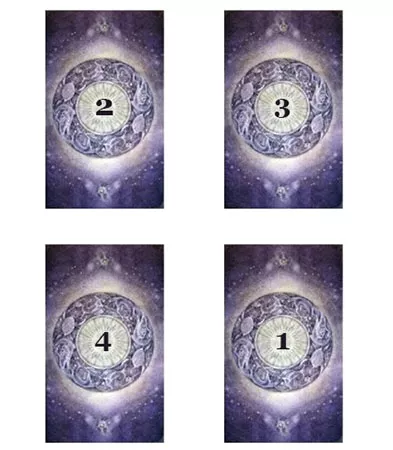
Layout Method
- Shuffle and cut the deck as usual, then draw the fourth card from the top and place it in position 1 as shown.
- Set the counted cards aside, then count through the remaining cards again, draw the fourth card, and place it in position 2.
- Repeat the above steps two more times to draw two additional cards, placing them in positions 3 and 4.
- Turn the four cards face up in order and interpret them.
Meaning of Card Positions
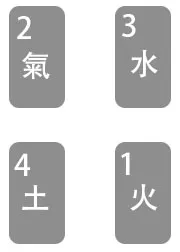
- 1 represents fire, symbolizing action. This card primarily offers advice on what actions to take.
- 2 represents air, symbolizing speech and communication. This card mainly guides your communication strategy.
- 3 represents water, symbolizing emotions and feelings. This card suggests the attitude to adopt in emotional matters.
- 4 represents earth, symbolizing material aspects and money. This card indicates how to handle practical concerns (such as finances) to help resolve the issue.
Example of Elemental Layout Divination Analysis:
Question: What would happen if I were transferred to a frontline position?
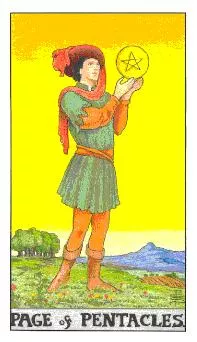
- Fire Element — Page of Pentacles
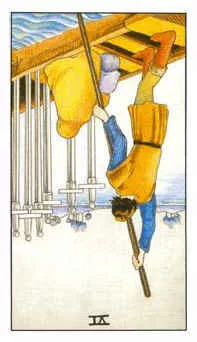
- Air Element — Reversed Six of Swords
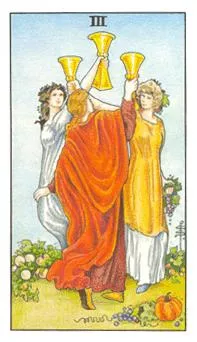
- Water Element — Three of Cups
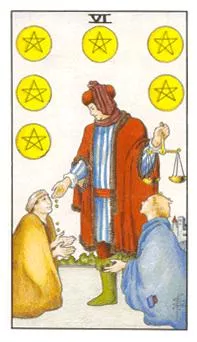
- Earth Element — Six of Pentacles
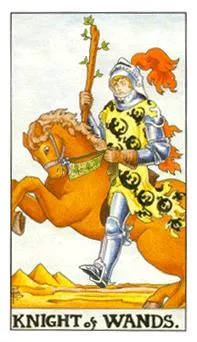
Indicator Card — Knight of Wands
Card Analysis:
This example uses an indicator card. The querent chose the Knight of Wands as the indicator card, pointing to forthcoming rewards and suggesting the querent often receives support from women.
- The air element card highlighting potential challenges is the reversed Six of Swords, suggesting growing possessiveness could lead to problems.
- The fire element card reflecting the mental state is the Page of Pentacles, indicating that after moving to a frontline role, the querent will feel re-energized and throw themselves into the work with vigor.
- The earth element card covering material conditions—and pointing to colleagues and subordinates—is the Six of Pentacles, indicating increased income ahead and greater respect from subordinates.
- The water element card addressing interpersonal dynamics is the Three of Cups, suggesting that once the querent becomes a frontline leader, certain flaws may surface. They may present themselves without restraint and overstate their achievements, often acting unilaterally in collaborative settings—prompting subordinates to feel intimidated and simply agree.
Comprehensive Analysis and Suggestions:
Taken together—from the Page of Pentacles through the Three of Cups—the cards sketch a clear picture of the querent’s situation at the frontline. People who appear deferential to higher-ups may carry that same stance to the grassroots level. If the aim is to gain advantages, fewer constraints at the frontline can open more opportunities—but can also foster less desirable tendencies. The situation itself isn’t inherently good or bad; outcomes will depend largely on the choices the querent makes.
The Four Elements and the Overall Structure of Tarot
In Western mysticism, the four elements—fire, air, earth, and water—are foundational, much like the five elements (metal, wood, water, fire, and earth) in Eastern Wu Xing philosophy. Everything can be categorized using these frameworks. Tarot is closely tied to the four elements: the four suits of the minor arcana correspond to them, while the major arcana addresses broader, more abstract spiritual themes. In other words, the major arcana explores deeper causes, whereas the minor arcana depicts surface-level events.
1. Fire (Wands)
Fire corresponds to the Wands suit in the minor arcana and represents action, initiative, and creativity. As in the phrase “fiery passion,” fire is linked to movement, enterprise, conflict, and intuition. People with strong fire qualities tend to be direct, energetic, and attention-grabbing. The fire signs in astrology are Aries, Leo, and Sagittarius.
2. Air (Swords)
Air is elusive, changeable, and variable. In astrology, it rules abstract thinking, analysis, and clear judgment, with an emphasis on theory. Practical expressions include publishing, writing, travel, and learning. On the flip side, air is also associated with challenges, disputes, illness, and even death—making the Swords suit, aligned with air, one many approach warily.
3. Water (Cups)
Water is traditionally linked to gentleness, emotions, feelings, and the subconscious, and is considered a feminine element. In contrast to the proactive nature of fire, water is receptive. People with strong water traits are especially attentive to relationships and emotions; they’re sensitive, sometimes sentimental, enjoy caring for others, and also need care themselves. The water signs are Pisces, Cancer, and Scorpio.
4. Earth (Pentacles)
The earth nourishes all things, providing stability and reliability. If air represents theorists, earth represents practitioners. People with strong earth traits are diligent, value the security that wealth brings, and can enjoy life when finances are steady—though they may be less flexible. Thus, the Pentacles suit signifies not only material wealth but also material comfort and enjoyment. The earth signs are Capricorn, Taurus, and Virgo.
The study of Tarot is vast and profound. The elemental spread is just one of many options, and there are numerous more complex layouts to explore. We hope the above has deepened your understanding of Tarot.