Jin Zizai’s Secrets of Facial Analysis: An Overview of the Five Facial Features
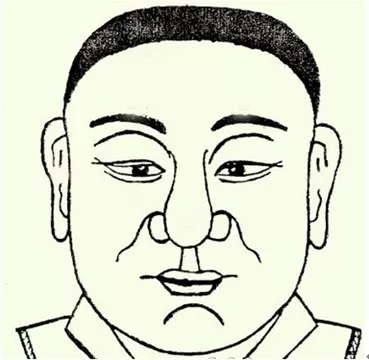
In physiognomy, there are many methods and numerous terms: bone structure, flesh structure, shape, voice, behavior, and posture. Focusing solely on the face, the face is divided into the nine regions, eight trigrams, four seasonal colors, three stops, five features, and twelve palaces; the four rivers, five mountains, and eight schools; as well as five stars, six days, and thirteen principles. With so much to learn, you could spend a lifetime trying to master every detail. It’s essential to focus on the key points and study their principles—grasp one facet well and the rest follows. Therefore, the five facial features—eyebrows, ears, nose, mouth, and eyes—are the first things readers should get to know.
Ears govern hearing; eyebrows reflect longevity; eyes are the inspectors; the nose discerns; and the mouth receives and gives. If one feature is favorable, it can bring a decade of wealth; if all five are favorable, a person will enjoy prosperity for life.
1. Auspicious Traits of the Five Features
If one feature is auspicious, the related faculty prospers.
- Ears: Rosy or fair in color; set higher than the eyebrows; well contoured and complete; close to the head; large and thick.
- Eyebrows: Wide, clear, and long, with a defined start and end; smooth and glossy; thick but orderly; not overshadowing the eyes.
- Eyes: Clear distinction between black and white; no exposed pupils; a restrained, contained gaze; elongated shape.
- Nose: A prominent bridge; straight profile; rounded tip; full nostrils; warm coloration.
- Mouth: Square, broad, and substantial; corners gently upturned like a bow; well-defined outline; rosy color; wide when open and neat when closed.
Gold's Wisdom
1. If the five features look good but the head shape is poor, is that auspicious or inauspicious?
Classical texts address this. If each feature looks good on its own but they’re set too close together or too far apart, if the three stops differ greatly in length, or if the head is small with a large face (or vice versa), it is not considered auspicious.
2. Inauspicious Traits of the Five Features
If one feature is inauspicious, the related faculty suffers.
- Ears: Lower than the eyebrows; dark or sooty in color; missing or broken; small and pointed; lacking contour; lacking lobes; too thin; or with protruding ear bones.
- Eyebrows: Raised brow bones; short length; sparse or thin; gaps in the middle; broken in the middle; connected at the head; thin and low, pressing down on the eyes.
- Eyes: “Three whites,” “four whites,” or triangular; floating light; bulging and exposed; overly round and large; peering or shifty; or squinting.
- Nose: Small or short; pointed tip; low bridge; broken; crooked tip; red tip; exposed nostrils; thin nostrils; or a drooping tip.
- Mouth: Blue, white, or purple lips; overly thin; poorly defined edges; excessively thick; upper lip curling with a lower lip that is thick and drooping; or a large mouth that does not close well.
Gold's Wisdom
1. Which feature among the five is the most important?
If you must choose, the eyes are the most important. A pair of noble eyes ensures a life free from worry about food and clothing.
3. General Meanings of the Five Features
- Ears govern hearing. Good ears indicate someone who heeds advice and achieves much; poor ears suggest bias and frequent failure.
- Eyebrows reflect longevity. Good brows suggest support from benefactors and few troubles; poor brows indicate family difficulties.
- Eyes are the inspectors. Good eyes signal wisdom and clarity; poor eyes indicate ignorance and toil.
- The nose is the discerning organ. A good nose suggests perceptiveness and success; a poor nose indicates indecision and regret.
- The mouth receives and gives. A good mouth suggests abundant wealth and eloquence; a poor mouth points to poverty, loneliness, and deceit.
Gold's Wisdom
1. Since the five features are largely predetermined, and cosmetic surgery is of limited use, what is the purpose of studying physiognomy?
The purpose is not to show off or to predict fortune and misfortune. Recognizing a shortcoming in your features can prompt you to adjust your mindset and behavior. For example, prominent brow bones may signal an impulsive temperament; if you consciously temper your reactions, you’ll gain composure and improve your chances of success. Likewise, if a partner or friend has prominent brow bones, use gentle language and a relaxed tone to avoid conflict. Over time, your temperament shifts, your features appear more harmonious, your complexion improves, and your fortune changes. As the ancients said: “Appearance arises from the heart, and the heart can change fate.”
4. Enhancements to the Five Features
The precise, simple statements below are meant to help readers reason for themselves and quickly grasp physiognomic methods.
1. The nose is the star of wealth and governs fortunes in middle age.
2. Clear eyebrows and bright eyes mark an intelligent person.
3. A full, large nose suggests a kind heart.
4. Eyes that do not cry yet are watery, and a brow furrowed without real worries, foretell early punishment and late-life loneliness.
5. Three bright features bring wealth from the heavens.
6. Lips that do not cover the teeth invite suspicion.
7. A large face with a small nose suggests a hard life.
8. A bright, smooth complexion signals a peaceful life.
9. Chicken-like eyes indicate impatience and intolerance.
10. A slanted philtrum points to many punishments.
11. Disordered eyebrows indicate instability.
12. A snake-like head and mouse-like eyes are not suited to seeking an official post.
Gold's Wisdom
1. Is it necessary to learn the methods of physiognomy?
Many people cling to ancient texts for a lifetime yet still cannot read faces correctly. During their study, they memorize phrases but overlook the importance of interpretation methods. Physiognomy involves addition and subtraction; the same feature does not mean the same thing for everyone. Learning how to interpret is essential for practical use.
Gold's Summary
The five features are the foundation of physiognomy. They do not yield precise conclusions but teach us to understand human nature and infer behavior. One cannot master physiognomy without first grasping the basics. At the outset, do not rush into judging a person’s aura or bone structure, nor into reading features together with body shape. If you have not mastered the five facial features, everything else is an illusion.