Analysis of Facial Similarity: Why Some Twins Grow Less Alike Over Time
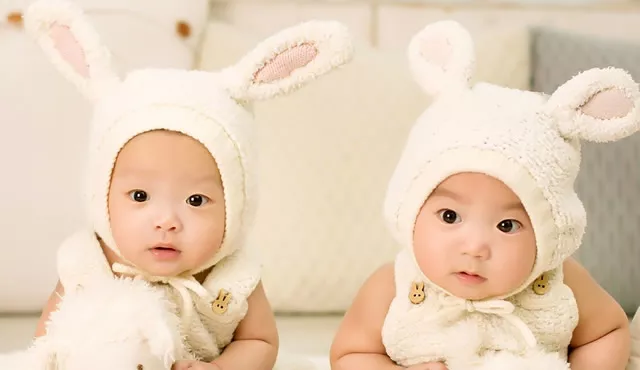
Image source: Pixabay
Many people believe that identical twins should look exactly alike, but studies conducted in the Western world over the past several decades have shown this isn't always true.
Research involving numerous pairs of twins separated early in life revealed that some twins maintained a striking resemblance over the years, while others developed noticeable differences in appearance.
Why do identical twins sometimes look different? It was initially concluded that family environments played a major role. However, it's actually a broader range of factors, including social environments, cultural influences, and social class, that contribute to these differences.
This topic has long been explored in the study of physiognomy, which offers more in-depth explanations. Differences in appearance aren't purely genetic; they result from a variety of subtle influences. For instance, someone who grows up in a restrictive environment will appear differently from someone raised in a relaxed atmosphere, even if they are identical twins who were nearly indistinguishable in childhood. The varied environments experienced during their development can lead to noticeable differences as adults.
Over time, a person's appearance is shaped by their emotional habits, which reflect their psychological state and ultimately influence their life outcomes. For example, even if two individuals share the same genetic makeup—one attending a rural school with limited resources and the other an urban school with ample resources—they will develop vastly different temperaments and characters. This is not simply a rural versus urban issue but rather a matter of psychological development, as they are exposed to distinct worlds.
Physiognomy does not focus on the aesthetic appeal of facial features but rather on observing characteristics such as eyebrows, eyes, and nose to gain insights into a person's psychological state. These observations form conclusions based on experience. Some psychological states may lead to misfortune, referred to as "evil features," often associated with a shorter lifespan. Conversely, certain states can bring prosperity and are termed "blessed features," linked to longevity and good fortune. Some traits may indicate high achievement, while others could reflect lower moral character and lack of success, suggesting a lower social standing.
Many people, unaware of these principles, hastily judge features such as a short philtrum as an indication of a short life, dismissing the idea as mere superstition. When discussing feng shui, it is often scoffed at as nonsensical. Discussions about fate leave them excited about the good parts and discouraged by the bad, with little motivation for self-improvement. Those who do not understand the importance of self-correction, whether individuals or cultures, are on a path to decline. This reflects the bitter historical experiences of our ancestors, which we call civilization.