Observing Personality and Destiny Through Food
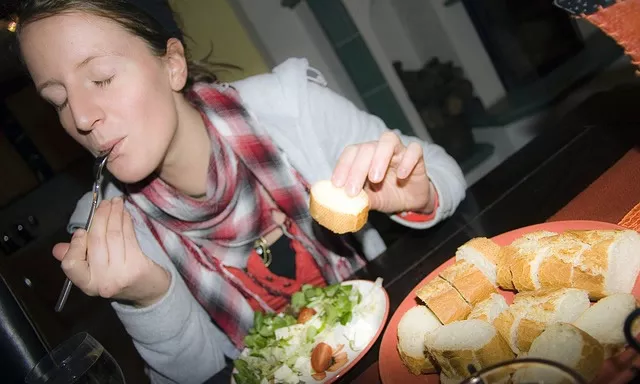
Image credit: Pixabay
Table manners—the way we eat—can reflect a person’s civility and refinement. Eating habits may reveal aspects of character, routine, and social standing. From the perspective of physiognomy, every action—how we walk, sit, lie down, and even how we speak—conveys a wealth of personal information, which can be especially helpful in understanding strangers.
The poem from the “Ma Yi Shen Xiang” says:
“A tiger eats unlike a wolf; heedless haste leaves an empty plate.”
“Watch closely and act deliberately; chewing like a cow and swallowing like a sheep bring many blessings.”
“Pecking like a bird at a pig’s meal is the lowest; such people find no lasting fortune.”
“Those who gulp in haste are often restless; a mouse’s meal ends in emptiness.”
“It is said: Eat slowly and mindfully; why be in a rush?”
“Worse still is to peck like a bird; both kinds of messy eating should be avoided.”
“Those who eat in haste are often impulsive; a calm heart eats slowly.”
“Where does your fortune lie? In the nourishment of a cow, which brings blessings.”
Good table manners include taking food in an orderly, unhurried way, chewing with a relaxed mouth, and handling food gently; if you need to speak, do so briefly.
When eating, sit upright with your head level, and keep a steady rhythm—quick but not rough, slow but not sluggish. These are marks of good manners.
It is inappropriate to talk with food in your mouth or show anger while chewing. Eat efficiently without lingering, calmly without irritability, and avoid making noise when you’re full or while swallowing.
People who eat quickly are prone to gain weight, while those who eat slowly tend to be slimmer. Those who eat very little yet are overweight are often said to have generous dispositions; those who eat a lot but stay thin may have more chaotic personalities. Fast eaters often have aggressive temperaments, while slow eaters tend to be gentle.
Unrefined eating habits include: tilting the head back, which suggests low status; pecking like a bird, associated with poverty; keeping the lips tightly closed, taken as a sign of purity; trembling lips, indicating a lack of loyalty; showing the teeth while eating, suggesting hardship and a short life; spilling soup, said to foretell hunger while traveling; nibbling like a mouse, suggesting want; chewing like a horse on fodder, indicating poverty; letting food merely sit on the tongue while chewing, suggesting a hard life; and constantly changing facial expressions while eating, said to predict lifelong poverty.
Chewing like a ruminating cow is said to mark someone blessed with wealth; eating like a grazing sheep indicates respect and honor; eating like a tiger points to power and authority; eating like a monkey suggests a position of influence.
Of course, these connections between eating habits and one’s life come from ancient observation. Times have changed, and such judgments may not hold as strictly today. Still, it’s fair to say that poor table manners can make life harder and hinder one’s prospects. With careful observation, one can see why these conclusions were drawn.