Mai Yi Xiang Fa: Shen Yi Fu with Commentary by Liu Heng - Who Can Rise to High Office?
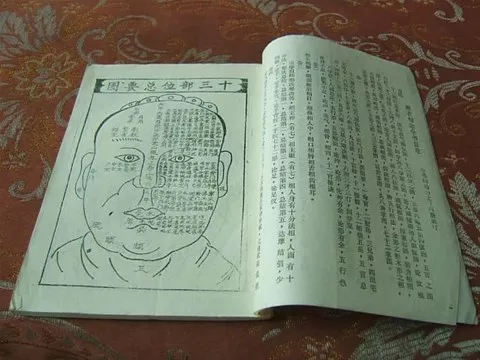
The study of physiognomy has a long history. Many enthusiasts of the I Ching are more inclined towards I Ching predictive arts, with fewer dedicating themselves to the study of physiognomy. Predictive arts can accurately forecast the causes and outcomes of events, while physiognomy determines a person's destiny and character. The Eight Characters method excels in assessing fluctuations in fortune, while Qimen Dunjia is renowned for its precise and comprehensive predictions. Liu Yao is particularly adept at providing quick and accurate family-related predictions. In contrast, physiognomy uniquely focuses on facial features and the five senses, utilizing Five Elements philosophy as a connective thread, integrating theories from I Ching and traditional Chinese medicine to deeply explore a person's health, character, and fate. The most famous method in physiognomy is the Ma Yi physiognomy, summarized and annotated by Master Liu Heng.
Original Text of "Shen Yi Fu"
- Describes a handsome and refined appearance, destined for high status; with distinctive bone structure, they are sure to achieve nobility.
- Prominent "卧蚕" (eyelid) features suggest children will succeed later in life; if the tear hall is full and the color is normal, sons will be seen at an early age.
- A low and dark dragon palace implies difficulty having descendants; bright yin-yang eyes suggest ease in raising intelligent children of both genders.
Liu Heng's Annotations
- A simple and aged face with prominent features indicates a person of good character; those with a high and balanced facial bone structure are sure to attain nobility.
- In physiognomy, the "卧蚕" refers to "three yin and three yang," relating to the stomach meridian, which governs postnatal development and determines children's success or failure. If the tear hall is full and the skin color is normal, sons should be expected sooner.
- However, a shriveled and dark "卧蚕" suggests poor fortune, indicating difficulties keeping offspring; even if children are born, they may not be intelligent. Proper coloration in the "three yin and three yang" areas, without grid-like wrinkles, ensures healthy and smart descendants.
Original Text of "Shen Yi Fu"
- A bright pearl emerges from the sea; Jiang Taigong meets King Wen at eighty; fiery shoulders signal that Ma Zhou met the Tang Emperor at thirty. The wandering soul is released to avoid water disasters.
- Law marks at the mouth; Deng Tong faces starvation in the wilderness; the serpent locks its lips, and Emperor Liang succumbs to hunger in the city.
- A tiger head and swallow neck; Ban Chao is granted the title of Marquis of a thousand miles; a dragon brain and phoenix eyes; Fang Xuanling is appointed as a minister.
Liu Heng's Annotations
The bright pearl signifies large ears with earlobes facing the mouth, indicative of abundant kidney energy, wisdom, and longevity. Jiang Taigong meeting King Wen at eighty symbolizes extreme longevity and wisdom, whereas a hairline resembling Mars represents early success. A high hairline with a pronounced forehead indicates early achievements, while broad shoulders signify abundant lung energy, regulating courage. Ma Zhou meeting the emperor at thirty embodies early prosperity. A released wandering soul, avoiding water disasters, hints at underlying potential challenges.
Law marks at the mouth indicate close-minded actions, leading to possible disasters, akin to Deng Tong facing starvation in the wild. The serpent locking its lips suggests similar tendencies.
Liu Heng cites historical references: Deng Tong from the Former Han had this mark; Emperor Wen ordered Xu Fu to read his physiognomy and pointed to his mouth, saying: "He will starve to death one day." The emperor said, "Wealth and nobility are with me," granting Tong the right to mint money. Later, Emperor Zhang commanded the collection of money, which led to Tong's eventual starvation. Similarly, Emperor Liang, possessing this mark, fell victim to a siege, ultimately succumbing to illness from frustration and passing away.
A tiger head and swallow neck describe a tiger-like head with a broad and round jaw resembling a swallow. A large head and broad shoulders indicate a prudent and meticulous person. Ban Chao earned the title of Marquis of a thousand miles, while a dragon brain and phoenix eyes, characterized by a wide forehead and clear, elongated eyes, reflect a principled thinker, leading to Fang Xuanling's ministerial appointment.
Liu Heng cites historical references: Ban Chao, second son to Ban Biao, alongside his brother Gu and sister Zhao, achieved great contributions to the state. Xu Fu observed Ban Chao and declared: "Swallow neck, tiger head, soaring and feasting, is the Marquis of a thousand miles." He abandoned writing, crossed the Yumen Pass, earned significant merits in the western regions, and ultimately gained the title of Duke of Dingyun.
Original Text of "Shen Yi Fu"
- A large face with a small nose suggests a life of hardship; a thin nose with a round face implies that amassed wealth will eventually dissipate.
- Those with rising edges begin to succeed after fifty, while high and prominent auxiliary bones lead to official positions by thirty-nine.
- A crane shape and turtle breath; Lü Dongbin encounters an immortal and attains immortality; dragon brain and phoenix eyes; Xuanling's ministerial appointment.
Liu Heng's Annotations
A large face with a small nose signifies a person with significant potential but limited ability, unable to control their fate, resulting in a tough life. A thin nose and a round face suggest that wealth amassed through effort will eventually deplete. A large face with a small Saturn points to a challenging life. Liu Heng notes: A small nose signifies the four extremes of ceaseless toil. A round face with a prominent nose indicates wealth abundance, but if the face is round yet high and thin, wealth will diminish.
(The four parts symbolize earth, heaven, mountains, and outskirts; having all indicates rising from the edges.) A small nose combined with a full forehead, cheekbones, chin, and jaw may not bring prosperity in middle age, but honor and prosperity might ensue in later life, hinting at a blessed existence.
Auxiliary bones, denoting the two supporting angles, if high and prominent, signify early achievements.
A crane shape and turtle breath, with a full forehead and thin nostrils, suggest wisdom unrecognized by society. Lü Dongbin possessed this physiognomy and, upon reaching Mount Lu, encountered the immortal Zhongli, eventually achieving immortality in a dream. (Xuanling lived during the Tang Dynasty and studied with eighteen others.) The dragon brain refers to a prominent skull revealing the forehead, while phoenix eyes feature elongated and clear eyes. Fang Xuanling possessed this physiognomy, serving as a minister during the Tang Dynasty.