Liu Heng's Interpretation of Physiognomy: Lack of Occipital Bone Behind the Ear Indicates Challenges in Achieving Wealth and Longevity
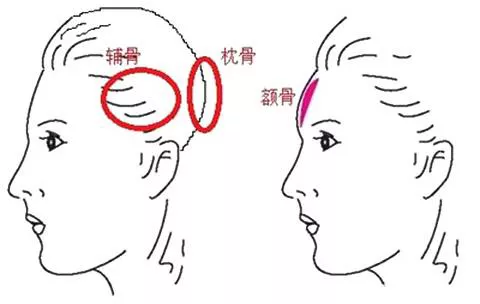
Physiognomy emphasizes the analysis of the skull's structure first, followed by facial features and their combinations. The significance of facial lines comes next, and mole analysis is considered even less important. Some practitioners mistakenly equate mole analysis with physiognomy, leading many to believe that examining facial moles is synonymous with reading one's fortune, which misleads future generations. Even more absurdly, some try to correlate facial moles with body moles, conducting live validations that leave individuals in awe, showcasing ignorance dressed as confidence. There are few ancient texts discussing the relationship between skull structure and physiognomy, and those that exist are often vague, lacking clear guidelines. Below are interpretations of skull physiognomy based on Liu Heng's work, "Essence of Physiognomy."
1. A prominent occipital bone indicates longevity
The occipital bone is located at the upper back of the skull, the part that touches the ground when lying down. Generally, individuals with a well-developed occipital bone possess high intelligence and wisdom, signifying sufficient kidney energy (Liu Heng notes that the kidneys support bone health and nourish the brain, considered the sea of marrow). Since the kidneys are associated with longevity, those with a prominent occipital bone have the inherent potential for a long life.
2. A high occipital bone indicates strong ancestral roots
While fathers provide life, mothers shape the physical body; intelligence is often thought to be inherited from the mother, as the kidneys govern wisdom. A well-developed occipital bone signifies high intelligence and achievements, reflecting ancestral virtues from the father's lineage, while also relating to attributes from the mother's ancestry.
3. A slightly elevated occipital bone indicates solitary longevity, needing supportive bones for true prosperity
If the occipital bone is prominent but lacks corresponding development in the forehead, resulting in a narrow and recessed forehead, then, even with longevity, one may lead a life of mediocrity, termed solitary longevity. An advanced occipital bone indicates wisdom, while a full and well-shaped forehead suggests potential for prosperity; both wisdom and intelligence are crucial for true success.
4. Flat and strong cheekbones should correspond with occipital bones behind the ears
When the cheekbones are flat and robust, with complementary occipital bones behind the ears, one is more likely to conduct matters with order and wisdom, leading to success. This showcases the harmony between the front and back of the head in physiognomy.
5. Absence of occipital bones behind the ears makes wealth and longevity difficult to attain
If the back of the head lacks occipital bones, giving a flat appearance, it can appear as if part of the skull is missing when wearing a hat. This skull structure does not typically indicate wealth or longevity, as it suggests insufficient kidney energy, underdeveloped brain marrow, and a lack of intelligence, making success hard to achieve.
6. A well-developed occipital bone in a "T" shape, coupled with a smooth and even forehead, suggests nobility
The occipital bone should be prominent and full, with a flat and strong forehead, and the side profile should be smooth without indentations. This configuration, known as "linked pearls," signifies a high social status.
7. A skull shaped like a river or with distinctive double rings or mountain-like shapes indicates significant wealth
A skull with a river-like shape features a well-defined forehead, sideburns, and occipital bone; double rings suggest a rounded occipital bone; mountain shapes indicate a full occipital bone; while "middle moon" and "curved moon" refer to a full occipital bone with a flat forehead. These attributes suggest a person who can attain social success.
8. An isolated or slanted occipital bone indicates a lower status
If the occipital bone is isolated, with a sharp jawline and slanted forehead, these characteristics suggest a life of hardship and low status.
9. An egg-shaped or hill-like occipital bone indicates great wealth
A prominent and powerful occipital bone, akin to a mountain, along with a wide, flat forehead and a straight nose with a well-defined jawline, signifies a person of high status.
10. A high occipital bone extending to the top of the head, paired with a well-defined forehead and a broad space between the eyebrows, indicates a lineage of wealth and longevity
A high occipital bone that complements a well-formed forehead and a wide space between the eyebrows, large enough to fit two fingers, signals a lineage of wealth and longevity.
11. A prominent occipital bone, cranial bone, and top bone should be supported by bones on both sides to avoid isolation and misfortune
A full occipital bone, large and powerful cranial bone, prominent top bone, and broad cheekbones on both sides create the foundation of a noble physiognomy.
12. For children under three years old, a prominent forehead indicates easy upbringing
If a child under three years old has a full forehead and prominent occipital bone, it indicates sufficient innate kidney energy, making the child easy to nurture.
13. For individuals over thirty, a developed occipital bone with a closed crown bone signifies longevity
After the age of three, if the occipital bone is developed and the crown bone is closed, these are indicators of a long life.