How Is 'Pyramid Energy' Generated? Are Pyramid Structures Beneficial to the Human Body?
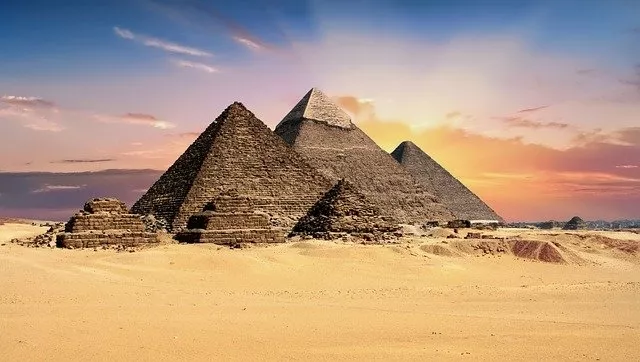
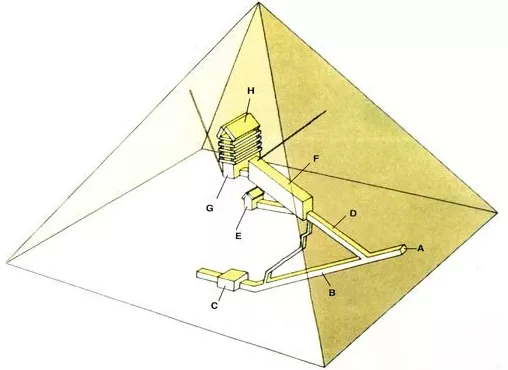
In the 1940s, a Frenchman named Bouffier visited Egypt and ventured into the Great Pyramid of Khufu. Inside the burial chamber, he found the dried-out remains of small animals that seemed to have wandered in and died long ago. Although the chamber wasn’t dry, the bodies showed no signs of decay or odor. Puzzled by this, Bouffier eventually hypothesized that the pyramid's shape itself might have preserved them.
Upon returning home, he built a small-scale model of the pyramid without a base, at one-thousandth the size of the Great Pyramid, using wooden boards. Aligning the model north-south, he placed a dead cat at a height equivalent to one-third of the structure from the base, mirroring the location of Khufu's burial chamber. To his amazement, the cat turned into a mummy over time. Bouffier then experimented with various organic materials, achieving similar results. Later, a Czech radio engineer named Karel Dubeil came across Bouffier's documentation and was intrigued by his experimentation with using horse manure paper to recreate the Great Pyramid model.
Dubeil, thinking the experiment seemed straightforward, decided to recreate it himself. He constructed several models, each 30 centimeters tall, using three-millimeter thick horse manure paper, scaled to match the dimensions of the Great Pyramid. To his surprise, items like beef, lamb, eggs, flowers, dead frogs, and geckos placed inside the model dried out without rotting. After these initial successes, he began corresponding regularly with Bouffier.
Dubeil continued his experiments, curious about the energy within the model. He once placed a razor blade inside, expecting it to dull, yet found it became sharper instead. He was able to use it for shaving 50 times. Fascinated, he delved into studying the model's effects on razor blades.
He created a 15-centimeter-tall model, positioning the blade flat inside at one-third of the height from the base, aligned in the north-south direction just like the model itself. The results were consistent across various tests, leading to the development of an immensely simple yet effective razor blade sharpener—a model of the Great Pyramid made from horse manure paper.
In 1949, Dubeil officially applied for a patent for the "Pharaoh's Razor Blade Sharpener" with the authorities in Prague, Czech Republic. Typically, patents there were approved within three years, but this invention, numbered 91304, took an entire decade to be granted, receiving approval in 1959.
This invention proved successful; it was neither a trick nor an illusion. During this time, Dubeil was probing into the principles that enabled the model to sharpen blades.
While working at a radio research institute with access to cutting-edge global technology, Dubeil expanded his investigations to include radio waves, radar, cosmic rays, and other forms of radiation. He examined the oscillations created within a pyramid model made from an insulating material such as horse manure paper, and how these related to the Earth's magnetic field and the edges of the blades.
Dubeil proposed a hypothesis: cosmic microwaves from the sun, focused by the Earth's magnetic field inside the pyramid, generated oscillation waves that caused the blade's edge to "dehydrate" and sharpen.
Does "pyramid energy" truly exist? How is it generated?
Is "pyramid energy" a real phenomenon? How is it generated? How does it create such extraordinary effects? Why is the energy concentrated around Khufu's burial chamber, specifically one-third up the pyramid? Is it mere coincidence, or did ancient civilizations understand this concept? Research indicates that "pyramid energy" is an "objective natural phenomenon" that modern science hasn't fully explained yet.
The prevailing belief is that the pyramid shape acts much like a giant lens or capacitor that gathers an undefined energy source within; others suggest it attracts cosmic rays, magnetic oscillations, and unknown rays. Another theory posits that this energy results from the interplay between cosmic forces and Earth's gravity. Some speculate that pyramids generate high-frequency oscillations affecting human cells and muscles in profoundly positive ways. Additionally, there are claims that not just pyramids, but various structures of differing shapes and sizes, can produce a force field or an internal energy source.
This unique force field might counteract, amplify, or reduce natural force fields. French engineer Dubeil highlighted in his book "Shape Waves" that various geometric shapes, including conical, spherical, square, and pyramidal, could modify their internal cosmic waves through interactions with cosmic rays or sunlight.
The pyramid is not alone in creating special energy fields within its space. Dubeil noted that people spend their lives moving among various shaped buildings, from cars, theaters, to homes.
He advocated for understanding the effects of building shapes on human health, suggesting that houses should be designed with the most health-promoting geometric shapes in mind. Dubeil believed that spherical and pyramidal structures offer the most physical and mental health benefits and that wards in these shapes can expedite recovery. Others argue that cylindrical structures hold significant advantages, too.
Some researchers maintain that spending most of our lives in square and rectangular buildings is counterproductive, as these shapes do not produce beneficial energy. On the contrary, they may generate negative force fields that interfere with the natural force fields advantageous to humans.