The Mysteries of Dark Energy, the Fifth Element, and Ether
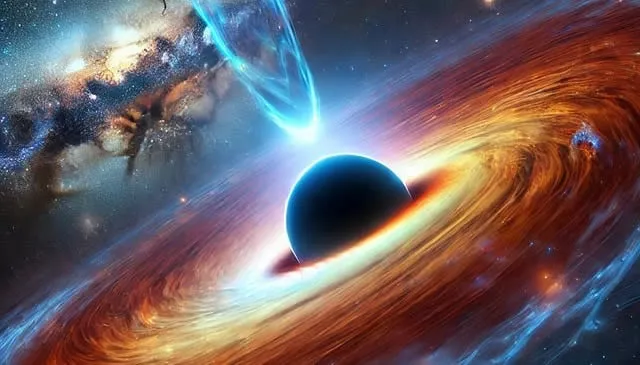
Image source: Pixabay
Scientists are aware that the universe is expanding at an accelerating pace. They theorize that "dark energy" may be the driving force behind this expansion, though its true nature remains largely unknown. To gain insight, some have revisited ancient theories. Several scholars have suggested the ancient Greek philosophical concepts of "quintessence" or "ether." The ancients considered "ether" to be a continuous, pure element originating from the heavens, distinct from the other four elements that constitute the world.
NASA noted in an article: "If 'ether' is equivalent to dark energy, we still do not understand its characteristics, how it interacts with other matter, or why it exists. As such, dark energy remains a mystery."
Modern interpretations of "ether" describe it as a type of energy that varies continuously across different locations and times, permeating the entire universe. Einstein also alluded to a form of spatial energy that forms in ways we have yet to observe. When scholars began studying the universe's expansion, they recognized that Einstein's theory of gravity might require revisions. Current gravitational theories may not accurately capture the forces between objects.
The Harvard-Smithsonian Center for Astrophysics commented in an article for NASA: "Scholars are generally hesitant to alter established physical laws, particularly Einstein's theory of gravity. Nevertheless, several leading scientists are now exploring the possibility that this cherished theory might need to be revised."
Regardless of the true nature of dark energy, it is thought to comprise about 68% of the known universe. Another enigmatic entity, "dark matter," constitutes approximately 27%, leaving us with numerous questions. We can only study the remaining 5% of matter. This merely describes the known universe. The universe's vastness is staggering, and the universe we understand may be just a tiny grain of sand on an endless beach.