Time Will Cease to Exist Beyond a Certain Space
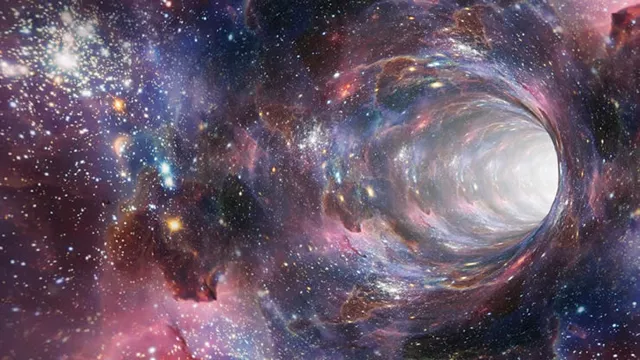
There is a well-known saying in China: “A day in heaven is a thousand years on earth.” Similarly, the Bible states, “For the Lord, a day is like a thousand years, and a thousand years are like a day.” What was once thought to be a mere myth is now finding support from scientific research.
It takes the Earth one day to complete a rotation and one year to orbit the Sun. In contrast, the Sun takes over 200 million years to orbit the center of the Milky Way galaxy. But how long does it take for the Milky Way to complete one full rotation?
Research from the International Centre for Radio Astronomy Research in Australia, along with other institutions, published in the Monthly Notices of the Royal Astronomical Society, indicates that the Milky Way requires about one billion years for a single rotation. Moreover, all galaxies comprising countless stars take approximately the same amount of time for one rotation.
Professor Gerhard Maier, from the same research center, explained, “Regardless of a galaxy's size, if you are positioned at the outer edge of its galactic disk and turning with it, you will spend about one billion years making one complete rotation.”
This rotational period remains consistent across different galaxies. Put simply, if we imagined the Milky Way as a planet, then spending one year on this galactic body would mean that humans on Earth experience one billion years. The Milky Way is but a speck in the universe, made up of countless galaxies. If one were to rise to the edge of the universe and spend one year at its boundary, one can only wonder how many billions of Earth years that would represent.
Buddhist scriptures describe the universe as having thirty-three layers of heaven. Starting with the Earth's atmosphere as one layer, above it lie the solar system, the Milky Way, the Milky Way nebula, then the universe, and beyond that, further universes. The higher the layer, the slower time passes, potentially billions of times slower than on Earth. According to relativity, time and space together form a four-dimensional spacetime, which forms the universe's fundamental structure.
Time and space are not absolute; the rate at which time passes is perceived differently depending on an observer's relative speed or position within a different spacetime structure.
A single day on Earth differs vastly from a day in the solar system or the Milky Way in terms of speed and distance, with differences that are beyond our imagination. Each planet within our galaxy possesses its unique spacetime properties, resulting in significant variations.
Based on Earth's measurement of time, astronomers have calculated that it takes Jupiter 11.86 years to orbit the Sun. Spending one year on Jupiter would mean that 11.86 Earth years have passed. Living on Neptune for one year would equate to 164.8 years on Earth.
Mercury completes its orbit of the Sun in 88 days while taking 58 days and 15 hours to rotate on its axis. Spending one year on Mercury means that less than half a year would pass on Earth. Conversely, living one day on Mercury would mean 58 days and 15 hours have elapsed on Earth.
The saying “a day feels like a year” suits Venus perfectly. Venus orbits the Sun in 224.7 days but rotates in 243 days. Thus, one day there equals 243 Earth days.
Judging Venus by Earth's time standards, the notions of a day and a year become nearly indistinguishable. Thus, beyond the Milky Way, could there be places where “a day is like a thousand years, and a thousand years are like a day”? Time is a human-defined relative concept, ceasing to exist once we leave Earth's specific framework.
Ancient Chinese Daoist and Buddhist practices speak of immortality as elevating one's level through special methods, transcending our space and escaping the constraints of time.
In regions beyond Earth, time is measured in thousands, tens of thousands, or even billions of years, rather than the mere decades of a human life. From our earthly perspective, might that not seem like immortality?
Einstein's theory of relativity suggests that a moving clock ticks slower compared to when it's at rest; the faster the speed, the slower time progresses. At the speed of light, or potentially faster, time could even halt altogether.
In essence, a spaceship traveling 1000 light-years at light speed would make it feel like just a moment for those aboard, while ten centuries might elapse on Earth.
With contemporary scientific understanding, “A day in heaven is a thousand years on earth” is no longer just an ancient myth or legend.