Exploring the Intricacies of Brain Neural Networks
The Brain's Neural Network Extends Beyond Three Dimensions
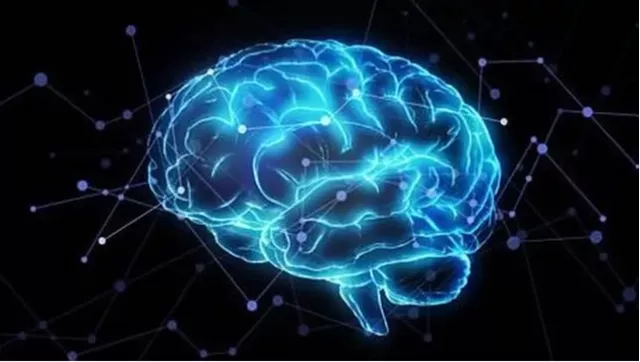
When we think about consciousness, the brain is often the first thing that comes to mind. Recent research on neural networks reveals that the complexity of the connections between brain cells is far beyond our imagination, existing not only in three dimensions but extending up to seven or even eleven dimensions.
A team of researchers from Switzerland, the UK, and France published a report in the journal Frontiers, describing how, through algebraic topology, they discovered that brain cell connections go beyond three dimensions (here, "dimension" refers to a mathematical concept, not the dimensions of space-time). In certain brain regions, these connections can reach up to seven or even eleven dimensions.
The Australian technology site Science Alert quoted Henry Markram, the lead scientist and a neuroscientist at the École Polytechnique Fédérale de Lausanne (EPFL) in Switzerland, as saying: “We have found a world that we never imagined could exist.”
Markram explained: “(Within the scope of our analysis) tens of millions of high-dimensional connection units occupy only a small area, yet their dimensions can reach seven. In some neural network spaces, we found dimensions extending up to eleven.”
The researchers also highlighted that topology serves like a telescope or microscope, providing both macro and micro insights into the brain's neural network, yet it still cannot completely unravel the mysteries of neural processes.
Science Alert commented that with the human brain housing over 86 billion neurons, the complexity of neural networks formed in various types and dimensions in all directions is beyond imagination. Therefore, it is unsurprising that we have yet to fully decipher the workings of the brain's neural networks and the deep questions surrounding consciousness.
The Interconnection of the Human Body and the Universe
Scientists from the University of Groningen in the Netherlands wrote in the journal NeuroQuantology: “The human brain is not merely an 'isolated' organ for processing information, but rather serves as a center for the exchange of information between bodily organs and the universe.” As such, the consciousness reflected in the brain, or what we perceive, might originate from other dimensional spaces (referred to as alternate spaces).
Addressing the source of this consciousness and the characteristics of brain activity, Groningen University scientists suggest that it could be understood through the universally observed phenomenon of rotation. For instance, rotation is evident in the universe, galaxies, black holes, Earth's magnetic field, tornadoes, the spatial field of the human body, the DNA helix, electromagnetic fields, and photon geometry.
These rotating phenomena can be analyzed using quantum motion. Moreover, the so-called past, present, and future are all part of the existing material in cosmic information; the perception of time differences arises as quantum motion manifests within observed dimensions.
Scientists further noted that by viewing the brain as a site of electromagnetic field movement, we can better understand various mental phenomena, such as intuition, telepathy, remote viewing, and near-death experiences, which cannot be explained by traditional neurophysiological theories.