Tracing Maya Agriculture: The Cultivation of Corn and Its Ritual Significance
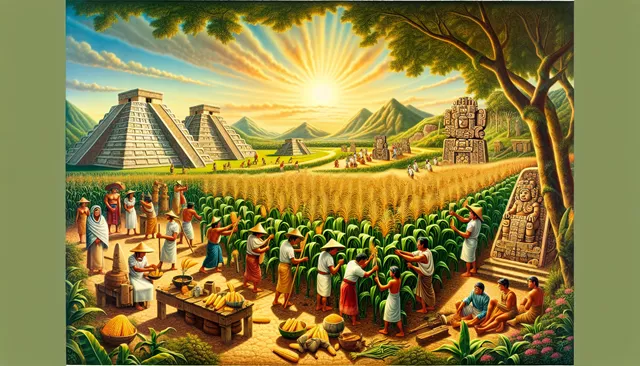
In the vast expanse of history, the illustrious Maya civilization shines like a brilliant gem within the American continent. Its rich tapestry of mythology, architectural brilliance, and enigmatic astronomical calendar unveil a deep and profound history. Today, as we delve into a discussion about the Maya civilization, I'd like to approach it from a commonly overlooked perspective: the unique agricultural culture of the Maya, particularly their cultivation and reverence for corn.
The early agricultural practices of the Maya date back to around 2000 BC during the Preclassic period, during which the vital role of corn in Maya life was firmly solidified. Over the millennia, they esteemed corn as the source of life, a belief mirrored not only in their daily sustenance but also in their religious beliefs and mystical rituals.
At first glance, cultivating corn might seem like a mundane agricultural task, yet from the Maya viewpoint, it was a sacred and mysterious activity. The Maya ingeniously devised a cultivation method that was both scientific and in sync with the natural order. Unlike modern practices where corn is grown in neat rows, they employed the "Three Sisters" planting technique, an ancient and wise method of companion planting. Corn, beans, and squash grew together in harmony, supporting and nurturing one another.
Before planting corn, the Maya would take seeds from the altar and perform a solemn prayer ritual, beseeching the gods for rain and the earth for a bountiful harvest. As they placed the seeds in the soil, they conveyed their blessings and hopes, as though the potential life within the seed could understand their words and feel their affection.
Once planted, corn necessitated careful nurturing. The Maya would use tools to dig three-inch deep holes in the soil, place a corn seed in each, and gently cover it with earth. The entire process was precise and gentle, akin to caring for a newborn life. This meticulous approach to planting not only reflects the Maya's profound respect for nature and life but also their dedication to their agricultural practices.
Corn requires at least three months to grow, during which it demands careful attention to ensure adequate sunlight and water. During this period, the Maya adhered to their astronomical calendar to schedule a series of planting activities, performing each step from sowing to harvesting with the precision and rhythm akin to a dance. At harvest, farmers would carefully strip the plump kernels from the ears of corn, gathering these golden treasures that provided sustenance, symbolized life's hopes, and represented aspirations for the future.
In Maya ritual culture, corn holds a position of equal significance. They believed humans were created from corn kernels, viewing corn as a deity—the creator of life. In their elaborate ceremonial practices, corn frequently served as an offering, a mark of reverence to the gods, gratitude for blessings, and a celebration of life's dignity. Through complex and solemn rituals, the Maya expressed their thanks, praise, and prayers through words and actions, believing their offerings could appease the gods and ensure the continuation of life.
According to Maya mythology, the corn god is regarded as the ancestor of the Maya people, the soul of their existence. Consequently, the Maya's respect and reverence for corn reached a level of faith. They relied on corn for survival and viewed it as a spiritual symbol and source of meaning. To them, every kernel represented life's continuation, a symbol of the divine, and the spirit of their ancestors.
So, when the harvest season arrived, the Maya held grand festivals. They prepared food and drinks from freshly harvested corn as offerings to the gods and expressions of gratitude to nature. During the celebrations, the Maya shared with one another, expressing gratitude for the land, loved ones, and all that surrounded them. As the new year approached, they carefully selected corn seeds again, repeating the cycles of sowing, irrigation, and harvesting with wisdom and diligence, seeking nature's favor and ensuring life’s perseverance.
"The only source, the only heart, he is the corn god who gives us life." This passage from the ancient Maya chronicle "Popol Vuh" encapsulates the Maya's attitude and beliefs regarding corn. They believed corn bestowed vitality and was the link between the universe, earth, nature, and humanity. Corn was more than just a crop; it was an embodiment of emotion and filled with the mystique of faith.
In reflecting upon history, it's not difficult to trace aspects of modern agricultural techniques back to Maya agriculture. Their understanding and respect for nature, their love and faith in life, offer profound insights for our technological advancements, exploration of the universe, and life-care. To the Maya, corn wasn't just a crop or food—it was the embodiment of life, a mysterious faith, and a window into the unknown world and reverence for life.
Though the Maya civilization may have faded into the annals of history, the intricately carved and mysterious temples and pyramids they've left behind, the bright night skies, the sacred flames, and the agricultural traditions passed through generations continue to tell the story of their deep respect for life. From this reverence and understanding, perhaps we can draw a deeper appreciation and understanding of life.
Respect for nature and love for life are crucial in this era where reliance on both technology and nature deepens. We must endeavor to grasp that profound faith—a way of life enriched by respect for nature. By observing and reflecting on the unique agricultural culture of the Maya civilization, we can enhance our understanding of nature, foster a deeper love for life, and collectively cherish and protect our beautiful planet.
The Maya civilization was rich with brilliant technology, abundant mythology, detailed agricultural techniques, and heartfelt faith. Such a noble and complete civilization warrants contemplation. As we navigate the currents of history, let the Maya's reverence for corn illuminate our path as we continue to seek life's essence and cherish our unique and wondrous world.