The Architectural Art of the Maya Civilization: Ancient Wonders Unveiled
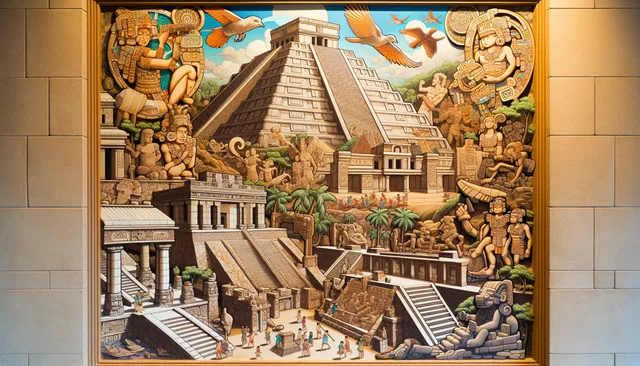
Amidst the lush green of the forest, a dreamlike city emerges, shrouded in the light mist and bathed in the golden rays of the morning sun. It's hard not to be amazed: this is the Maya civilization of centuries past, a legendary prehistoric culture known for its mystery and grandeur.
The Maya represent one of the ancient civilizations of the Indigenous peoples of Central America, flourishing from around 1500 BC until the 16th century, and leaving behind countless architectural wonders. Today, these ancient structures stand within the jungle, whispering tales of a glorious past. I am an admirer of this ancient civilization and a storyteller weaving the narrative of these prehistoric marvels.
Our journey begins in the ancient city of Coba. Nestled in the eastern region of Mexico's Yucatan Peninsula, Coba is a testament to Maya civilization. The site boasts a wealth of carvings and murals that unveil the complex culture and lifestyle of Maya society. Structures like the Temple of the Short Stelae are simple yet exquisite, serene yet sacred, drawing you into a world filled with mysterious beliefs. Its sharply outlined steps on a massive base appear as if they lead to another world, granting a glimpse into the wisdom and mysteries of the ancient Maya.
Next, we explore Chichen Itza, one of the most renowned sites of the Maya civilization. The Temple of Kukulkan, also known as the Feathered Serpent Pyramid, stands as a brilliant gem of solidified history. During the spring and autumn equinoxes, sunlight creates seven triangular shadows on the pyramid's steps, symbolizing the descent of the Feathered Serpent deity. This structure perfectly integrates astronomy and religion, offering breathtaking sights that inspire awe of Maya brilliance.
At the Pyramid of the Magician in Uxmal, we are entranced by the magic of this towering structure. Adorned with intricate carvings and vibrant patterns, this pyramid, spanning 120 meters in diameter and rising 40 meters high, is a landmark of Uxmal. Each pattern carries its own story with significant meaning. Here, the passage of time can be seen in the stone carvings alongside glimpses of Maya ingenuity.
Every building is a treasure of Maya wisdom, and every city stands as a testament to their civilization. In these ancient cities, we can witness their elegant attire, graceful demeanor, skilled craftsmanship, and architectural prowess. The Maya used their buildings to immortalize mythological stories in stone, revealing deep insights into their social structures. Their carvings act like silent verses, intertwining reality and transcendence, the relationship between humans and gods, and the connection between body and soul.
The materials, forms, and decorative styles of their architecture reflect the Maya's unique understanding of nature and the cosmos. The pictorial patterns, vivid stone carvings, symbols marking dates and times, murals commemorating ancestors and deities, and vibrant, shimmering pottery may seem primitive, yet every detail is imbued with profound thought.
As you wander through the cities left behind by the Maya, you can't help but admire their wisdom and foresight. Their architectural art stands as a silent epic, expressing the greatness of the human spirit through its magnificence and inherent strength. They have bequeathed the world an enduring legacy, a treasure trove that sustains the cultural memory of humanity.
Time flows, civilizations rise and fall, yet the silent hymns echoed through millennia continue to convey Maya cultural customs, filled with the joys and sorrows of ancient peoples, providing us with a deeper understanding of human history. Like the dawn of creation or the golden glow of sunset, the brilliant Maya remain forever woven into the tapestry of human civilization, illuminating our journey to uncover the meaning of history and life.