Palmistry: What Your Life Line Reveals About When Disasters May Strike
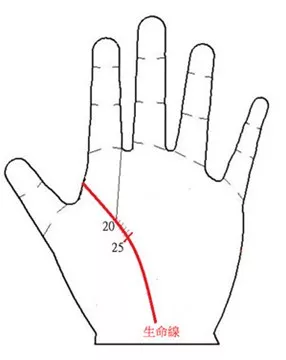
The life line, along with the heart line and head line, is one of the three main lines on the palm. It is believed to reflect overall life quality and vitality, and to reveal aspects of a person's physical and mental health.
The length and clarity of the life line are not fixed; it may appear to extend when health is good and to shrink when signs of illness or weakness appear. While its length points to vitality, it does not by itself determine how long a person will live. For a more accurate reading, consider it together with other features, such as the head line and any auxiliary life lines. Therefore, do not underestimate yourself or assume an early death just because your life line is short.
Many markings may appear on the life line. These are seen as warnings that let us take precautions before accidents or illness occur, helping us avoid physical and emotional harm. In that sense, we can be grateful for their timely alerts.
Pinpointing exact timing on the life line can be challenging because hand shapes and sizes vary, but it is possible to estimate approximate ages. Pay extra attention to potential events during the years indicated.
To estimate the ages associated with markings on the life line, draw a line from the inner side of the index finger to the life line and mark that point as age 20. Then, count roughly one year for each millimeter downward. With this method, the ages and possible meanings of various life line markings are no longer a secret as we discuss their interpretations below.
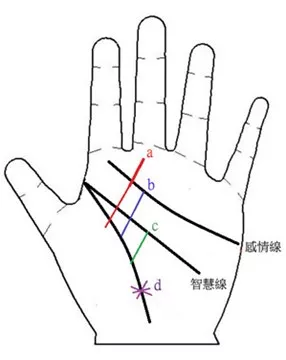
I. Life Encounters Accidents
If the life line shows the following, be alert to crises related to accidents or character-related pitfalls.
a. Unforeseen Line: A line that is thick at one end and thin at the other, starting below the middle finger and touching or crossing the life line. In palmistry, this indicates a high risk of accidents or disasters, such as plane crashes or mountaineering mishaps. Use extra caution with dangerous activities and avoid them if possible.
b. Ascending Line Ends at Heart Line: Similar to a career line that ends at the heart line, this can point to setbacks caused by romance or emotional decisions. For example, you may go to great lengths for someone only to be deceived, yet remain a kind‑hearted person who cares for others.
c. Ascending Line Ends at Head Line: This suggests major losses stemming from intellectual blind spots or misusing one’s talents, leading to an unfulfilling path. Fortunately, if you’re willing to correct your flaws and put in the effort, this line can still extend.
d. Star Mark: A star on the life line points to potential dangers in that year that could threaten life. If it is just a cross, it indicates unpleasant disputes with relatives—the two signs carry different meanings.
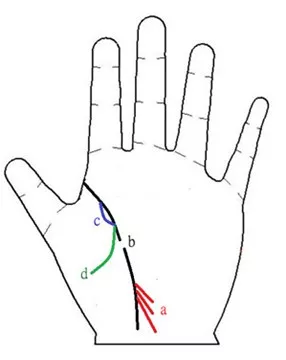
II. Life Encounters Illness
If the life line shows the following, be cautious about situations that could arise from acute or chronic illness.
a. Fringed End: A fringed end suggests a tendency toward physical decline and fatigue. This isn’t limited to old age; many people begin to lose energy in middle age, possibly due to years of irregular sleep or inherently weaker constitution.
b. Broken Life Line: A break may indicate major changes in the family environment or the onset of illness. The larger the gap, the more severe the turmoil or illness. If both hands show this, the likelihood increases. If the broken segments overlap, it suggests a chance of recovery and is less concerning.
c. Island Mark: An island on the life line points to health risks. At the beginning of the line, it can mean being born with a weaker constitution or a weaker bond with parents. At the end of the line, it can indicate declining organ function and reduced sexual vitality. In general, be extra careful during the years when an island appears, as health issues may arise.
d. Large Hook on Life Line: Sometimes a large hook appears at the end of the life line. This is unfavorable; even on one hand, it can point to life‑threatening conditions. It often signals significant chronic illness affecting internal organs. Seek evaluation to identify the cause and rest sufficiently to avoid work incapacity or irreversible harm.
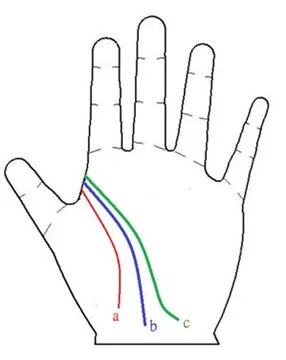
III. Strength of Vitality
The curvature of the life line is said to symbolize our ability to handle life’s challenges. Take stock of your situation and make gradual adjustments—that’s a sound approach. Don’t aim so high that you overlook what’s right in front of you; use methods that suit you.
a. Small Curvature of Life Line: Indicates a timid disposition, lower confidence, weaker stress tolerance, and a tendency to feel powerless about life’s direction. Such individuals are better suited to stable, lower‑pressure work. Strengthen mental resilience through moderate psychological and physical training.
b. Large Curvature of Life Line: Indicates abundant energy and strong inner stability, with good adaptability to different environments. This reflects a vigorous, positive outlook on life. Make good use of your vitality to create your own path!
c. Life Line Curving Toward the Mount of Moon: Many artists show this feature, which often indicates a high likelihood of living abroad. Health may be delicate, but there’s a love of novelty and change, making monotonous work hard to sustain. Even after marriage, settling into family life may be difficult; socially oriented jobs often provide greater stability.