Does a Short Lifeline Mean a Short Life?
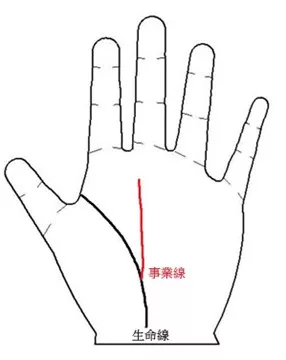
Many people tend to believe that the length of the life line on their palm is directly related to their lifespan—that a longer life line means a longer life, while a shorter one indicates a shorter life. As a result, some people become concerned when they notice that their partner's life line is particularly short, fearing it might mean a limited lifespan. However, I have always felt that this belief is unreliable. Here are a few reasons why:
1. Palmistry has its limitations
Palmistry offers some insights into a person's fate, but it's important not to overextend or misinterpret this information. In terms of physiognomy, palmistry provides less detail than facial analysis, which is less comprehensive than skeletal analysis, and skeletal analysis is less detailed than body features. Therefore, the insights gained from palmistry are inherently limited. When considering one's fate, physiognomy is less precise than BaZi, which in turn is less accurate than Zi Wei or the Iron Plate Divination. Caution and discernment are advised when interpreting palmistry insights.
2. Lifespan is unpredictable
Determining how long a person will live remains one of the greatest mysteries in fate. It's something that even spirits can't forecast. A person's lifespan isn't solely predetermined; regardless of a fortune teller's or physiognomist's skill, they cannot fully grasp the workings of fate. An individual's lifespan is also influenced by their virtue and fortune. While one might ascertain someone's inherent traits through certain methods, assessing their virtue and achievements is much more complex.
3. Physiognomy requires a holistic approach
When analyzing facial features, palmistry, skeletal details, or body features, it is crucial not to rely exclusively on one type of information. Instead, a comprehensive evaluation should integrate various sources. For instance, palmistry can be validated with facial analysis; physiognomy can be confirmed with fate analysis. Information regarding life, health, obstacles, and virtue in palmistry should be cross-referenced for consistency and accuracy.
When it comes to palmistry itself, the life line primarily represents one's physical vitality, stamina, social interactions, and level of activity. It influences longevity indirectly and has no direct correlation. Thus, a short life line might indicate poorer physical health, lower resistance, and a smaller, less active social circle. The actual length of life also depends on other lines, such as the fate line, head line, and Mars line.
This matter has been largely resolved since 1952, when the International Palmistry Association conducted an experiment yielding clear conclusions. The study, known as the "Canberra Conference," gathered 1,104 participants from various countries residing in Australia, and produced the following results:
- Among those with a life line shorter than an inch: 257 lived to 65 years old, 182 reached 75 years, and 87 lived to 85 or more.
- Those whose life lines were broken or fragmented: 146 encountered major illness or accidents, nearly dying; 42 faced multiple major incidents but had fragmented life lines without experiencing major illnesses or accidents.
- Those with a chain of island shapes in their life line: 317 had chronic poor health and were accident-prone over at least a decade, 144 had minor health issues with no major accidents, and 173 were accident-prone but generally healthy.
These results strongly suggest that the length of the life line does not determine a person's lifespan. In other words, a long life line does not guarantee a long life, and a short life line does not predict a short one. Additionally, the conference drew five conclusions about the life line:
- It reflects the strength and weakness of a person's vitality and personality;
- It signifies the likelihood of encountering accidents or serious illness;
- It indicates the potential for surgery and the possible timing;
- It gives an overview of one's health throughout life;
- The fate line can serve as an alternative to the life line.
Therefore, individuals with short life lines should not be excessively worried about their lifespan or alarmed by incorrect interpretations from those who lack a deep understanding of palmistry.
In conclusion, attempting to predict someone's lifespan is largely pointless and can cause needless anxiety for the person being evaluated. Rather than living in fear, it's better to focus on health, personal well-being, and nurturing one's virtues, while leading a life of integrity.