Do You Truly Understand the Concept of a Lifeline?
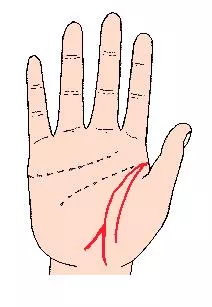
Lifeline
The lifeline is the curved line that wraps around the base of your thumb, positioned between the thumb and index finger. Everyone has this line on their palm. The ideal lifeline is one that deeply encircles the base of the thumb down to the wrist, without any brief interruptions or abrupt stops in the middle. Some lifelines curve towards the Mount of the Moon, with some tightly encircling the thumb's base and others more loosely following the curve, among various other forms.
While the length of the lifeline is often thought to indicate lifespan, it actually doesn't correlate directly. Instead, the lifeline indicates:
(1) An individual's physical health and strength;
(2) The family environment and luck;
(3) The likelihood of accidents or health issues;
(4) Sexual vitality.
A continuous, deep, and clear lifeline suggests strong physical strength and a potential for significant career achievements. On the other hand, a short, broken, chain-like, or cross-patterned lifeline is considered unfavorable, indicating possible illness or injury.
At its origin, the lifeline often appears chain-like and may branch into several lines as it approaches the lower part, especially near its intersection with the fate line or health line. Thus, the lifeline may seem incomplete or appear irregular. The lower part of the lifeline reflects the natural decline in physical vitality with age, often becoming weaker and more unpredictable with time.
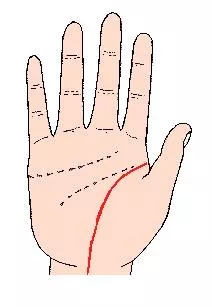
Lifeline Extending to the Middle of the Wrist
A lifeline that extends deeply and clearly to the middle of the wrist signifies strong vitality, good health, an upbeat personality, and ample energy. Such individuals are typically active and brave, though they may also lean towards being opinionated or self-assured. It's beneficial for these individuals to practice self-control and avoid excess to protect both their physical and mental well-being.
However, if the line shows breaks or negative patterns midway, it does not assure good health or longevity. People often focus on the length of the lifeline, but even a long one doesn't guarantee a long life, as other factors like accidents or external events can cut life short. Thus, the lifeline's length shouldn't be considered a foolproof lifespan indicator. This line is not static; it can slightly change over time. During periods of good health, the line may appear longer, whereas it may shrink or appear weaker during prolonged illness.
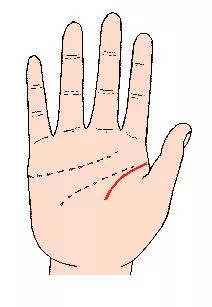
Short Lifeline Does Not Necessarily Indicate a Short Life (Image)
1. Short Lifeline
A short lifeline that narrows and fades abruptly suggests weak vitality. However, it's not wise to predict a short life based solely on this. If short lifelines appear on both hands and end at similar points, this may imply a life-risking event at that age. Yet, if only one hand has a short lifeline, there's less concern. Even with a short lifeline, a strong thumb, a pronounced intelligence line, or supportive auxiliary lines can mitigate its weaknesses, potentially extending one's lifespan.
In summary: Individuals with long lifelines who excessively indulge or overeat may not live long, while those with short lifelines who prioritize their health could live extended years.
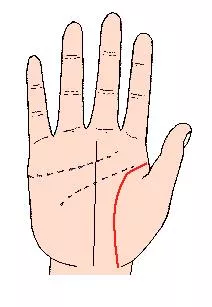
2. Weak Lifeline
A lifeline with a shallow curve and limited area on the Mount of Venus indicates low energy or reduced secretion of sex hormones, which might lead to less attraction to others. If both the lifeline and intelligence line are weak, and the Mount of Venus is underdeveloped, this suggests low vitality and a risk of unhealthy tendencies, making it challenging to change one's fate.
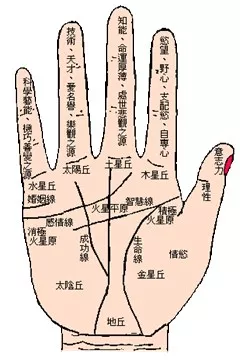
Meaning of Fingers